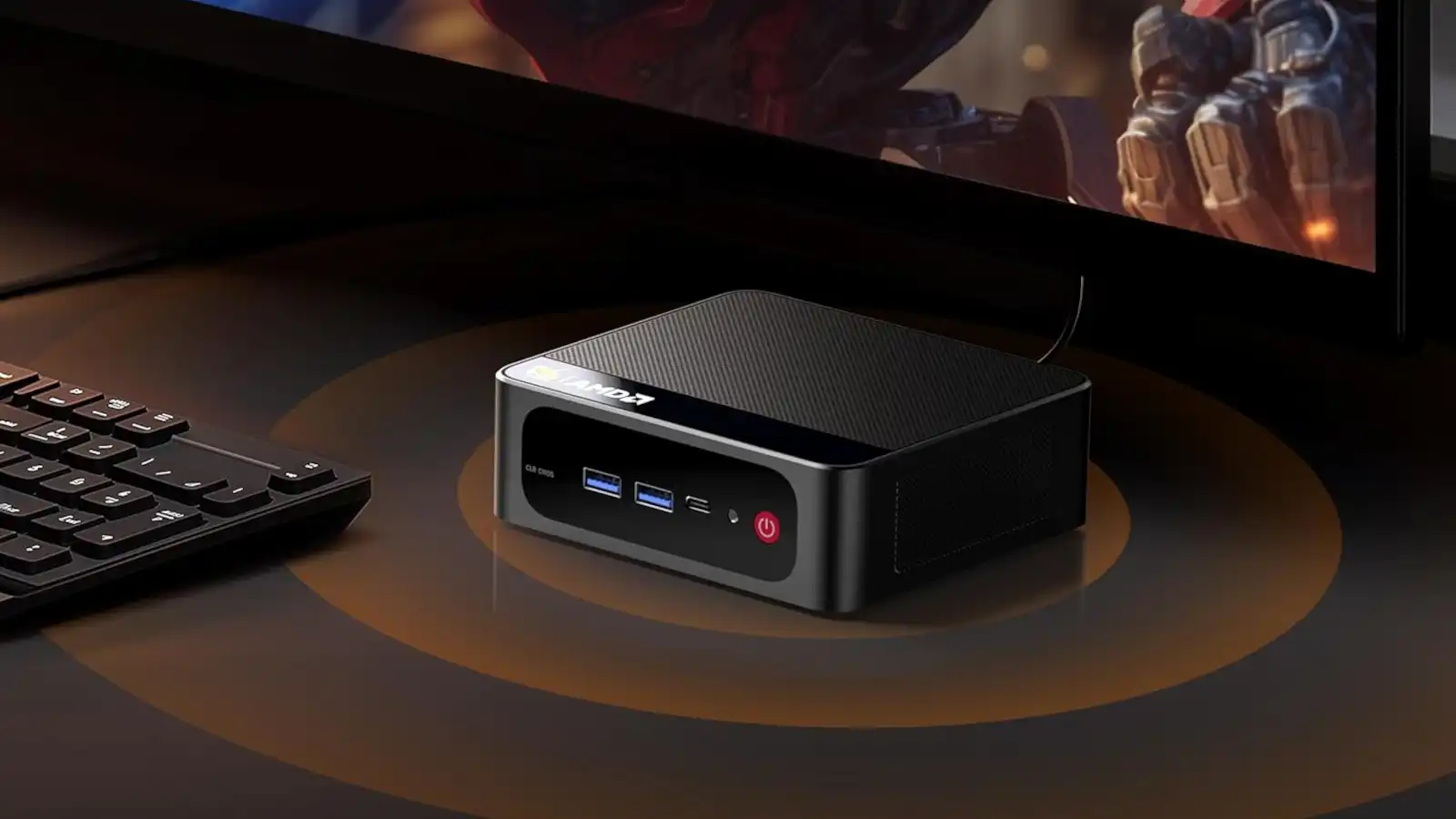
A Ryzen mini PC has arrived with 16GB of DDR4 RAM and the ability to drive three 4K displays simultaneously, positioning itself as a productivity powerhouse for creatives and professionals. Priced at $409, it promises high-performance multitasking—yet its rigid platform design introduces tradeoffs that power users must carefully evaluate.
The device leverages an unspecified Ryzen processor paired with integrated Radeon Vega graphics, estimated to feature 8-10 compute units. While this configuration excels in office productivity and light video editing, it falls short for demanding workloads like AAA gaming or heavy rendering. The triple 4K support is a standout, but refresh rates are not uniform: one display can hit 120Hz, while the others max out at 60Hz unless external GPUs are introduced—a difficult proposition in this form factor.
Key Advanced Specifications
- Processor: Ryzen (unspecified model)
- RAM: 16GB DDR4 (upgradability unconfirmed)
- Storage: 512GB NVMe SSD
- Display Output: Triple 4K via DisplayPort and HDMI 2.0
- Graphics: Integrated Radeon Vega (8-10 CUs)
- Connectivity: Thunderbolt 3, USB-C, Wi-Fi 6, Bluetooth 5.0
The hardware is optimized for efficiency rather than user customization. A proprietary vapor chamber handles cooling, leaving no room for aftermarket solutions or overclocking tweaks. Expansion options are similarly limited: a single M.2 slot for secondary storage exists, but PCIe slots for GPUs or NVMe drives are absent—a significant drawback for users who prioritize future-proofing.
Platform Lock-In: The Unseen Cost
- Cooling: Vapor chamber (no third-party cooler support)
- Expansion: M.2 slot only; no PCIe slots for GPUs or additional storage
- Ports: Two USB-C (Thunderbolt 3), two USB-A, HDMI 2.0, DisplayPort—no legacy PS/2 or extra GPU outputs
The lack of PCIe expansion is the most restrictive element. Power users who rely on GPU upgrades or additional storage will find themselves constrained by the mini PC’s compact design. While the system performs well within its intended workloads, those who push hardware limits may encounter performance bottlenecks that could have been mitigated with a more open platform.
Value Proposition: Convenience vs. Flexibility
The $409 price tag positions this Ryzen mini PC as a premium productivity machine, but its value depends on how long users can remain within its constraints. For those who prioritize portability and don’t require high-end GPU performance, it offers strong performance per dollar. However, enthusiasts or professionals who demand expandability may find the locked-down ecosystem more limiting—and costly—than anticipated.
Availability details are still unclear, but if past trends hold, this device will likely arrive as a prebuilt system with minimal customization options. Users will need to weigh whether the convenience of an all-in-one mini PC justifies the tradeoff in long-term flexibility. The market’s response will determine whether power users are willing to accept these limitations for the promise of compact performance.