The AW2726DM is a 27-inch QD-OLED monitor that challenges the notion of what an Alienware display should be. It’s not just another high-end gaming panel; it’s a carefully positioned entry into the QD-OLED market, aimed at users who want to escape traditional LCD technology without breaking the bank.
At its core, the monitor features a 2560 x 1440 Fast QD-OLED panel with a 240 Hz refresh rate and a 0.03 ms GtG response time. It covers 99% of the DCI-P3 color space, supports HDR10, and includes AdaptiveSync and AMD FreeSync Premium for smooth variable refresh rates. Connectivity is practical but not groundbreaking: DisplayPort 1.4 ensures full 240 Hz operation, while two HDMI ports are limited to 1440p at 120 Hz.
A fully adjustable stand with height, tilt, swivel, and pivot options adds to the usability, along with an anti-reflective screen coating and wide 178° viewing angles. A built-in microphone is a subtle but noteworthy inclusion for content creators or those who prefer integrated audio solutions.
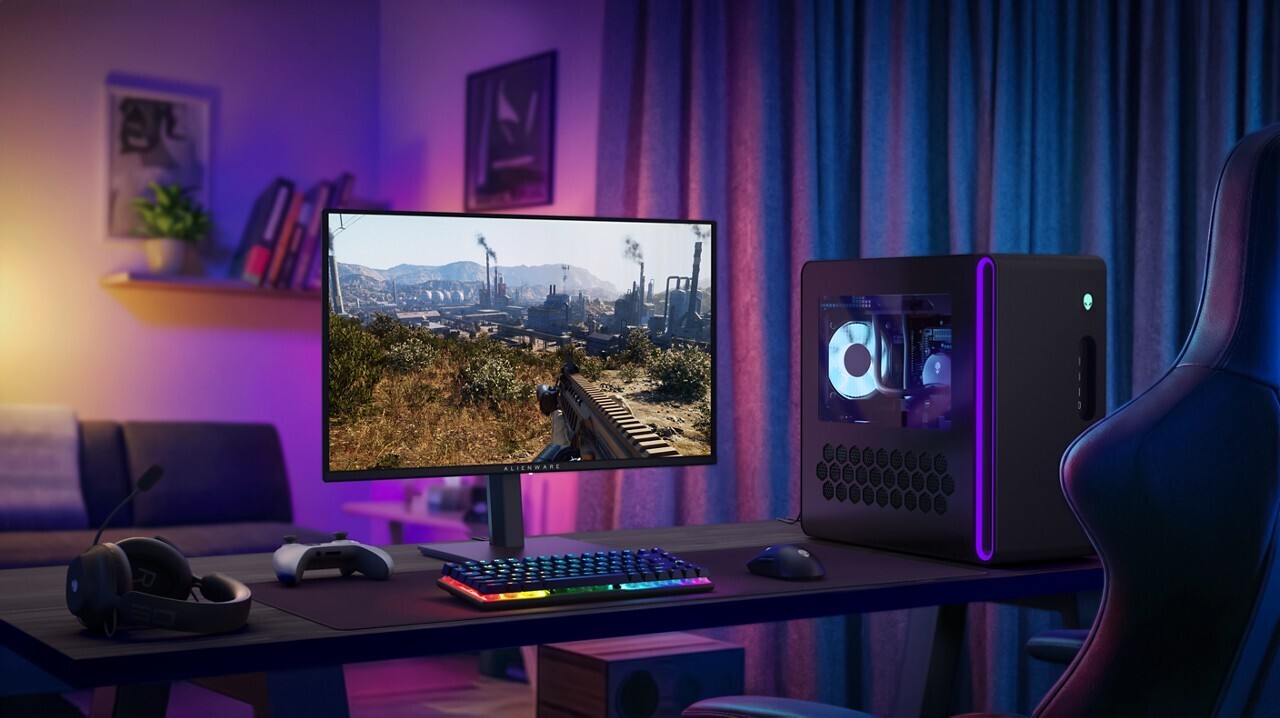
However, there are tradeoffs that warrant attention. SDR brightness is rated at just 200 cd/m², which is on the lower end for QD-OLED panels. This will likely affect peak HDR performance, even though the monitor supports HDR10. Additionally, NVIDIA G-Sync compatibility is noticeably absent, limiting its appeal to users with high-end NVIDIA GPUs who rely on this certification.
The AW2726DM positions itself as a more affordable QD-OLED option, but it does so with a restrained feature set compared to Alienware’s usual premium offerings. It’s a monitor that invites careful consideration for those balancing cost and performance, especially in competitive gaming or content creation where every millisecond matters.
For now, the AW2726DM stands as a cautious step into the QD-OLED market—one that offers compelling specs but leaves room for improvement in brightness and ecosystem support. Buyers will need to weigh these factors against their specific needs, whether it’s competitive gaming at 1440p or content creation where color accuracy is paramount.