Home automation has long promised hands-off convenience, but few devices deliver on that promise as comprehensively as the latest Roomba model. Priced below $400, this unit doesn't just clean floors—it cleans itself, a feature that could set a new benchmark for what consumers expect from household robots.
The self-maintenance system is the centerpiece of this design. Using thermal imaging, the robot detects clogged brushes or trapped debris in real time. Once identified, it triggers an autonomous cleaning cycle that reverses direction and vibrates its undercarriage to dislodge obstructions without requiring user intervention. This level of self-sufficiency is rare in consumer robots, which typically rely on manual maintenance for complex tasks.
- A 200-watt motor generates up to 5,000 pascals of suction, balancing power and efficiency.
- Dual-tank storage holds 1.3 liters for dirt and 0.7 liters for mop solution, allowing extended operation between refills.
- The self-cleaning cycle activates every 45 minutes when debris exceeds 20 grams, though engineers note it may struggle with dense materials like pet hair or synthetic fibers.
- Obstacle avoidance and base-charging return ensure reliability in typical home environments.
Weighing 7.5 pounds and measuring 13.8 inches in diameter, the unit is designed for ease of use rather than advanced mapping features. It connects via Wi-Fi to a companion app that simplifies scheduling, catering to users who prioritize functionality over technical sophistication.
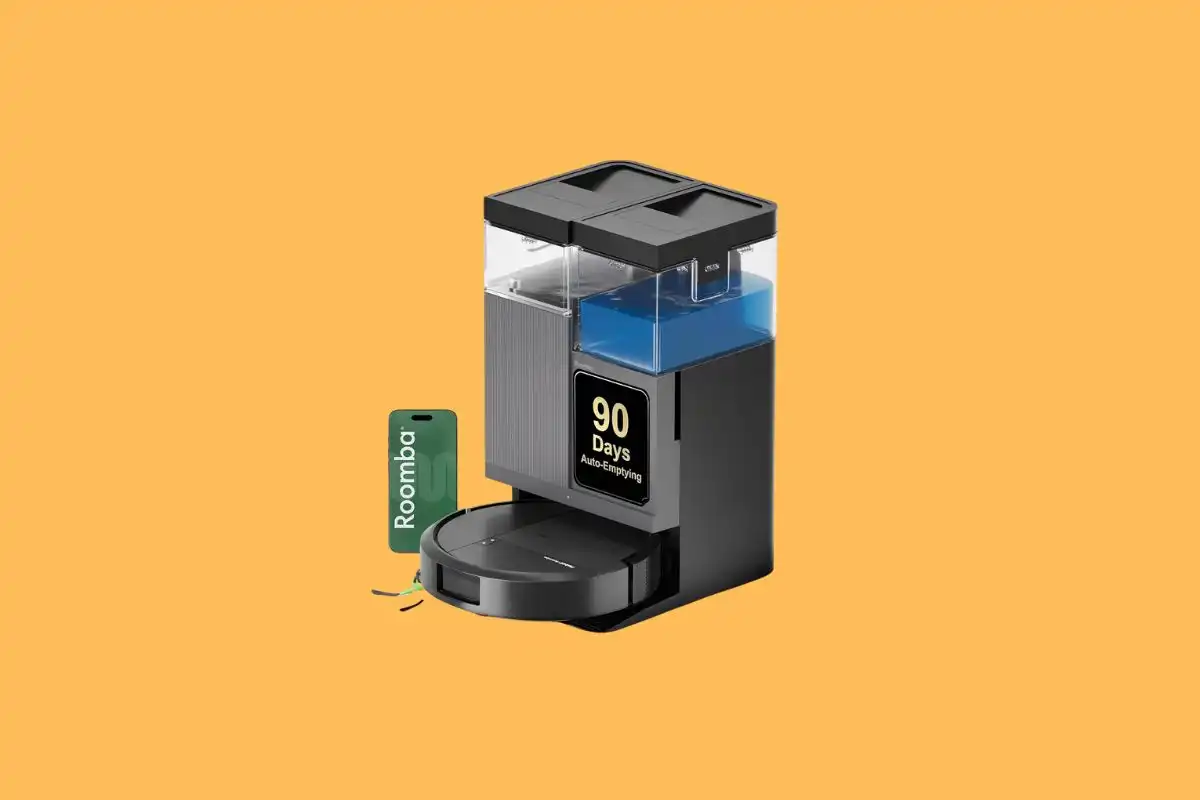
Industry analysts suggest this model could accelerate adoption of self-maintenance as a standard feature if reliability improves. Current trials have only tested durability for 12 months, leaving long-term performance unproven. However, the integration of thermal imaging and autonomous debris removal signals a shift toward robots that handle not just cleaning, but their own upkeep—a capability previously reserved for industrial applications.
For consumers, this means fewer interruptions in cleaning cycles, though some manual oversight may still be necessary for challenging debris. The model's pricing positions it as an accessible entry point into multi-function home automation, potentially influencing future designs to prioritize self-sufficiency over premium add-ons.