In the relentless pursuit of performance, high-end PC builds often face a critical trade-off: achieving maximum cooling while maintaining compatibility with modern case designs. This tension has driven innovation in liquid cooling and power delivery for years, but recent advancements from Lian Li suggest a shift toward more intelligent, modular solutions that adapt to system demands rather than force users into rigid configurations.
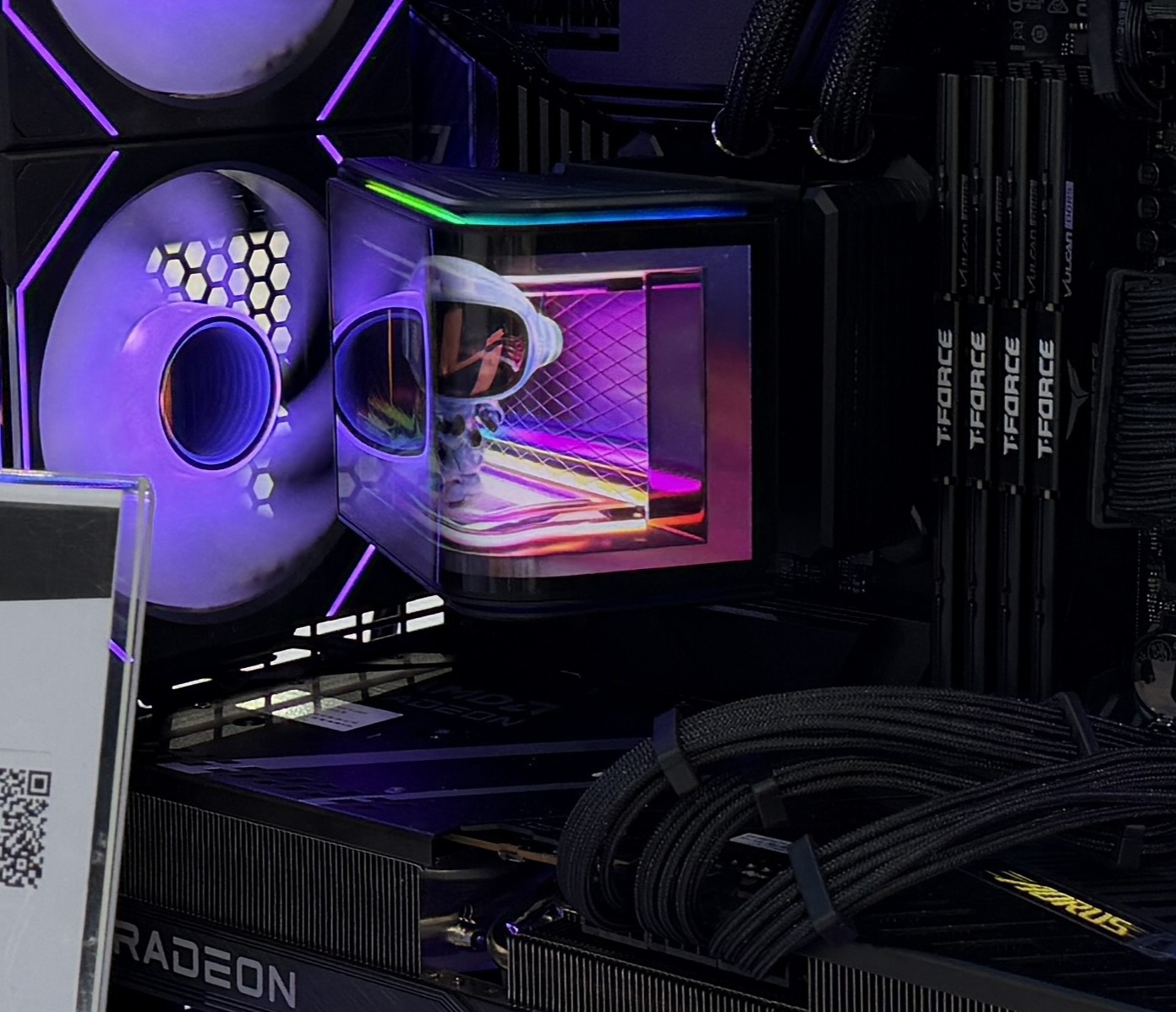
The company’s latest lineup, unveiled at Computex 2026, introduces three distinct product families—each addressing a different facet of high-performance systems. At the heart of this expansion is the Lian Li Q58, a 360mm liquid cooler that challenges conventional airflow assumptions. Traditional AIO coolers rely on uniform radiator designs to maximize heat dissipation, but the Q58 incorporates a dual-chamber architecture. This separation of hot and cold air paths reduces internal turbulence, allowing for more efficient heat transfer without increasing fan noise—a balancing act that’s particularly valuable in professional workstations where thermal performance must coexist with acoustic sensitivity.
Fan Innovation for Constrained Spaces
Cooling isn’t the only area seeing rethinking. Lian Li’s SL-120 series fans represent a departure from standard fan designs, prioritizing static pressure over raw airflow. These 120mm fans are engineered to perform comparably to larger 140mm models in environments where space is limited—such as mid-tower cases or direct-to-GPU cooling setups. The reworked blade geometry allows them to maintain performance under high static pressure, a common bottleneck in compact builds where traditional fans degrade in efficiency. This isn’t just about squeezing more airflow into smaller spaces; it’s about maintaining thermal consistency in scenarios where airflow dynamics are already constrained.
A Power Supply Built for Dynamic Workloads
The LX-850 power supply line takes a different approach to the challenges of modern systems. Rather than focusing solely on wattage or 80+ certification, this fully modular PSU introduces three independent power rails (12V, 5V, and 3.3V) with per-cable load balancing. This design isn’t just about cable management—it addresses a growing inefficiency in high-wattage systems where multiple components draw power from different rails simultaneously. For multi-GPU setups or workstations running demanding workloads, this dynamic distribution can reduce power delivery bottlenecks and improve system stability without sacrificing efficiency.
Broader Implications for System Design
The Q58, SL-120 series, and LX-850 represent more than incremental upgrades; they reflect a broader industry trend toward modularity in both cooling and power delivery. Enthusiasts and professionals alike will benefit from components that adapt to their build constraints rather than forcing compromises on case size or cable routing. The challenge for Lian Li—and the rest of the industry—will be proving that these designs translate into real-world improvements in thermal headroom, system stability, and noise levels.
For now, the focus remains on performance without sacrifice. Whether it’s the Q58’s turbulence-reducing design or the SL-120 series’ high-static-pressure capabilities, each product is a response to the increasing complexity of modern PC builds. The question isn’t whether these innovations will work in theory, but whether they’ll hold up under the constant negotiation of airflow, power delivery, and case compatibility that defines high-end computing today.