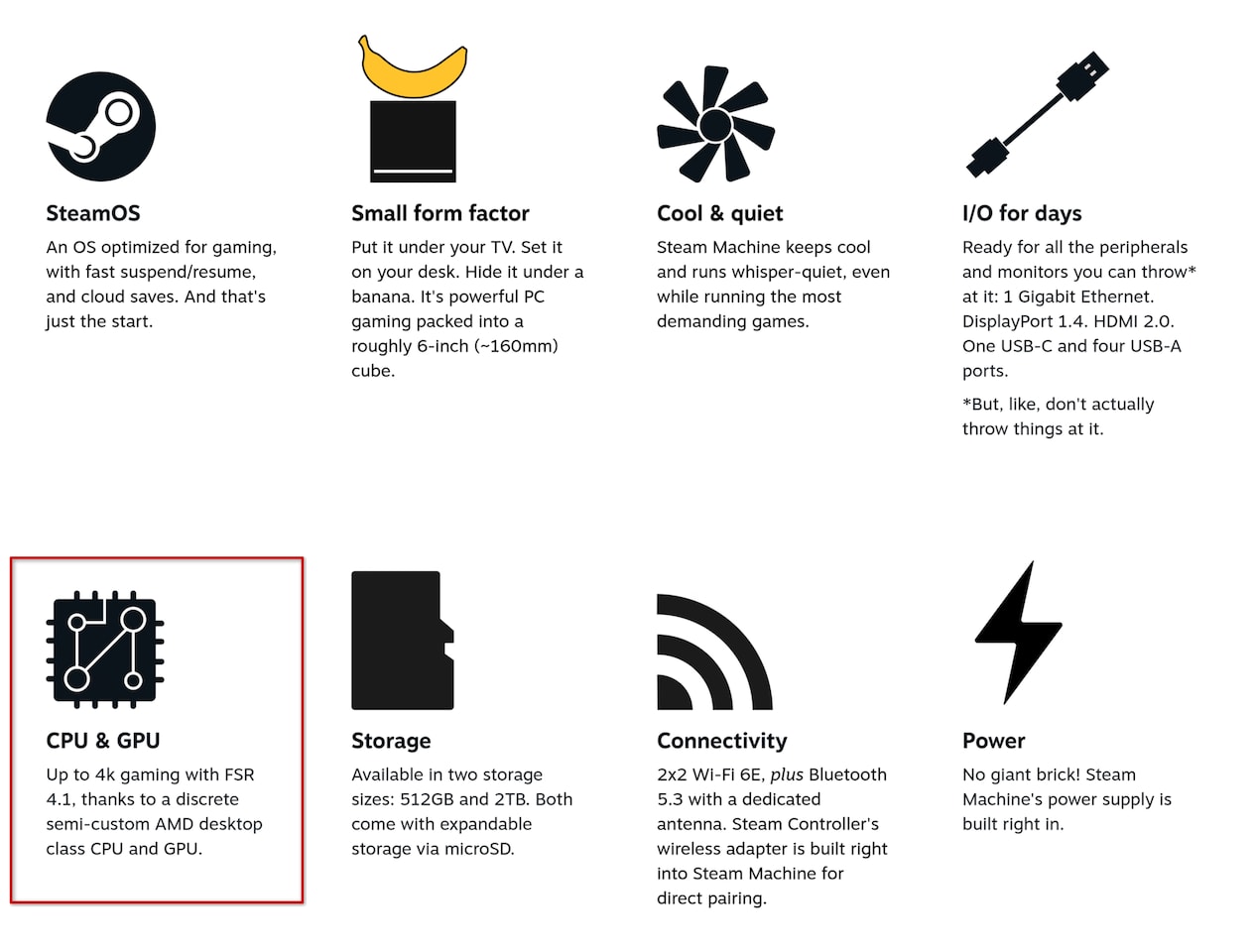
A gaming rig that once promised 4K at 60 frames per second now says only 'up to 4K with FSR 4.1.' That single change—quietly made on a product page—signals a shift in how Valve positions its Steam Machine, a long-awaited attempt to blend PC power and living-room usability.
Gamers who looked forward to the machine’s launch now face a reality that doesn’t always match earlier marketing. Benchmarks show that even 1080p performance can dip below 60 FPS in demanding titles, especially on ultra settings. When upscaled via AMD’s FSR 4, those frames are stretched to 4K, but the experience isn’t seamless for everyone.
The adjustment mirrors a broader trend: tech companies softening claims when faced with market skepticism and legal risks. It also echoes recent controversies in console marketing—namely, Sony’s 8K PS5 campaign—which left some wondering whether Valve was learning from past missteps or simply playing it safe.
Key specs
- Display: Up to 4K (with FSR 4.1 upscaling)
- Performance: Claims 'up to' 4K gaming, no fixed FPS promise
- Upscaling: Supports AMD FSR 4 and FSR 4.1
- Connectivity: HDMI 2.1 (with open-source support noted)
The Steam Machine’s hardware is built around an unspecified GPU, likely from the RX 7000 series, paired with off-the-shelf components. While it aims to deliver PC-level performance in a living-room form factor, real-world results vary—especially when balancing resolution and frame rates.
For gamers, the shift means lower expectations but also less risk of disappointment. Whether that’s enough to overcome lingering doubts about pricing and adoption remains to be seen. Valve’s move suggests it’s prioritizing transparency over bold promises, at least for now.