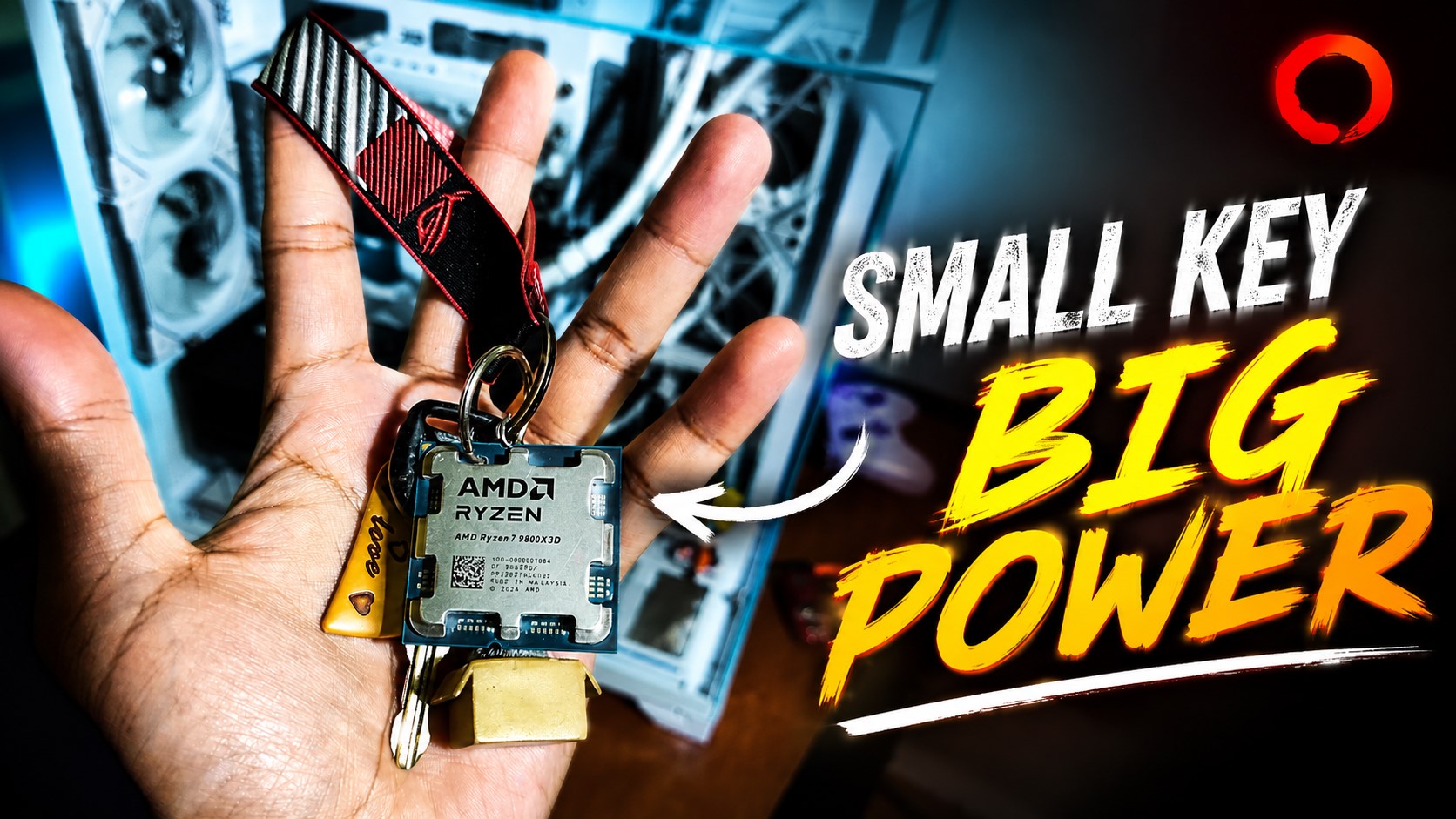
The Ryzen 7 9800X3D is a silent powerhouse—delivering top-tier gaming performance without the usual fan noise or hefty price tag for raw power, but only if paired with the right motherboard. For small businesses looking to balance cost and efficiency, the tradeoff isn’t just about specs; it’s about whether the platform can justify the investment.
AMD’s latest CPU, built on its 3D V-Cache architecture, brings a 16-core, 24-thread configuration to desktops. It runs at a base clock of 4.5 GHz, with a boost clock reaching 5.0 GHz, and is paired with up to 32 MB of L3 cache—nearly double that of its predecessors. This isn’t just about raw numbers; it’s about how those specs translate into real-world performance, especially for workloads like gaming, content creation, or even light server tasks.
Key specs
- Architecture: Zen 4 with 3D V-Cache
- Cores/Threads: 16/24
- Base Clock: 4.5 GHz
- Boost Clock: 5.0 GHz
- L3 Cache: 32 MB (per core)
- TDP: 120 W
- Socket: AM5
The 9800X3D’s standout feature is its L3 cache, which AMD claims delivers a 15% performance boost in gaming scenarios compared to traditional Zen 4 cores. This makes it particularly attractive for businesses running simulation software or high-end graphics workloads where cache efficiency matters. However, the catch lies in motherboard compatibility—the AM5 platform is required, and not all existing systems can upgrade without a full build.
Who should consider it?
The 9800X3D isn’t just for enthusiasts; small businesses with demanding workloads—like rendering 3D models or running virtualization—could see tangible efficiency gains. But the real decision comes down to cost: a complete system with this CPU, a compatible motherboard (like ASUS’s ROG X870), and DDR5 RAM can push $1,200, with the CPU alone around $400. For those already invested in AM4 platforms, the upgrade path is nonexistent, leaving them stuck with older hardware or facing a full system rebuild.
The efficiency impact isn’t just about performance; it’s about operational cost. A quieter, more power-efficient CPU reduces data center noise and cooling needs, but only if the platform supports it. Without proper motherboard integration, the savings vanish. For small businesses, the question is whether the long-term gains outweigh the upfront expense—or if they’re better off waiting for broader AM5 adoption.
For now, the Ryzen 7 9800X3D remains a niche player, its potential limited by platform constraints. But as motherboard support expands and prices stabilize, it could become a standard choice for businesses prioritizing performance without sacrificing efficiency.