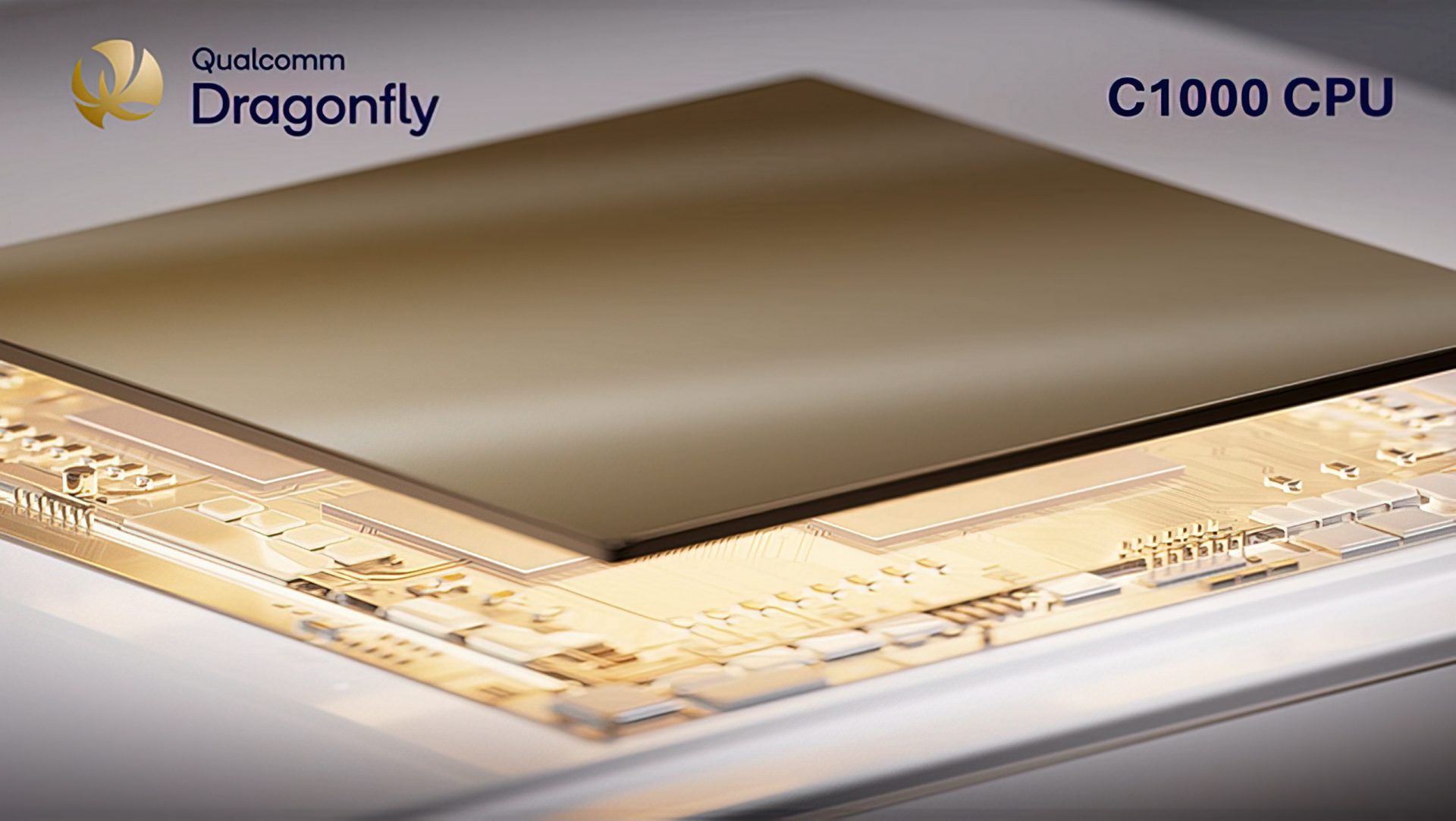
The foundation of next-generation AI factories has quietly shifted. Qualcomm’s latest Dragonfly ecosystem is no longer just about hardware—it’s a full-stack compute platform that collapses three distinct domains into one seamless workflow: AI acceleration, custom silicon development, and high-performance networking. For IT infrastructure teams, this represents a significant departure from traditional deployment models, where these components were often siloed or bolted together at the last stage of a project.
At its core, Dragonfly integrates a 12-core Arm-based CPU clocked at up to 3.0 GHz with a dedicated AI accelerator capable of handling both sparse and dense matrix operations. The platform also includes a suite of tools for designing custom silicon, allowing developers to tailor hardware directly from the same environment used for software development. This dual capability—simultaneous acceleration and customization—is designed to eliminate the typical back-and-forth between hardware and software teams that slows down AI project timelines.
Networking is another critical component. Dragonfly incorporates 100 Gbps Ethernet support, enabling low-latency communication between nodes in distributed AI systems. This is particularly relevant for edge computing scenarios where real-time data processing is essential. The platform’s memory subsystem features up to 64 GB of LPDDR5X RAM, ensuring that workloads with high bandwidth demands—such as large-scale neural network training—can operate without bottlenecks.
For IT administrators, the shift toward a unified compute framework introduces both opportunities and challenges. On the one hand, the ability to prototype custom silicon within the same environment used for software development could drastically reduce time-to-market for AI products. However, this also means that teams must now grapple with integrating multiple specialized skill sets—hardware design, AI acceleration, and networking—into a single workflow. The learning curve is non-trivial, but the potential payoff in terms of efficiency and scalability is substantial.
A closer look at the technical specifications reveals why this platform could reshape how AI factories are built

- Compute Core: 12-core Arm CPU (up to 3.0 GHz) paired with a dedicated AI accelerator for sparse and dense matrix operations.
- Memory: Up to 64 GB LPDDR5X RAM, optimized for high-bandwidth workloads.
- Networking: Built-in support for 100 Gbps Ethernet, critical for distributed AI systems and edge deployments.
- Custom Silicon Tools: Integrated environment for designing and testing custom hardware, bridging the gap between software development and hardware prototyping.
The platform’s emphasis on scalability is evident in its support for both single-node and multi-node configurations. This flexibility allows IT teams to start with smaller, more manageable deployments before scaling up as project requirements grow. However, one area that remains somewhat unclear is how Dragonfly will handle thermal management in high-density AI clusters. While the platform itself may not generate excessive heat, the custom silicon components—especially those optimized for acceleration—could introduce new challenges in cooling and power distribution.
Looking ahead, the strategic implications of this ecosystem are clear: Qualcomm is positioning Dragonfly as a one-stop solution for building AI-ready infrastructure. For IT teams evaluating their options for future-proofing data centers, this platform could simplify deployment while offering the customization needed to stay competitive in an increasingly AI-driven landscape. The key question now is whether other players in the compute ecosystem will follow suit, or if Dragonfly will carve out a distinct niche in the market.
In plain terms, the most significant change here is that IT teams no longer need to choose between specialized hardware for acceleration, tools for custom silicon, and networking capabilities. They can now integrate all three into a single, cohesive platform—potentially accelerating AI development cycles while reducing the complexity of deployment.