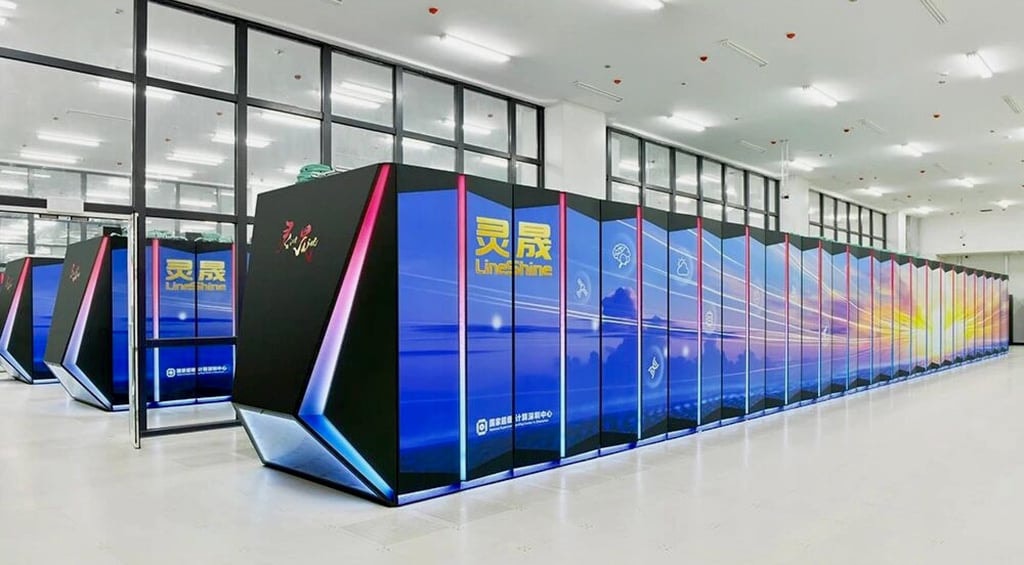
NVIDIA has cemented its position as the backbone of the supercomputing world, powering more than four in every five of the fastest systems globally. This isn't just about raw computational power—it's a fundamental rethinking of how these machines operate, blending AI optimization with unprecedented efficiency.
At a glance
- NVIDIA GPUs are now used in 418 of the top 500 supercomputers worldwide.
- More than half of these systems are AI-optimized, with NVIDIA's H100 and L40S GPUs leading adoption.
- The average performance per watt has seen significant improvements, reflecting broader industry efficiency gains.
- NVIDIA's presence in the Green500 list of most energy-efficient supercomputers has surged.
The trend is clear: NVIDIA isn't just keeping pace with AI-driven computing—it's setting the benchmark. The H100 GPU remains a staple in high-performance computing, but its successor, the L40S, is gaining traction by delivering efficiency without sacrificing performance. This dual focus is critical for IT teams balancing cost, power consumption, and computational demands.
This shift represents more than just technological advancement—it's a response to growing pressures on data centers. Sustainability has become as important as speed, forcing IT leaders to rethink their infrastructure strategies. NVIDIA's dominance in this space means its roadmap will shape the future of supercomputing, with upcoming GPU generations likely to push both performance and efficiency even further.
Looking ahead
The next generation of supercomputers will need to do more than just compute faster—they'll need to do it smarter. NVIDIA's leadership in AI-optimized architectures positions the company at the forefront of this evolution. For IT teams, staying competitive means not only adopting the latest hardware but also integrating these systems into broader data center strategies that prioritize both performance and sustainability.
The implications extend beyond supercomputing. As AI workloads become more complex, the demand for hardware that can handle them efficiently will grow. NVIDIA's ability to balance power consumption with computational muscle will be key in determining how quickly this trend accelerates. The company's focus on energy efficiency isn't just a marketing strategy—it's a necessity in an era where data centers are under increasing scrutiny for their environmental impact.
For now, NVIDIA's dominance in supercomputing is undeniable. But the real question is whether this momentum can be sustained as the industry continues to evolve. The answer may lie in how well the company can innovate while addressing the dual challenges of performance and efficiency—a balance that will define the future of high-performance computing.