Games made with generative AI are selling significantly worse than those without, according to an analysis that tracks review data as a proxy for sales performance.
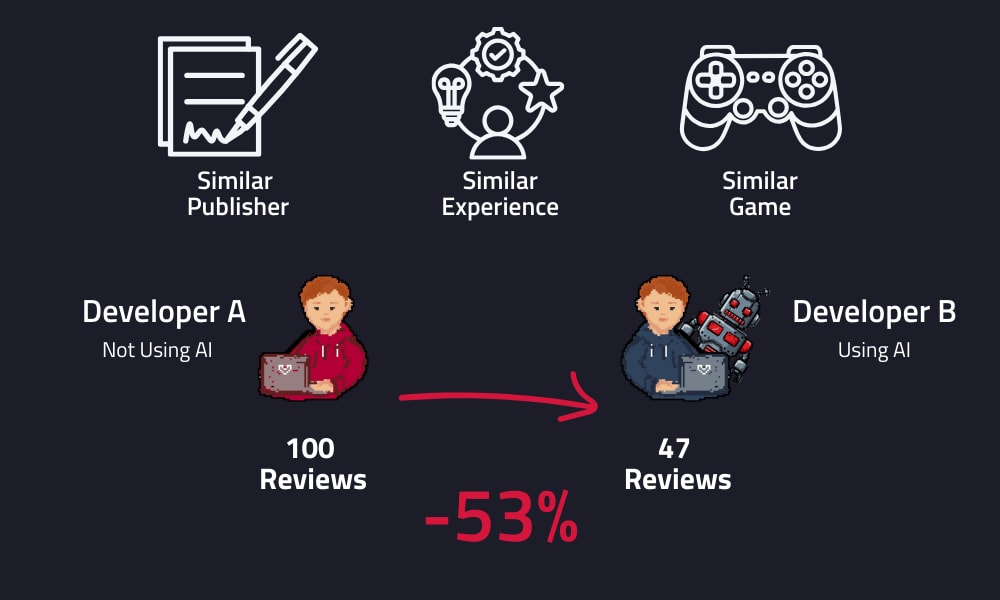
The study suggests that games disclosing AI use receive roughly half the reviews of comparable titles, implying a similar drop in unit sales. The decline is more pronounced among higher-profile projects, where AI-generated content appears to trigger stronger negative reactions from players.
While smaller or lower-quality games show minimal impact, mid-to-high-tier titles face a distinct disadvantage. This 'AI stigma' seems to punish developers who might otherwise succeed without the technology, creating a new barrier in an already competitive market.
Key Findings
- Sales Impact: Games with AI-generated content see up to 53% fewer reviews (and likely sales) on Steam.
- Rating Decline: Median positive review rates drop from 88.3% (non-AI games) to 84.6% (AI-assisted games).
- Studio-Level Risk: Larger studios and publishers experience the strongest negative correlation, suggesting AI use is more scrutinized at scale.
The analysis doesn’t prove causation—players may dislike AI-generated content for reasons beyond sales—but the pattern is clear: transparency about AI tools correlates with financial underperformance. For developers weighing efficiency gains against market perception, the trade-off has never been starker.
Looking Ahead
The trend raises questions about how studios will balance innovation and player trust. As AI tools become more embedded in game development pipelines, the industry may need to address whether the benefits outweigh the reputational risks—especially for titles aiming for mainstream success.