Educational technology is taking a significant leap forward with CTL’s latest Chromebook model, which integrates multiple connectivity bands into one durable device. This innovation aims to solve persistent issues around student internet access, particularly in environments where traditional broadband infrastructure is unreliable or nonexistent.
Previously, schools relied on external hotspots or cellular dongles to provide off-campus connectivity for students. These solutions often introduced logistical complications—lost devices, household bandwidth conflicts, and increased IT maintenance burdens. The new PX112C Series eliminates these problems by embedding 5G, 4G LTE, and CBRS private wireless capabilities directly into the Chromebook chassis. This shift represents a fundamental change in how districts approach connectivity for virtual learning or students in transitional settings.
The device’s multi-band support is designed to adapt to local network conditions. While 5G functionality remains pending Verizon certification, the inclusion of both public cellular and CBRS private wireless options provides flexibility. CBRS, which operates on shared spectrum, allows districts to create their own localized networks without interference from public carriers—a critical advantage for rural or large campus deployments. Battery optimization has been a key focus during development, with engineering prioritizing sustained uptime and reduced heat output, factors that are particularly important for fleet management.
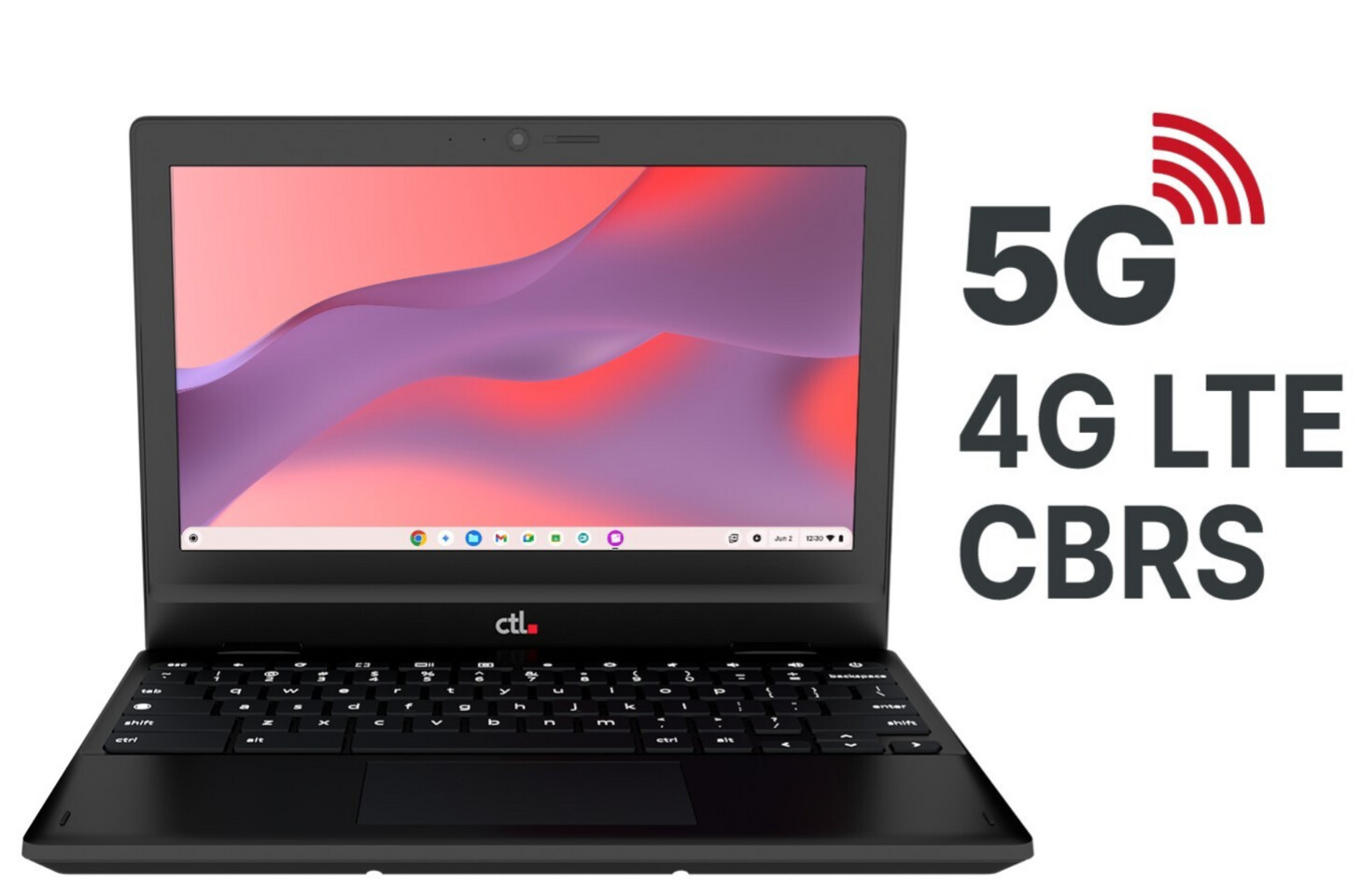
For IT administrators, the built-in connectivity model streamlines device management significantly. Traditional hotspot solutions required separate tracking, security updates, and conflict resolution between household networks and educational traffic. With everything integrated, schools can manage connectivity through Google Admin console alone, reducing vulnerabilities associated with external hardware. However, CBRS implementation does require coordination at the district level, which may pose adoption hurdles for smaller institutions or those without existing private network infrastructure.
CTL’s approach to EdTech deployment has historically emphasized practicality and sustainability. The PX112C Series continues this tradition with bulk packaging options, recycled materials in construction, and integrated lifecycle services that include student-friendly repair programs. Availability is targeted for mid-2026, with initial focus on virtual learning initiatives where reliable off-campus connectivity is most critical.
The potential impact extends beyond logistical improvements. Schools serving underserved communities or supporting hybrid/virtual models stand to benefit the most from this solution. Success will depend largely on whether 5G certification materializes as scheduled—without it, districts may need to rely exclusively on CBRS for now. If both paths prove viable, the PX112C Series could become a standard-bearer for equitable digital access in education.