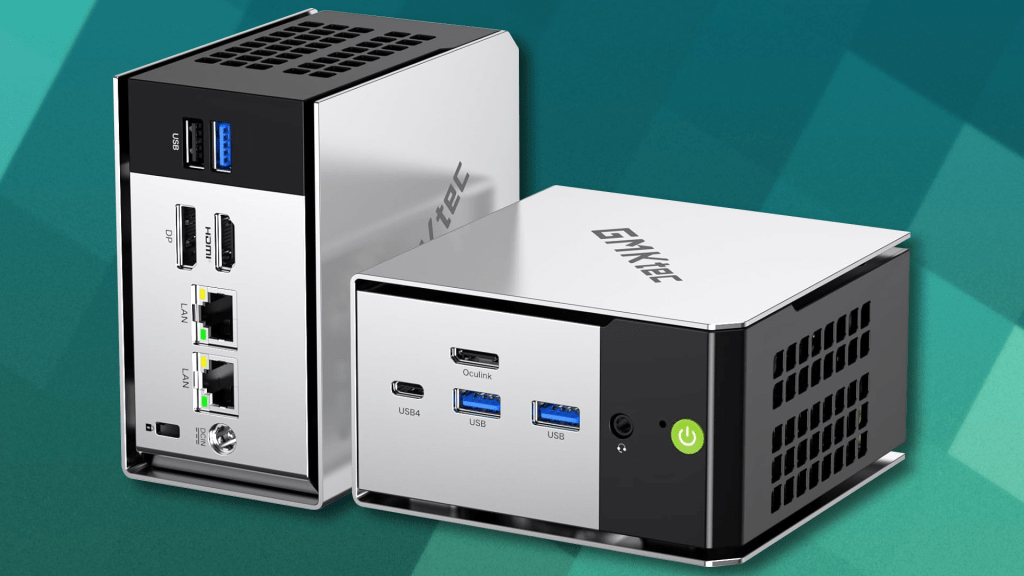
A compact yet powerful mini PC is redefining the boundaries of desktop computing, particularly for developers and engineers. This device crams impressive performance into a footprint measuring just 200 x 200 x 50 mm, featuring a quad-core Ryzen processor that can reach up to 3.7 GHz, paired with 16GB of DDR4 RAM and Radeon Vega 8 graphics. Its all-metal chassis not only enhances durability but also ensures efficient thermal management without the need for excessive noise.
- Processor: AMD Ryzen (quad-core, up to 3.7 GHz)
- RAM: 16GB DDR4 (expandable)
- Storage: 512GB NVMe SSD
- Graphics: Radeon Vega 8
- Ports: USB-C, HDMI 2.0, Gigabit Ethernet, dual USB-A
- Price: $390
The design of this mini PC is a study in functionality and aesthetics. Its all-metal construction eliminates the need for noisy fans while maintaining performance under sustained workloads, thanks to an integrated dual-fan cooling system. The inclusion of a 512GB NVMe SSD ensures rapid boot times and smooth multitasking, though users with larger data needs may require external storage solutions. The device's compact form factor makes it ideal for environments with limited space, without compromising on power or efficiency.
Performance is where this mini PC truly excels. It effortlessly handles simultaneous tasks such as code compilation, light rendering, and small-scale AI model execution. The balance between performance and energy consumption is striking, making it a practical choice for developers who need agility without sacrificing capability. While it may not match the raw power of high-end workstations, its efficiency and affordability position it as a strong contender in the compact computing segment.
Priced at $390, this mini PC challenges the conventional notion that powerful computing requires a bulky footprint. It bridges the gap between affordability and high-performance workloads, offering a seamless blend of connectivity, efficiency, and adaptability. For those working in constrained spaces or needing a secondary system for development tasks, it proves that even the smallest form factors can deliver significant computational muscle.