The RTX 5090 is already one of the most powerful GPUs on the market, but its connector design is now drawing scrutiny after multiple high-profile incidents. What started as a curiosity about the unusual three-connectors-per-slot setup has turned into a conversation about reliability—one that could influence how IT teams approach next-gen workstations.
The issue isn't just about aesthetics or cable management; it's about whether this design, which includes two 16-pin connectors and one 8-pin, is more prone to failure under real-world conditions. Early adopters and tech reviewers are split: some see it as a bold but risky innovation, while others argue it’s simply a case of bad luck for those who’ve already tried it.
Why the RTX 5090’s Connectors Matter
The RTX 5090 doesn’t just push performance boundaries—it also redefines how power is delivered to a GPU. Traditional designs rely on a single 12-pin connector (or two 8-pin connectors in dual-slot setups), but NVIDIA’s approach here is different: three connectors per slot, with the middle one handling an additional 8 pins. On paper, this allows for up to 750 watts of power delivery, which is necessary for a card that can draw over 600 watts under load.
- Power Connectors: Three connectors per slot (two 16-pin + one 8-pin).
- TDP: Up to 750W (though real-world usage may not always hit this peak).
- Cooling: Dual-fan or triple-fan designs, depending on the manufacturer.
- Memory: 24GB GDDR6X, 192-bit bus width.
- Performance: Estimated to be around 30% faster than RTX 4080 in raw compute tasks.
The problem isn’t the theoretical maximum—it’s whether this setup holds up in practice. Some users report that the connectors can become loose over time, especially if the GPU is mounted in a case with limited cable clearance. Others note that the additional pins increase the risk of misalignment or accidental disconnection during installation.
Is It a Flaw or Just Bad Luck?
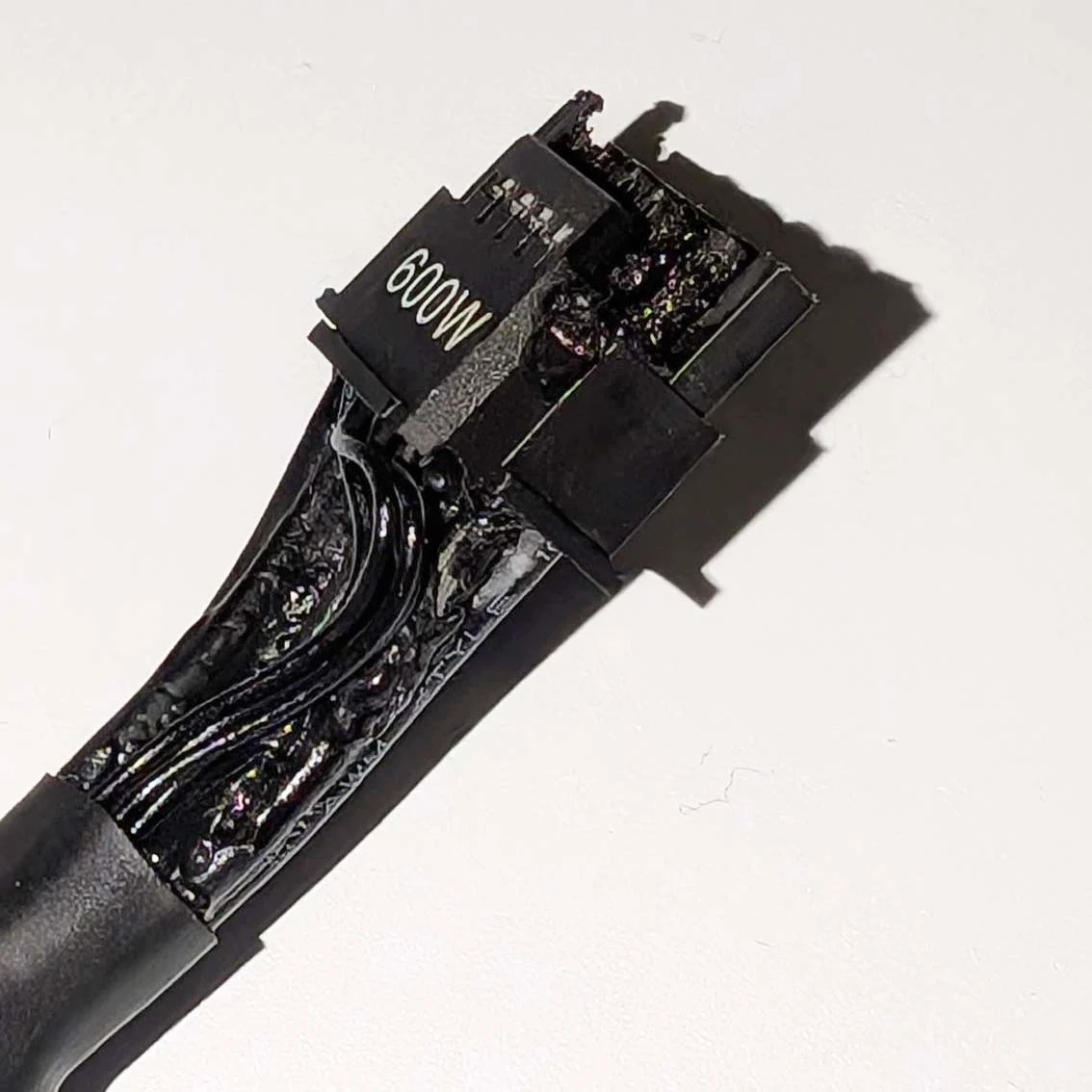
That’s the upside—here’s the catch: while some failures may be isolated incidents, others suggest a pattern. For example, one widely shared video showed a connector burning out after just a few hours of use, which is far from typical for even high-power GPUs. Another report highlighted cases where the connectors failed to seat properly, leading to system instability or shutdowns.
For IT teams managing workstations, this isn’t just about individual components—it’s about system stability and uptime. A GPU that requires careful handling during installation, or one that shows signs of wear after prolonged use, could become a liability in high-availability environments. The question then becomes: is this a design flaw, or is it simply that the RTX 5090 is pushing the limits of what’s currently feasible with standard connector technology?
NVIDIA has yet to on whether this will be addressed in future revisions, but the conversation is already shaping expectations. For now, users are advised to monitor their systems closely and consider alternative cooling or cable management solutions if they opt for the RTX 5090.