A retractable USB-C cable designed for developers and mobile professionals is pushing the boundaries of multi-functionality by integrating a 20-watt-hour rechargeable battery into a 100-watt power delivery system. The device, with its 6-foot auto-reel cord, promises to eliminate clutter while providing emergency charging capabilities—but whether it can sustain performance under daily use remains an open question.
The cable’s core innovation lies in its dual role: it serves as both a high-speed data transfer and power delivery tool, supporting USB Power Delivery (USB-PD) for compatibility with modern laptops. However, the addition of battery storage introduces engineering challenges that could limit its long-term adoption. The retractable mechanism, while convenient, is prone to wear when subjected to repeated tension or rapid retraction cycles. Meanwhile, heat dissipation becomes a critical factor during extended high-power charging sessions, potentially affecting both performance and longevity.
Market Positioning and Practical Limits
The cable’s 100-watt output is sufficient for most modern devices, but its 20Wh capacity means it won’t replace dedicated power banks for prolonged use. This positions it as a niche solution for users who prioritize portability and multi-functionality over raw performance. For developers working across multiple platforms or in environments with limited outlet access, the cable could reduce reliance on multiple accessories—but only if durability holds up under sustained use.
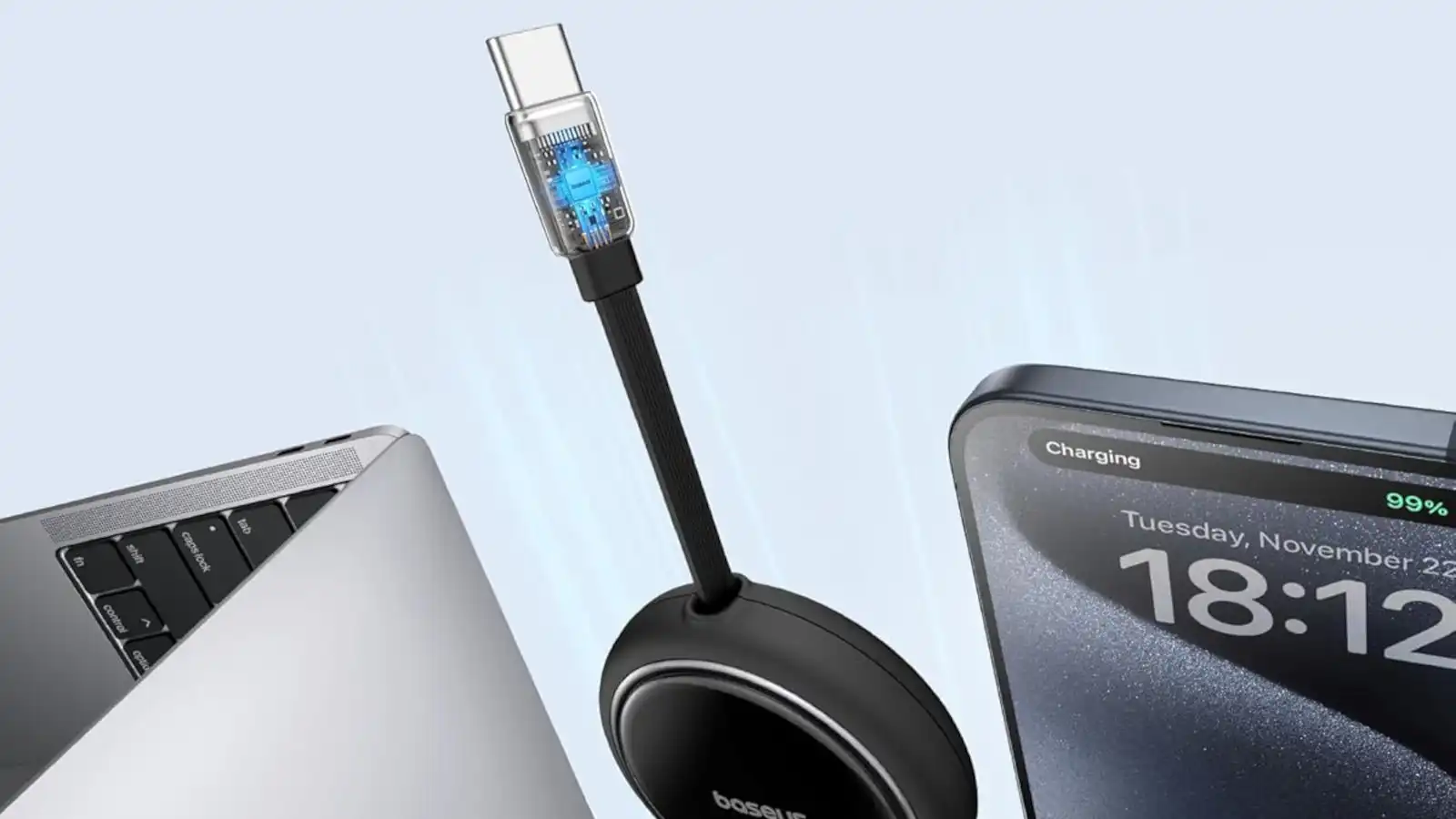
- 100-watt USB-C port with full USB Power Delivery support
- 20-watt-hour rechargeable battery for emergency charging
- 6-foot retractable cord with auto-reel mechanism
- Weight: 58 grams (excluding battery charge)
The immediate market reaction suggests strong appeal for users seeking space-saving solutions, but the cable’s long-term viability hinges on addressing durability concerns. If the retractable design and battery integration prove robust in real-world testing, it could set a precedent for more integrated power solutions. However, without clear evidence of sustained performance, early adopters may find themselves balancing convenience against potential tradeoffs in reliability.
Looking Ahead
The cable’s success will depend on whether future iterations can increase battery capacity without significantly impacting weight or cost. If it does, this could evolve into a more versatile tool for power management. For now, its role remains limited to emergency charging scenarios, making it a supplementary rather than primary solution for most users.
As the tech industry continues to demand lighter, more functional peripherals, this cable serves as both a test case and a potential blueprint for future designs. Whether it becomes a staple accessory or fades into obscurity will be determined by its performance in the field—particularly how well it handles the dual demands of retractability and power delivery over time.