When HP launched its Snapdragon X Elite laptop at $970, it positioned itself as a device for those willing to trade raw processing power for longer battery life. Now, with the price dropped to $700, the question isn’t just about whether efficiency can replace performance—it’s whether the savings make that tradeoff worthwhile.
The Snapdragon X Elite platform, with its 12-core CPU and Adreno GPU, is built for efficiency above all else. That means up to 16 hours of video playback on a single charge, but also limitations when it comes to sustained workloads like video editing or 3D rendering. For power users who spend more time on the road than chained to an outlet, this laptop’s design and display become just as important as its internals.
The 14-inch OLED screen is a standout, delivering 2560x1600 resolution at 90Hz without the dimness that often plagues ultraportable displays. The magnesium alloy frame keeps weight in check while adding durability, making it a practical choice for those who prioritize portability.
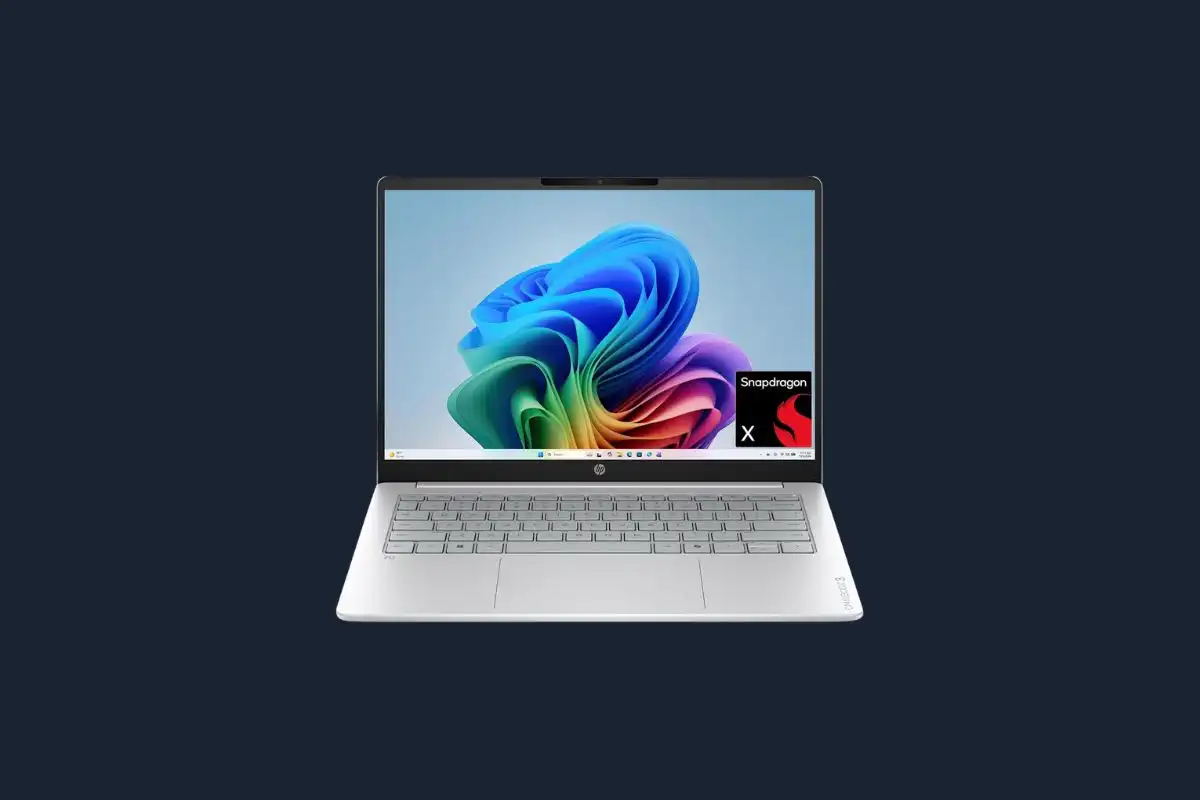
- Display: 14-inch OLED, 2560x1600 resolution, 90Hz refresh rate
- Chipset: Qualcomm Snapdragon X Elite (12-core CPU + Adreno GPU)
- Memory: 16GB LPDDR5X
- Storage: 512GB PCIe Gen4 SSD
- Battery: Up to 16 hours video playback, 90W fast charging
- Ports: Thunderbolt 4 (USB-C), USB-A, microSD card slot, 3.5mm audio jack
- Connectivity: Wi-Fi 6E, Bluetooth 5.2, dual-band 2x2 MIMO
The $700 price is a significant drop from the original $970, but it’s worth considering whether the savings justify the compromises. The Snapdragon X Elite isn’t as fast as Intel or AMD chips in single-threaded tasks, and sustained workloads will drain the battery faster than traditional x86 laptops. However, for note-taking, web browsing, and light creative work, this laptop delivers smooth performance without the need for a power adapter.
Availability remains limited, but HP has hinted at broader distribution in the coming months. Whether that includes a return to the original $970 price—or stays closer to today’s discounted rate—is still unclear. For now, it’s a test of whether efficiency can outweigh raw power for the average power user.