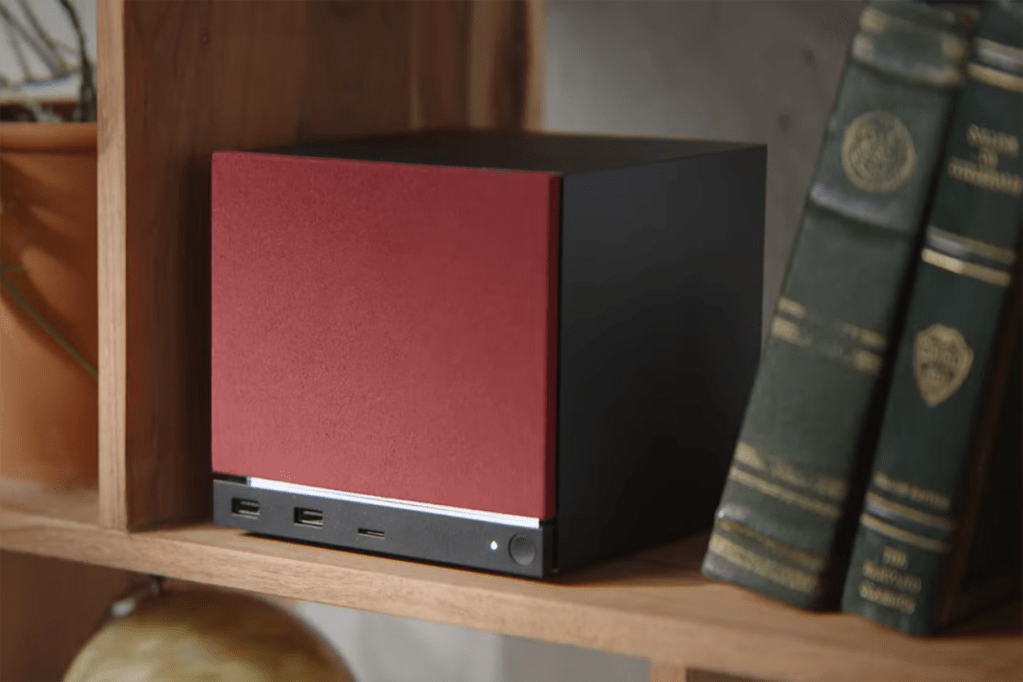
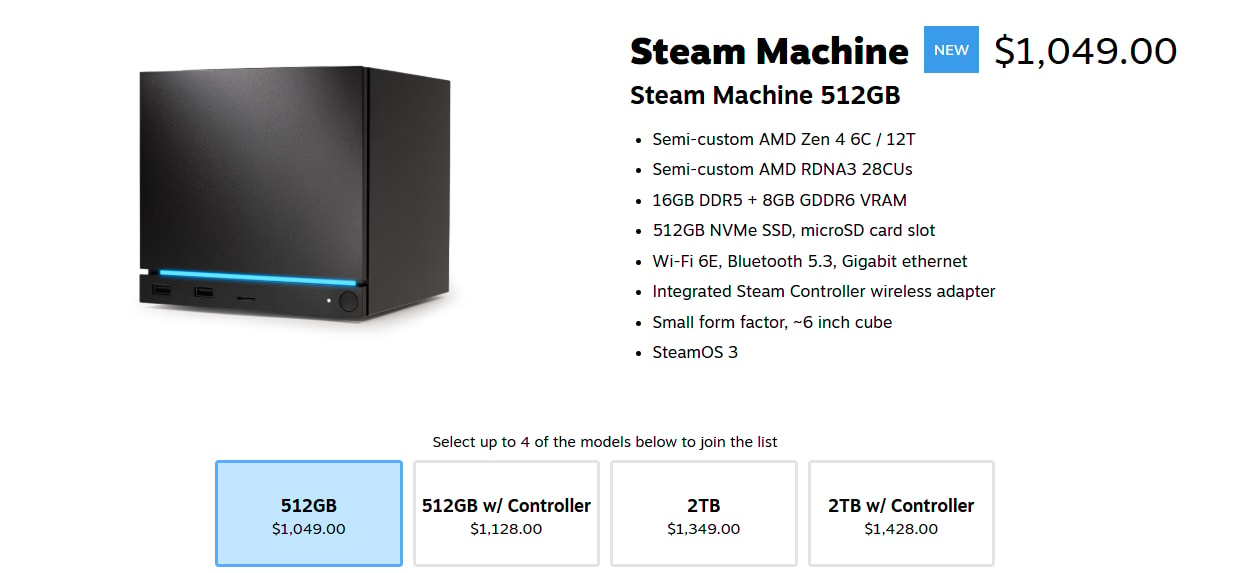
For small businesses looking to expand their gaming setups without breaking the bank, Valve's latest announcement might feel like a mixed bag. The company has officially unveiled pricing and pre-order details for its Steam Machine, a device designed to bridge the gap between console and PC gaming. However, the starting price of $1,049 for the base model—paired with only 512 GB of storage—could leave some wondering if this is truly a step forward or a costly experiment.
The Steam Machine isn't just another gaming box; it's Valve's attempt to redefine how we think about hardware, combining the convenience of a console with the power and flexibility of a PC. But with the 2 TB model jumping to $1,349—a difference that rivals the cost of mid-range NVMe SSDs—questions linger about its value proposition. Is this the future of gaming, or is it a niche product for enthusiasts willing to pay a premium?
Key Specs and What They Mean
- Storage: 512 GB (base) / 2 TB (premium)
- Ports: HDMI 2.1 for next-gen displays
- Bundles: Includes Steam Controller at an additional cost
- Price: $1,049 (512 GB) / $1,349 (2 TB)
The 512 GB model is particularly striking when compared to current market standards. While it may suffice for lightweight games or those with cloud-saving options, the jump to 2 TB adds nearly $300—a price that could be allocated elsewhere in a custom PC build. The inclusion of HDMI 2.1 support is notable, though its real-world impact depends on whether software developers fully optimize for this feature.
Why It Matters for Small Businesses
For small businesses, the Steam Machine's pricing and storage limitations could pose challenges. While it offers the flexibility to run PC games, the cost of entry is significantly higher than traditional consoles or even mid-range PCs. Additionally, the randomized pre-order system adds an element of uncertainty—customers won't know if they've secured a unit until after the deadline.
Valve's decision to bundle the Steam Controller also raises questions about compatibility and long-term support. The device is designed for both PC and console gaming, but its true potential hinges on how well it integrates with existing software ecosystems. Without strong developer backing, even the most promising hardware can struggle to gain traction.
What's Next: Performance and Platform Lock-In
The bigger question remains: will the Steam Machine live up to Valve's claims of outperforming 70% of current gaming PCs? Early benchmarks suggest it may deliver solid performance, but real-world testing is needed to confirm whether this holds across a variety of games. For small businesses, the risk of platform lock-in also looms—if Valve doesn't maintain strong software support or if third-party developers shy away, the device could become a costly footnote in gaming history.
Availability isn't guaranteed either. Pre-orders close on June 25th, but Valve's randomized selection process means not everyone will get a unit. For those who do, the experience might be worth it—but for now, the high price tag and uncertain future leave many wondering if this is a step forward or a leap of faith.