Wikipedia’s labyrinthine structure has always been its strength: one article leads to another, and another, spiraling into rabbit holes that can swallow hours of reading time. Now, a fresh browser extension called WikiRoulette takes that experience to the next level by removing the need for manual navigation entirely.
Instead of following links or searching for related topics, users land on a completely random Wikipedia page when they visit the site. From there, they can click ‘Next’ to jump to another randomly selected article, dive into the original source via ‘View on Wikipedia,’ or continue exploring through internal links—all while maintaining a sense of controlled spontaneity.
This approach sidesteps the natural tendency to follow thematic trails, which often keeps readers within a specific subject. WikiRoulette’s randomness ensures that users encounter topics they might never seek out on their own—a feature that could be both a time-sink and an educational adventure.
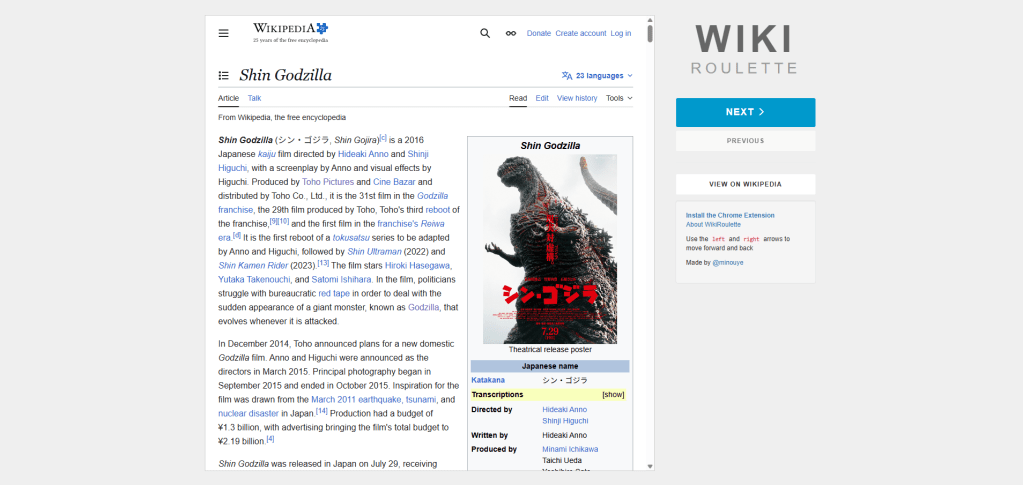
The tool’s simplicity belies its potential impact. By eliminating the need to choose between articles, it removes the pressure of decision fatigue while still allowing for deep dives when curiosity strikes. Whether the result is learning about obscure historical events or niche scientific concepts, the experience is designed to feel organic rather than forced.
For users accustomed to structured browsing, WikiRoulette introduces a new layer of unpredictability—one that could appeal to those who enjoy serendipitous discovery. The challenge lies in balancing randomness with usability; if the jumps are too abrupt, the experience loses its charm. But for now, it stands as a playful yet functional way to explore one of the internet’s most comprehensive knowledge bases.
In the long run, tools like this could redefine how people engage with large-scale informational resources, blurring the line between passive consumption and active exploration. Those who thrive on curiosity over control may find it the perfect companion for idle browsing.