A single sign-on solution now bridges the gap between human cloud administrators and AI-driven operations, promising to simplify complex enterprise environments. The system integrates identity verification across multiple cloud providers while maintaining granular access controls—critical for organizations scaling both human and automated workloads.
Key specifications include support for up to 10,000 concurrent sessions per tenant, sub-50ms authentication latency, and compatibility with existing IAM frameworks. The platform also introduces a new 'workload identity' model that dynamically adjusts permissions based on task type—whether executed by a person or an AI agent.
- Unified authentication for human and AI operations
- Multi-cloud support with consistent policy enforcement
- Sub-50ms latency for session establishment
- Integration with OAuth 2.1, OpenID Connect, and SAML 2.0
The shift toward unified cloud control reflects broader trends in enterprise IT, where AI agents are increasingly treated as first-class citizens alongside human users. Traditional identity models often treat automation differently—either over-provisioning access or creating silos for non-human workloads. This approach aims to eliminate those friction points by treating all identities uniformly under a single framework.
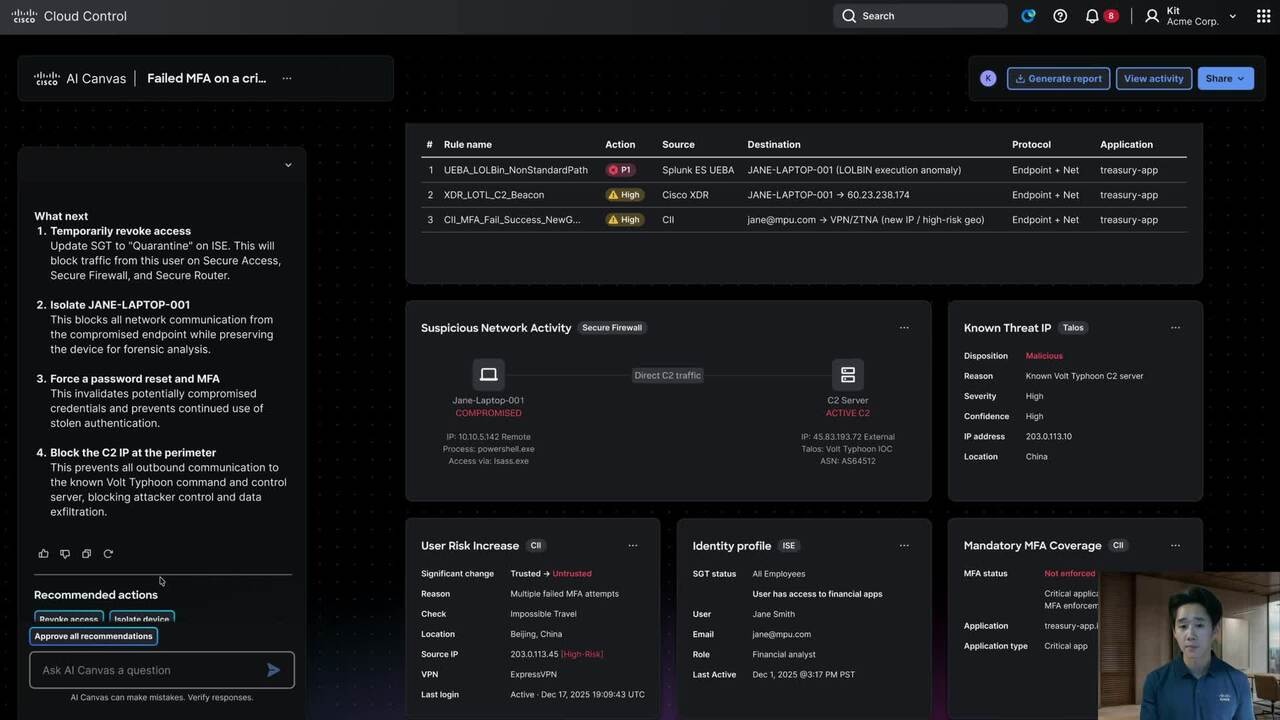
Implications stretch beyond authentication. Organizations managing hybrid cloud setups will benefit from centralized logging and auditing, reducing the complexity of tracking actions across disparate systems. For AI-driven operations—such as automated provisioning or self-healing infrastructure—the platform ensures that agents can act within predefined boundaries without requiring manual intervention.
What’s confirmed: full multi-cloud support, performance metrics, and immediate availability for new deployments. What remains uncertain: long-term adoption by legacy systems and how the workload identity model will scale with increasingly complex AI tasks.