Asetek's new Emma V3 (Gen10) platform is set to redefine liquid cooling for AI workstations, but its full impact will depend on how it balances performance with cost. The platform's advanced cold plate design promises measurable improvements in thermal efficiency and noise reduction, yet the lack of concrete details leaves much of its market potential speculative.
At Computex 2026, Asetek highlighted the Emma V3 as a solution tailored for AI workloads, emphasizing its ability to manage modern CPU hotspot behavior. The platform's dual-offset design and optimized retention kits suggest a focus on system integration flexibility, but without clear benchmarks or real-world testing, its advantages remain theoretical.
- Emma V3 (Gen10) platform with 4 mm offset cold plate
- 1.5°C reduction in thermal resistance under typical TDP workloads
- 45% reduction in perceived acoustic volume
- Dual-offset design with micro-channel grooves for improved heat dissipation
The partnership between Asetek and Chunqiu Electronic (CQ) adds another layer to the platform's potential. CQ's manufacturing scale could address supply chain concerns, but whether this translates into stable pricing or widespread availability is still unclear.
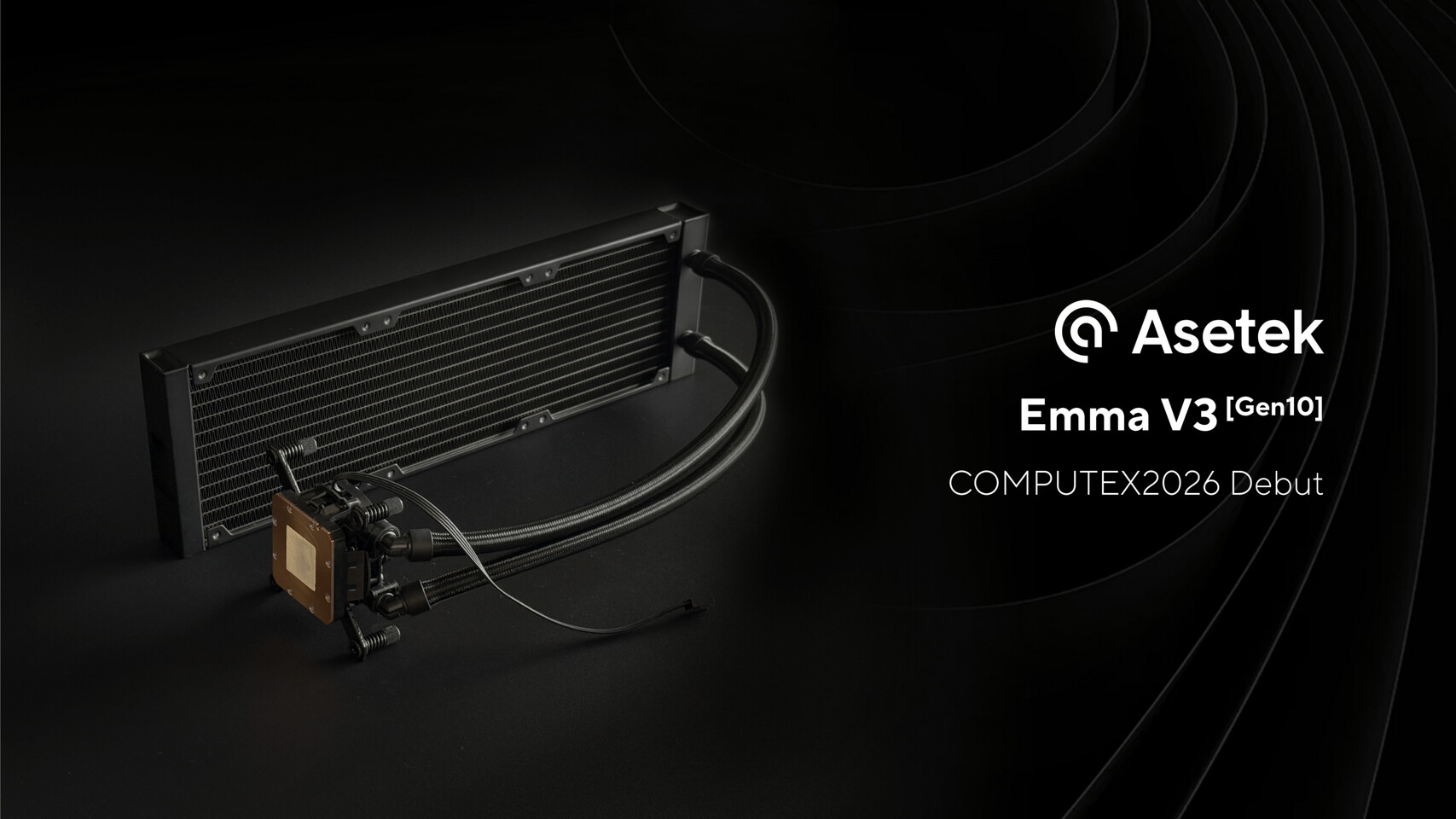
While Asetek isn't the only player in the AI workstation cooling space—competitors like NZXT and ADATA are also making strides with their own platforms—the Emma V3's focus on extreme TDP handling (450 W) sets it apart. Its 100% full Integrated Heat Spreader (IHS) coverage design is particularly notable, as it aligns with the needs of high-density computing solutions.
For now, the platform's debut through ASUS ROG and TRYX ecosystem implementations offers a glimpse into its capabilities, but the broader market will need more than technical specs to gauge its success. The question remains: Will these advancements justify the cost for AI enthusiasts and professionals, or will they remain a niche offering?