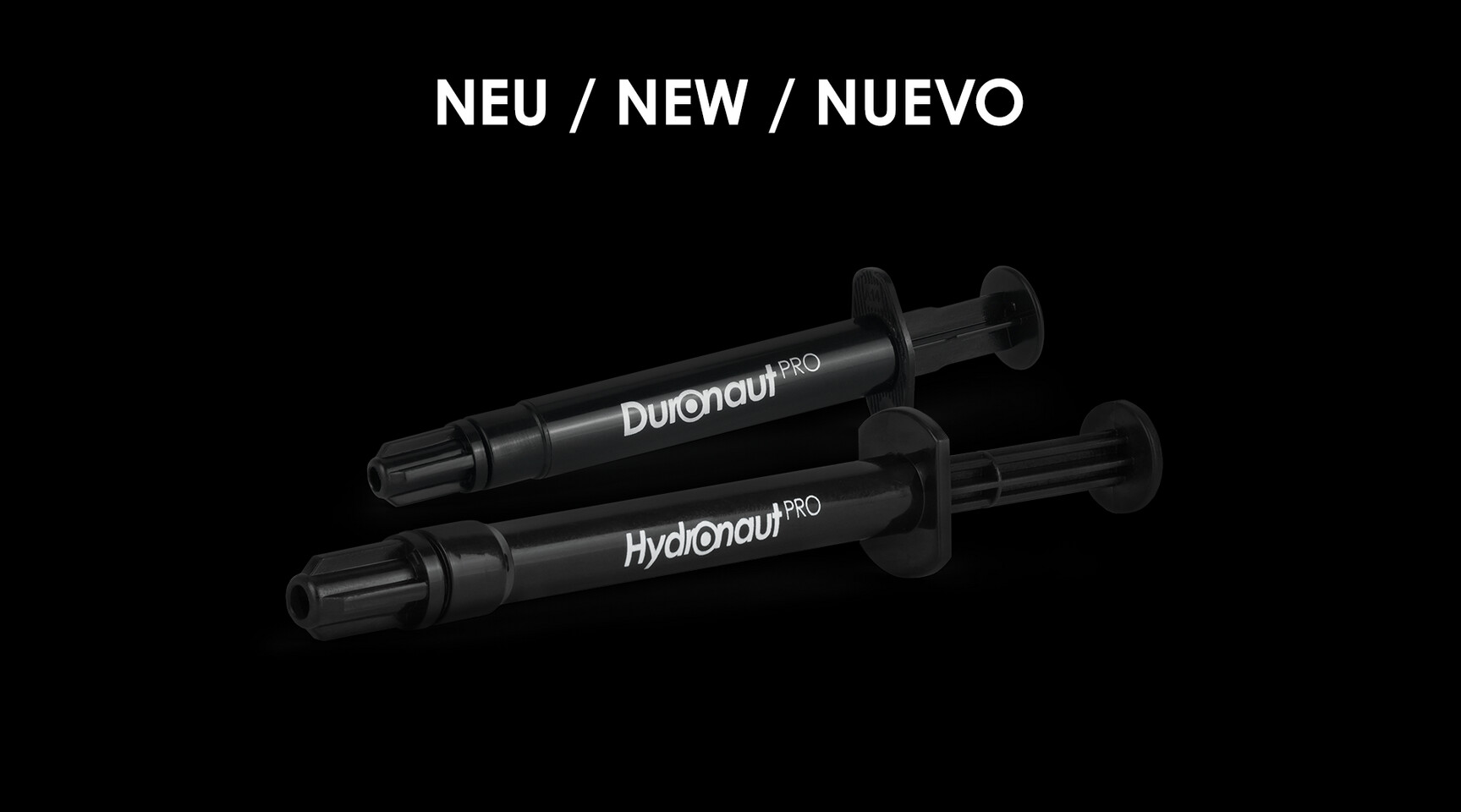
Thermal interface materials (TIMs) are often overlooked, but their role in maintaining system stability is undeniable. Thermal Grizzly's latest offerings, Duronaut Pro and Hydronaut Pro, take this further by addressing not just immediate thermal conductivity but also the long-term challenges that plague even the most advanced cooling setups.
Duronaut Pro stands out for its ability to sustain performance over extended periods. Traditional thermal pastes often degrade when subjected to prolonged heat cycles, leading to increased thermal resistance and potential system instability. Duronaut Pro mitigates this with a carefully engineered particle composition—aluminium micropowder and zinc oxide nanopowder—that minimizes the pump-out effect. This means less displacement of paste from critical contact zones under high pressure, ensuring consistent cooling even in demanding scenarios like 24/7 gaming or heavy workloads.
Industrial-Grade Reliability Without Compromise
Hydronaut Pro, on the other hand, redefines what it means to be industrial-grade. Unlike its predecessors, it eliminates silicone from its carrier structure entirely, a bold move given that silicone oils are the industry standard for adhesion and thermal transfer. The result is a paste that avoids material incompatibility issues common in industrial environments, such as seal swelling or degradation when used with materials like EPDM or NBR. This makes it ideal for servers, embedded systems, and other applications where reliability is non-negotiable.
Performance: Small Improvements, Big Impact
- Thermal Conductivity: Both variants show marginal improvements in delta Kelvin (temperature difference) under controlled conditions—typically just a few degrees lower than their predecessors. While these gains may seem minor, they translate to tangible benefits in real-world use, such as reduced throttling and longer sustained performance.
- Long-Term Stability: Duronaut Pro’s silicone oil-based carrier ensures high adhesion even when applied in ultra-thin layers, a critical factor for systems running continuous workloads. Hydronaut Pro matches this stability without the risks associated with silicone, making it a safer choice for industrial applications.
The performance gains are subtle but meaningful, especially in environments where every watt matters. For gamers or content creators pushing hardware to its limits, even slight reductions in thermal resistance can mean the difference between sustained high performance and premature throttling. Meanwhile, Hydronaut Pro’s silicone-free design addresses a long-standing pain point for industrial users: material degradation over time.
Market Implications: A Shift Toward Precision Cooling
The introduction of these two products signals a broader trend in thermal paste development—one focused not just on raw performance but also on solving practical, real-world challenges. Duronaut Pro extends the lifespan of high-end cooling setups without requiring frequent reapplication, while Hydronaut Pro opens new possibilities for industrial applications where material compatibility is paramount.
As thermal paste technology matures, the margins for improvement narrow. Yet these refinements prove that incremental advances can have outsized impact when paired with addressing tangible issues like pump-out effects or industrial-grade reliability. For users who treat their systems as precision instruments—whether in gaming, content creation, or high-reliability computing—this is where the next generation of TIMs will make its mark.
Availability and Adoption
Both Duronaut Pro and Hydronaut Pro are now available, though supply may be limited initially, particularly for Hydronaut Pro due to its niche industrial focus. Pricing details have not been confirmed, but given the specialized nature of these products, they are likely positioned at a premium compared to standard thermal pastes.
For gamers and enthusiasts already using Duronaut, the Pro variant offers an appealing upgrade path—one that promises not just better performance today but also long-term reliability. Meanwhile, industrial users gain a tool that meets their strictest requirements without sacrificing thermal efficiency. The future of cooling lies in precision, and these two products are leading the charge.