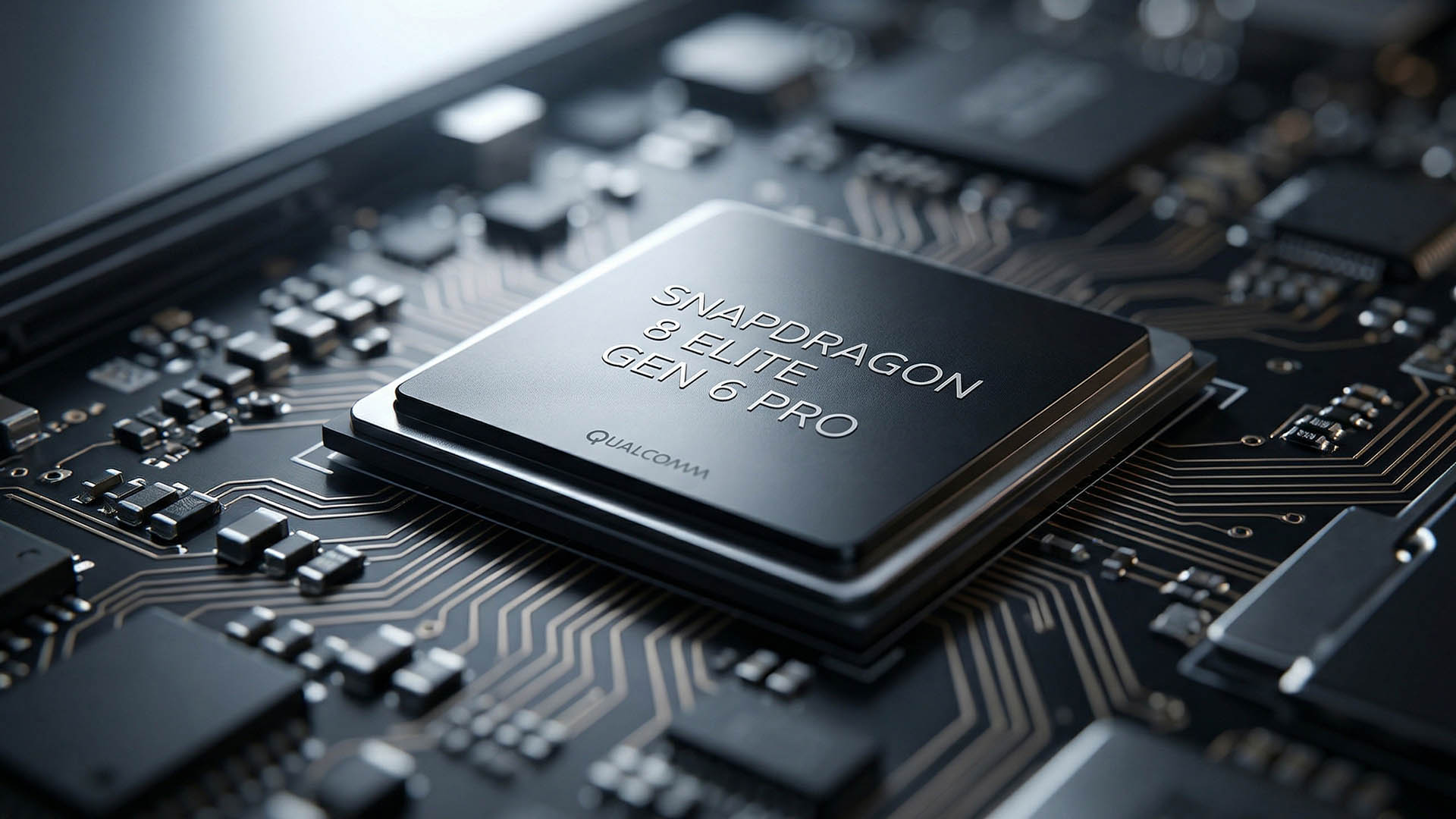
The Snapdragon 8 Elite Gen 6 Pro is breaking with tradition by adopting a two-tiered approach instead of the usual three variants, a change that could reshape how OEMs design flagship devices. While this simplification may reduce production complexity, it also introduces new challenges for enterprise buyers who rely on fine-grained control over performance and thermal management.
Historically, Qualcomm's premium chips have offered three distinct configurations: one optimized for mainstream performance, another for high-end builds, and a third tailored to extreme power or thermal constraints. The Gen 6 Pro, however, eliminates the middle tier entirely. This shift could streamline manufacturing but may also limit OEM flexibility, potentially narrowing the gap between budget and top-tier devices in ways that either accelerate innovation or create market gaps.
Key Specifications
- CPU: 1x Cortex-X4 (3.2 GHz) + 3x Cortex-A720 (2.8 GHz) + 4x Cortex-A520 (2.8 GHz)
- GPU: Adreno 850 (clocked at up to 1.2 GHz)
- Memory Support: LPDDR5X-6750 (up to 32GB) / LPDDR4X-3200 (up to 32GB)
- Storage: UFS 5.0 (up to 1TB)
- Modem: X75 5G (sub-6GHz + mmWave, max 8.4 Gbps DL)
- AI Accelerator: Hexagon 790 (20 TOPS sustained)
The Gen 6 Pro's CPU and GPU represent incremental improvements over the Gen 5 Elite, with the Cortex-X4 maintaining leadership in performance but operating at a slightly lower peak frequency. The AI accelerator is where the most significant advancements appear, now supporting 20 TOPS sustained throughput—a feature that could be more critical for enterprise workloads than traditional gaming benchmarks. However, the absence of a mid-tier variant introduces uncertainty: Will OEMs stretch the high-end version to fill mid-range needs, or will they leave gaps in the market?
Industry Impact
For enterprise customers, this shift could lead to more consistent power and thermal management but at the cost of reduced customization. A two-version strategy works well when demand is stable, but with AI workloads evolving rapidly, the risk of binned parts becoming a bottleneck increases. Qualcomm has not yet clarified whether future generations will revert to three variants, leaving buyers to navigate an uncertain roadmap.
In practice, users may experience smoother performance in AI tasks, such as real-time data processing, but thermal throttling could become more prevalent if OEMs push the high-end version into mid-tier devices. The tradeoff is clear: fewer variants simplify supply chains but may limit long-term adaptability.
Pricing details remain unofficial, but past patterns suggest the Gen 6 Pro will maintain its premium positioning, targeting flagship devices rather than mainstream or budget segments. Whether this strategy proves sustainable remains an open question—one that enterprise buyers should closely monitor as AI demands continue to evolve.