Data centers are no longer just about raw compute. They’re about orchestrating power, cooling, and physical space in ways that push the limits of what’s possible—especially when AI training becomes a daily requirement. A recent deployment has taken this to an extreme: a facility designed to handle 10,000 GPUs, consuming up to 50 MW of power, and requiring cooling systems that can dissipate heat equivalent to a small city block.
This isn’t just a technical achievement; it’s a shift in how AI infrastructure is built. Traditionally, data centers were scaled incrementally, with cooling and power added as needed. But this new model treats the entire system as one integrated challenge—where every watt saved or degree Celsius reduced in temperature translates directly into cost savings for AI creators.
Power and Cooling: The Invisible Constraints
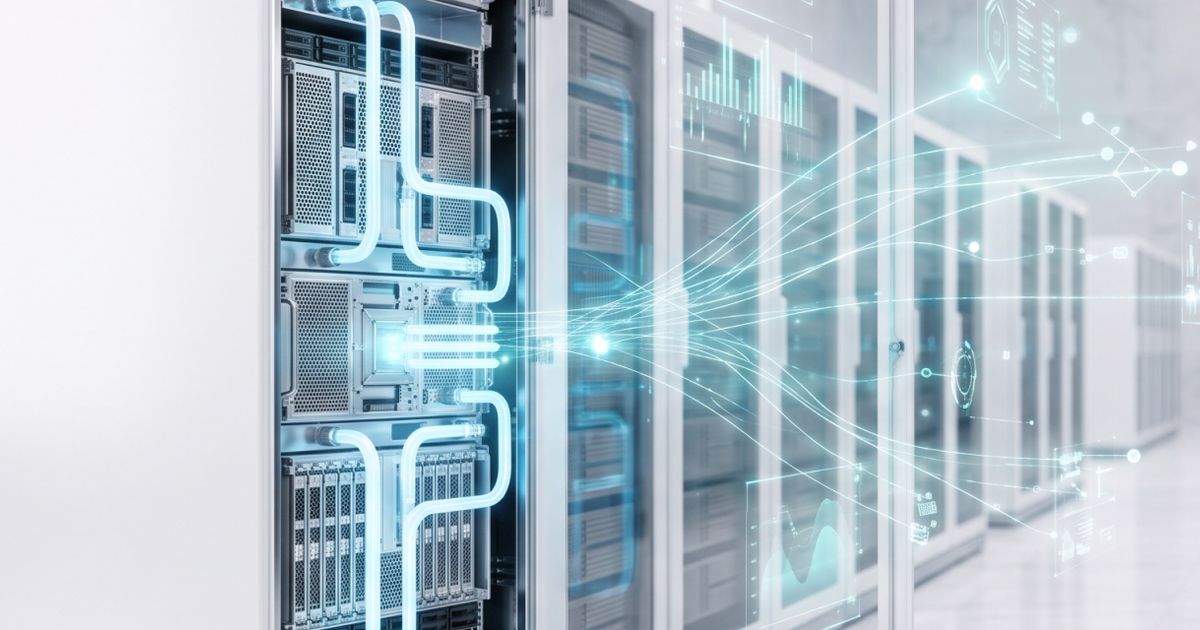
The facility’s power draw is a stark reminder of the reality behind AI’s growth. A single NVIDIA H100 GPU can consume around 700 watts under full load, but when you stack that across thousands of units, the numbers become unmanageable without rethinking the entire power grid. The solution here isn’t just more generators or larger transformers; it’s a hybrid approach that combines liquid cooling, immersion cooling, and even geothermal exchange systems to keep temperatures stable while minimizing energy waste.
For AI creators, this means two things: first, the cost of electricity becomes a primary concern, not just an afterthought. Second, the physical footprint of a data center is no longer just about server racks—it’s about how much real estate you need to house cooling towers, power distribution units, and backup systems. The tradeoff is clear: efficiency gains in compute are often offset by the complexity of managing the infrastructure that supports it.
Who Benefits—and Who Should Skip?
The obvious beneficiaries are large-scale AI research labs, cloud providers, and enterprises running heavy training workloads. These organizations have the budget to justify the upfront costs of such a facility, but they also need the long-term stability that comes with a system designed for this level of scale.
For smaller creators or startups, however, this model may not be practical. The capital expenditure alone—estimates suggest tens of millions just for the initial build-out—makes it inaccessible without significant funding. Even then, the operational complexity (managing liquid cooling loops, maintaining immersion systems, and dealing with geothermal logistics) is a barrier that few can overcome.
The Reality Check: Not All Solutions Scale
Despite the advancements, there are still limitations. Immersion cooling, for example, requires custom hardware designed to operate in liquid environments, which adds compatibility challenges if you’re already invested in traditional air-cooled setups. Geothermal systems depend on local geography, meaning they won’t work everywhere. And while power efficiency has improved with newer GPU architectures, the fundamental problem remains: AI workloads are power-hungry by design.
Where Things Stand Now
The market is still figuring out how to replicate this scale without repeating the same engineering hurdles. Some providers are turning to modular data centers that can be expanded incrementally, while others are exploring alternative cooling methods like evaporative cooling or phase-change materials. For now, though, the benchmark is set: if you’re building an AI factory, you need to think in terms of entire systems—not just individual components.