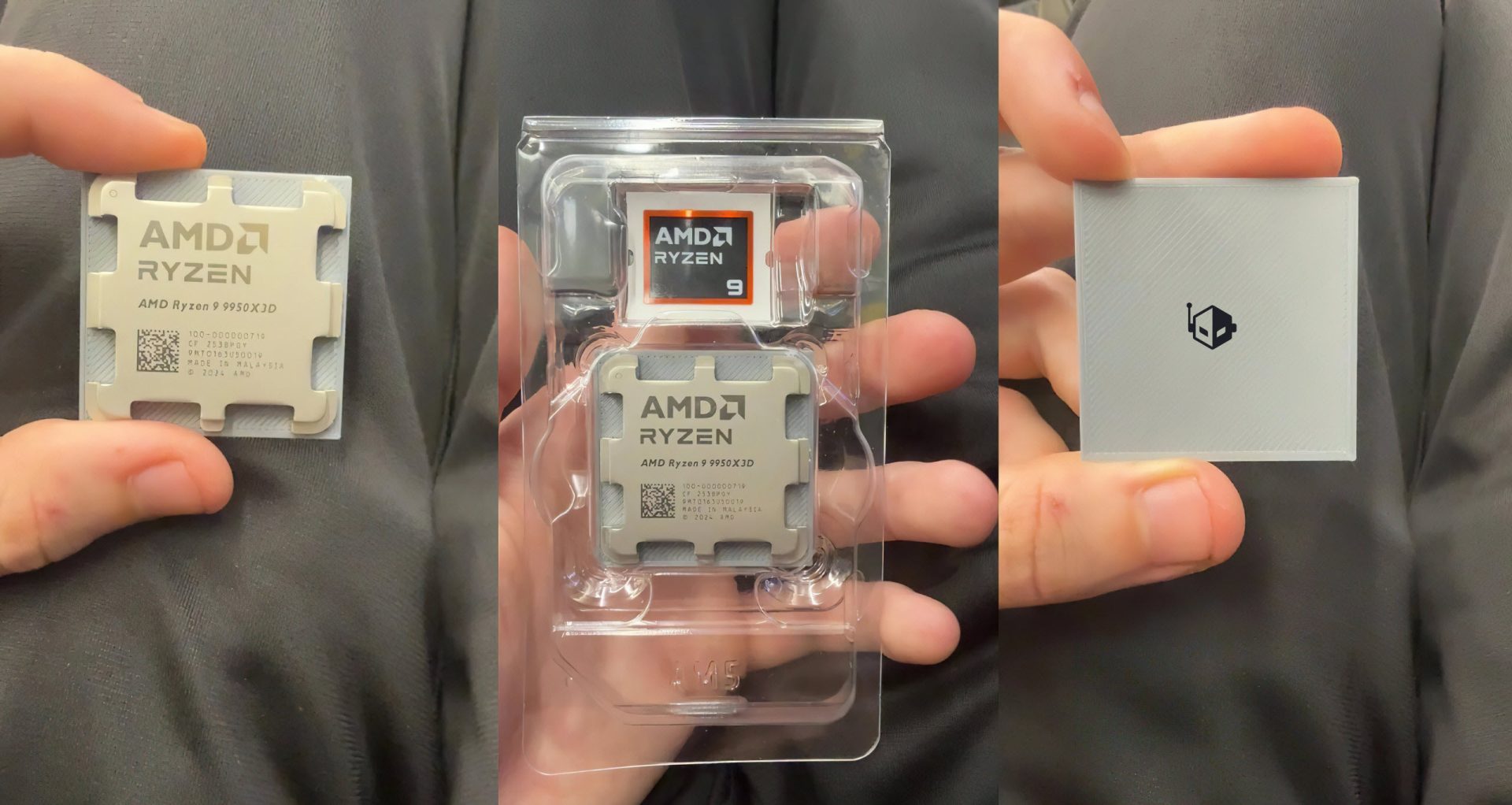
A user recently purchased a Ryzen 9 9950X3D processor, only to discover that the entire CPU die was missing from under its heatsink lid. This unexpected revelation has raised concerns about accessibility, cooling efficiency, and the future of high-performance CPUs.
Traditionally, CPU upgrades or repairs required removing the heatsink to access the die. However, newer processors like the Ryzen 9 9950X3D are being designed with a different approach in mind. The heatsink is now permanently attached, making it nearly impossible for users to remove without specialized tools or causing potential damage.
Connectivity and Ports
The Ryzen 9 9950X3D features a modern approach to connectivity and ports, with a focus on efficiency and performance. The processor is designed to work seamlessly with the latest motherboards, offering improved power delivery and thermal management. However, the permanent heatsink design poses challenges for users who may need to access the CPU die in the future.
Display and Performance
The Ryzen 9 9950X3D is a high-performance processor designed for demanding tasks such as gaming, content creation, and AI workloads. Its 16-core, 32-thread architecture delivers impressive performance, making it a top choice for enthusiasts and professionals alike.
- Chip: Zen 4
- Cores/Threads: 16 / 32
- Base/Boost Clock: 4.5 GHz / 5.7 GHz
- TDP: 120W
- Memory Support: DDR5-3200
- Cache: 96MB L3, 8MB 3D V-Cache
The Ryzen 9 9950X3D's performance is a significant leap forward from its predecessors. The inclusion of 3D V-Cache technology enhances multi-threaded performance, making it ideal for tasks that benefit from large cache sizes. However, the permanent heatsink design may limit its longevity and upgradeability.
Real-World Implications
The Ryzen 9 9950X3D's heatsink design is a double-edged sword. On one hand, it offers improved cooling performance and power efficiency, which are crucial for high-performance workloads. On the other hand, users may find themselves unable to access the CPU die without specialized tools or risking damage to the processor.
This trend towards permanent heatsink designs is not limited to AMD. Other manufacturers are also exploring similar approaches to improve thermal management and power efficiency. However, this shift raises important questions about the longevity and upgradeability of modern CPUs. Users should carefully consider these factors when choosing a new processor, balancing performance gains against potential limitations in accessibility.
As the industry continues to evolve, it will be interesting to see how manufacturers address these concerns and whether alternative solutions emerge that offer both high performance and ease of access for users.