The Razer Blade 18 pushes the boundaries of what a gaming laptop can achieve, blending desktop-level performance with ultraportable design. However, this balance comes with a significant thermal challenge that could reshape how users approach sustained workloads on high-end mobile systems.
Under the hood, the Blade 18 houses an Intel Core i9 processor with up to 24 cores and 32 threads, paired with an NVIDIA GeForce RTX 4090 GPU. This combination delivers performance rivaling desktop setups, but the laptop’s cooling system is taxed under prolonged loads. Unlike conventional gaming laptops, which often prioritize sustained power, the Blade 18’s thermal behavior suggests a need for more strategic workload management to maintain optimal efficiency.
- Intel Core i9-13980HX (24 cores, 32 threads)
- NVIDIA GeForce RTX 4090 with 16GB GDDR6 memory
- 18-inch QHD+ display (3840 x 2160) with 240Hz refresh rate
- Up to 64GB DDR5 RAM and 4TB PCIe Gen 4 SSD storage
The laptop’s design, while sleek and portable, reflects a compromise between raw power and thermal regulation. While it excels in short bursts—such as high-frame-rate gaming or quick-rendering tasks—the system requires careful attention during extended sessions to prevent throttling. This behavior is a reminder that even the most powerful mobile systems have limits, particularly when balancing performance with battery life.
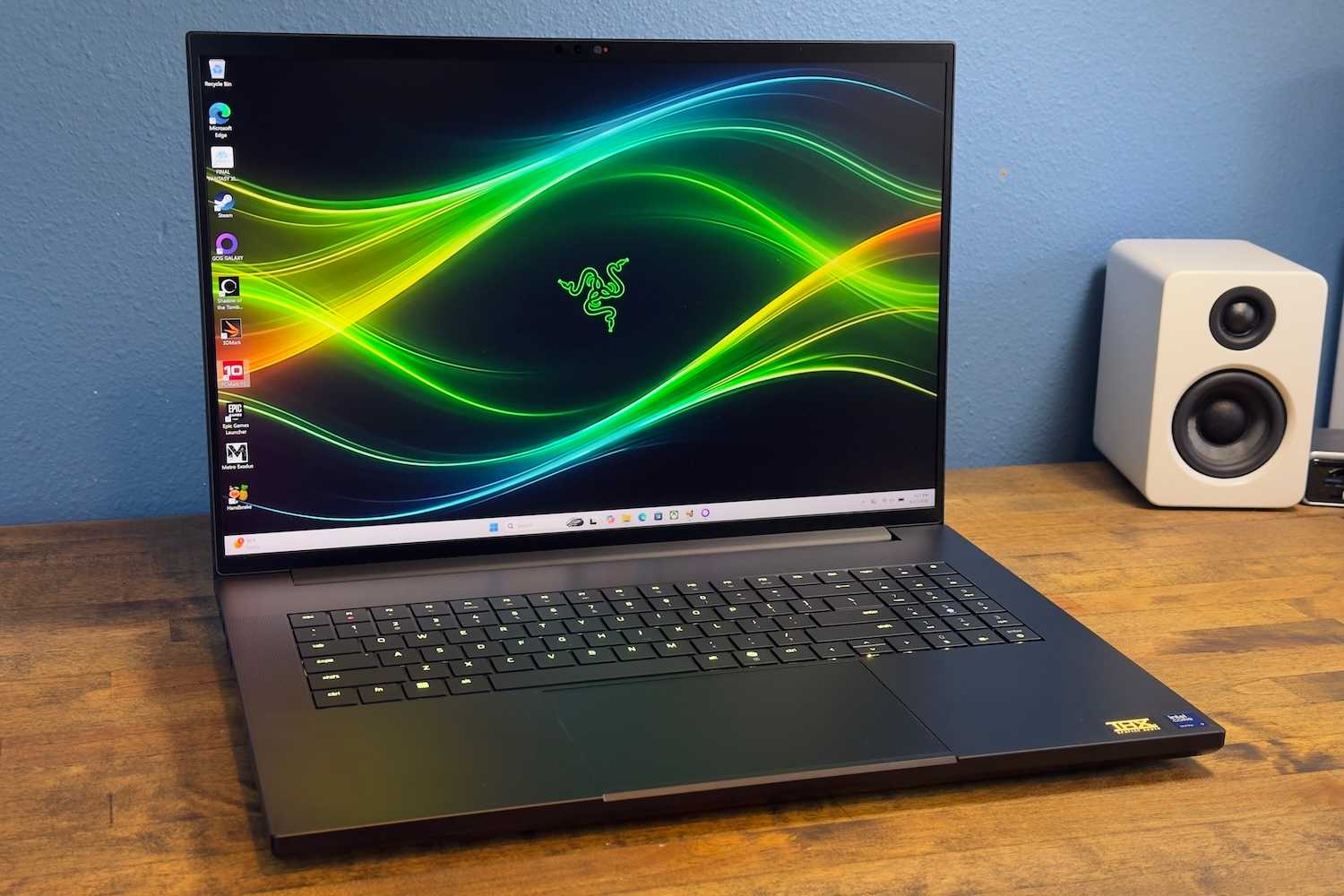
For users who prioritize peak performance over sustained workloads, the Blade 18 remains an attractive option. Its ability to deliver desktop-like frame rates and responsive input makes it ideal for scenarios where bursts of power are more critical than continuous operation. However, those relying on long-duration tasks—such as video editing or 3D rendering—may need to adjust their expectations or consider complementary cooling solutions.
The Blade 18’s introduction signals a shift in how high-performance laptops are evaluated. As processors and GPUs grow more powerful, the challenge for manufacturers will be refining cooling solutions without compromising portability or battery efficiency. For now, the Blade 18 serves as both a benchmark for performance and a test case for thermal management in next-generation mobile systems.