NVIDIA's RTX Remix 1.5 update marks a notable step forward in the company's mission to modernize classic games with advanced rendering techniques. While the framework has long been known for its ability to add full ray tracing and neural rendering capabilities, this latest iteration introduces two key improvements that could change how developers and modders approach game remastering: significantly reduced file sizes and smoother visuals through a new feature called Smooth Normals.
The update's most practical impact may come from its storage efficiency. NVIDIA's RTX IO technology, which offloads tasks from the CPU to the GPU, has been refined with new algorithms that compress game files more effectively. For example, Portal with RTX now requires 17 GB of storage instead of 25 GB, while Half-Life 2 RTX drops from 80 GB to 50 GB. These reductions don't come at the cost of visual quality; in fact, the opposite is true. The updated compression ensures that textures stream faster and with higher fidelity, making load times nearly imperceptible for users who prioritize both storage space and performance.
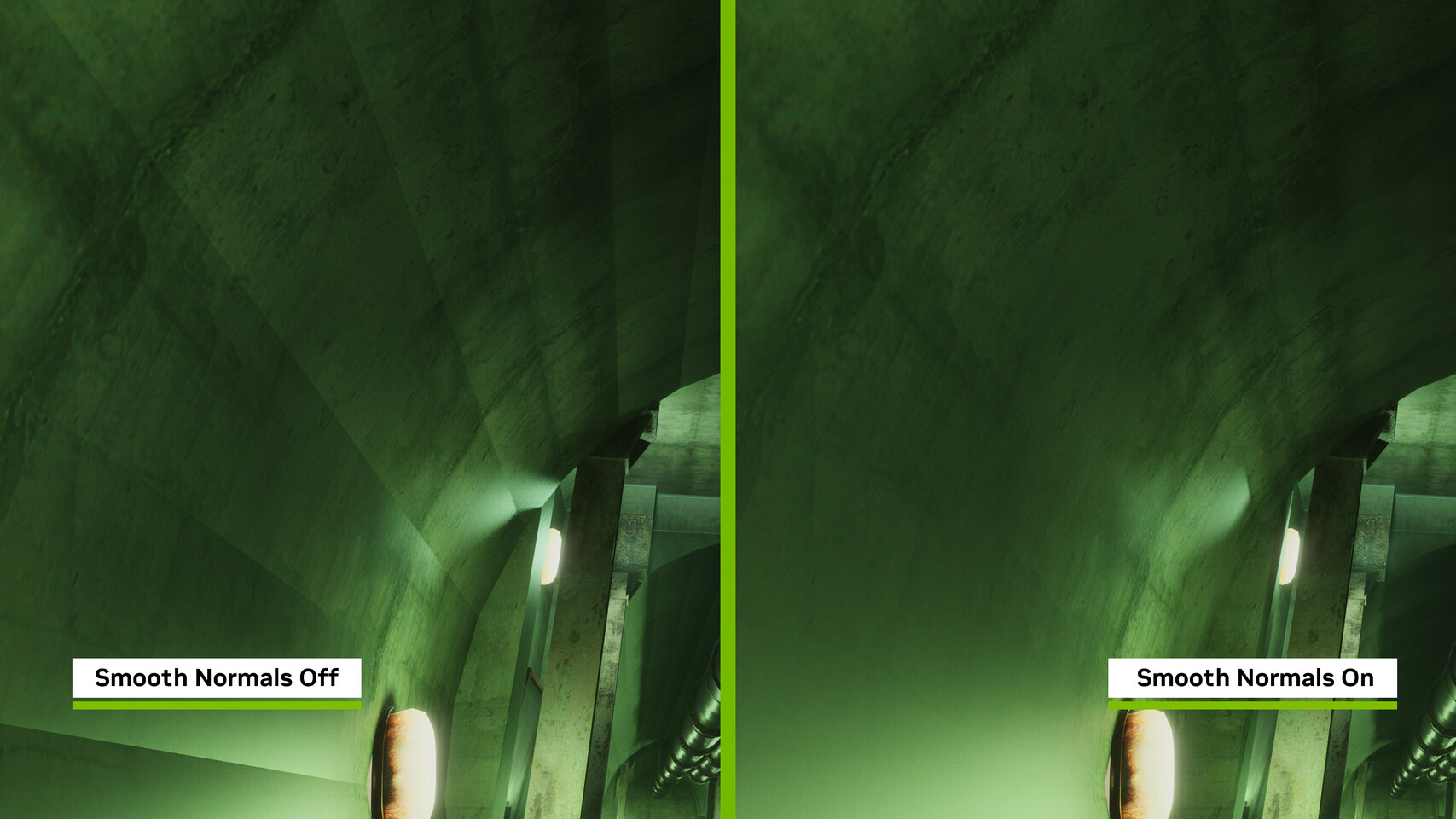
Smooth Normals, a feature highly anticipated by the modding community, addresses one of the most persistent visual artifacts in remastered games: blocky or faceted lighting. Older game assets, designed long before modern rendering techniques were standard, often appear disjointed when ray tracing is applied. RTX Remix 1.5 automates the generation of smooth normals, ensuring that legacy geometry blends seamlessly under path-traced lighting. NVIDIA's demonstration within a concrete tunnel in Half-Life 2 shows the difference clearly—a once-jagged surface now appears as a uniform piece, free from the visual noise that plagued earlier versions.
The update also expands lighting control options for modders, allowing them to experiment with different viewpoints and environmental settings. This flexibility could encourage more community-driven projects, giving developers additional tools to refine their remastered experiences without relying solely on NVIDIA's pre-configured presets.
For users who have been watching the evolution of RTX Remix, this update reinforces a trend: NVIDIA is not just adding features but refining how those features interact with existing systems. The reduction in file sizes, for instance, isn't just about saving space; it's about optimizing workflows for both developers and end-users. Games that once required substantial storage to run smoothly now fit within more manageable footprints, without compromising on the visual enhancements that define modern gaming.
While RTX Remix remains a niche tool—primarily used by modders and developers working on specific titles—the improvements in 1.5 suggest a broader vision for the platform. If future updates continue to balance efficiency with performance, it could become a standard part of the remastering pipeline for older games, making it easier to bring decades-old titles into the era of ray tracing and AI-assisted rendering.