Intel’s Arc A770, a card that launched over three years ago in late 2022, is receiving an unexpected revival through a new driver update. The latest Intel Arc 32.0.101.8509 WHQL release introduces XeSS 3 with Multi-Frame Generation (MFG), a feature that significantly improves frame rates in supported titles—particularly when paired with XeLL (low-latency mode). Testing by PC Games Hardware Germany reveals the A770’s 16GB VRAM now handles modern games more smoothly, though its overall maturity still lags behind NVIDIA’s RTX 2000-series.
MFG, which synthesizes additional frames between rendered outputs, delivers noticeable gains in games like Assassin’s Creed Shadows, Cyberpunk 2077, and F1 ’25 at QHD (2560×1440). The ASRock Arc A770 Phantom OC test sample, while not matching the efficiency of newer GPUs like AMD’s RX 9070 (which offers a 42% 4K uplift over the RX 7900), benefits from reduced stuttering and improved usability. However, MFG isn’t universal—only a select few titles support XeSS, and visual artifacts in Battlefield 6 led reviewers to prefer native rendering or rival technologies like FSR 4 and DLSS 4.5 in some cases.
For users still running the A770, the update offers a practical upgrade path. The card’s 16GB VRAM mitigates texture bottlenecks in newer games, while MFG helps bridge the gap between its Alchemist architecture and more modern alternatives. That said, the A770 remains a niche option—better suited for mid-range workloads than high-end 4K rendering or AI-driven workloads where newer GPUs excel.
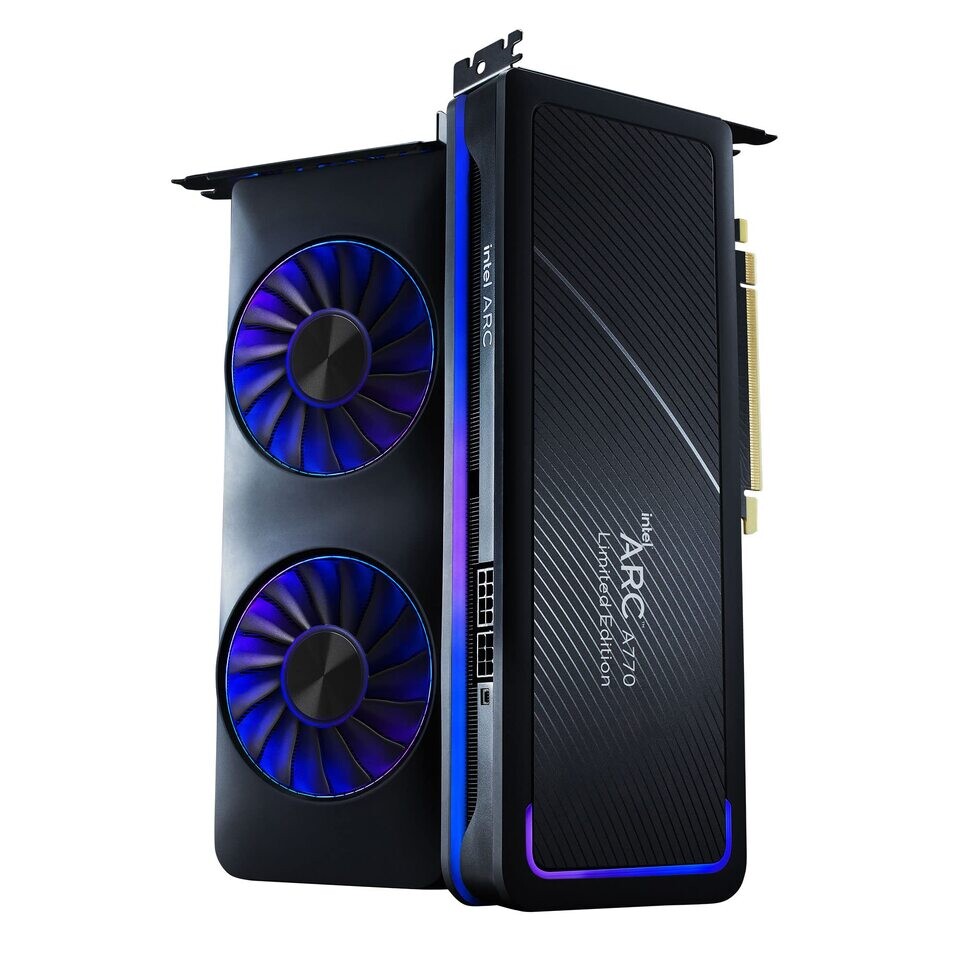
Key Specs
- Architecture: Intel Arc Alchemist (Xe2-HPG)
- VRAM: 16GB GDDR6
- Bus Interface: 256-bit
- Base Clock: ~1.75 GHz (varies by model)
- Boost Clock: ~2.5 GHz
- TDP: ~225W
- API Support: DirectX 12 Ultimate, Vulkan 1.3, OpenGL 4.6
- Ray Tracing: XeSS 3 (with MFG), XeLL (low-latency mode)
- Connectivity: 3x DisplayPort 1.4a, 1x HDMI 2.1
- Price (Launch, 2022): ~$500 (now discounted)
The A770’s revival hinges on software, not hardware. While it lacks the raw power of newer RX 9070 or RTX 2000-series cards, the MFG-enabled driver makes it viable for 1080p/1440p gaming in supported titles. However, power efficiency remains a concern—older GPUs like the A770 generate more heat and consume more electricity than modern alternatives, making them less ideal for compact builds or systems with limited cooling.
Intel’s focus now shifts to newer Battlemage GPUs (e.g., the B580 and upcoming B770), which promise better performance per watt. For now, the A770 serves as a reminder that even legacy hardware can find new life with the right software—though its longevity depends on game developers continuing to optimize for XeSS.