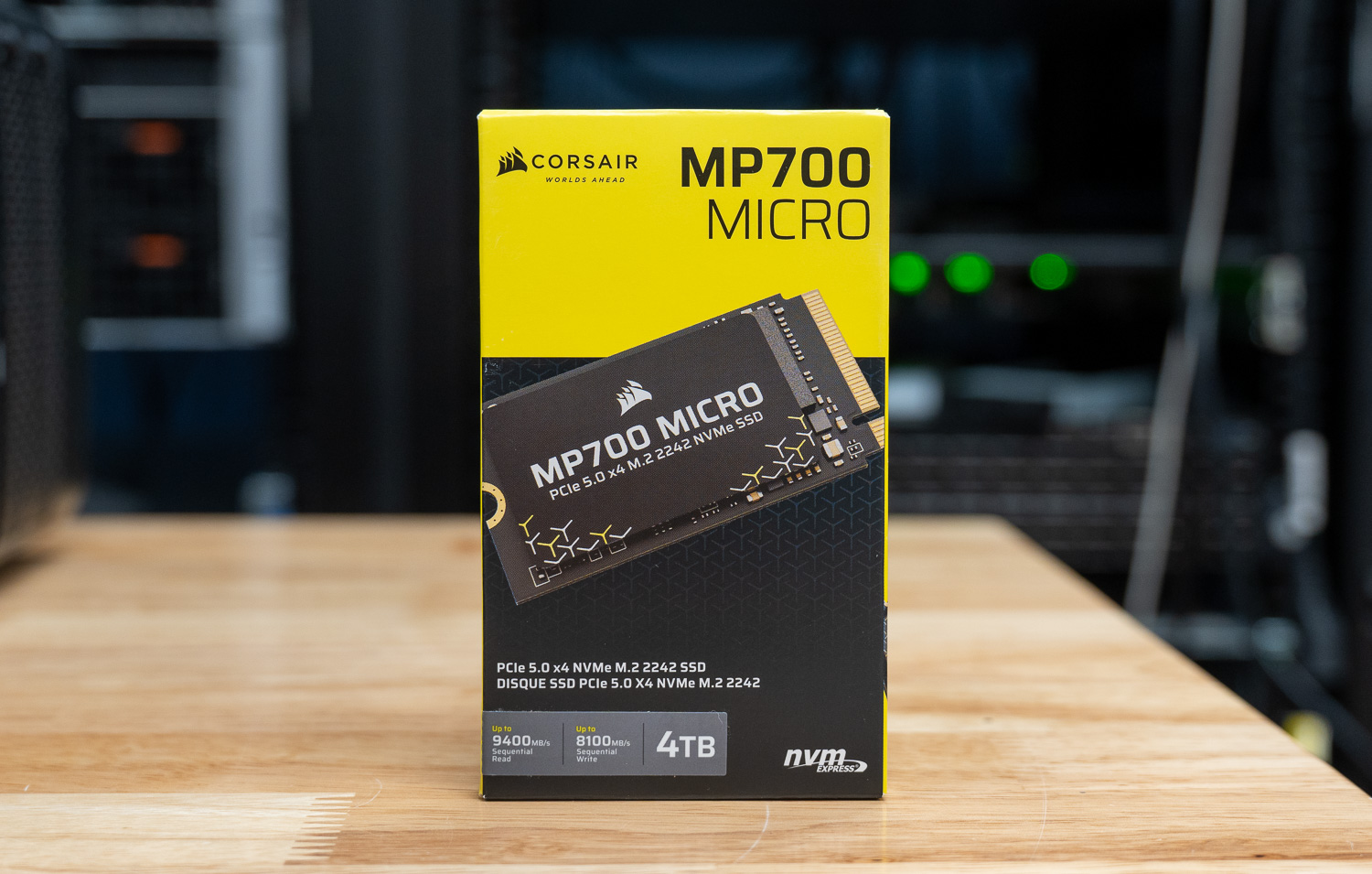
The Corsair MP700 MICRO 4TB is a technical marvel: it packs 3,840 MB/s sequential read speeds into a 2242 M.2 slot—small enough to fit in most laptops but powerful enough for high-end desktops. That compact size, however, comes with engineering tradeoffs that small businesses should weigh before adopting Gen5 SSDs.
At its core, the MP700 MICRO is built around a Phison E18 controller paired with 230-layer TLC NAND. This combination allows it to reach peak read speeds of 3,840 MB/s and write speeds of 3,600 MB/s in Gen5 mode. For comparison, most Gen4 SSDs max out around 7,000 MB/s—meaning the MP700 MICRO is slower but still capable of handling demanding workloads like video editing or large database queries.
That’s the upside—here’s the catch: the tiny form factor limits cooling. The MP700 MICRO runs hotter than larger SSDs, especially under sustained loads. Corsair addresses this with a thermal sensor that throttles performance when temperatures rise, but it’s not as aggressive as solutions found in desktop-oriented drives. For small businesses running 24/7 servers or workstations, this could lead to unexpected slowdowns.
The price reflects these tradeoffs: the 4TB model is priced at $399, which is competitive for Gen5 but significantly higher than Gen4 alternatives. If future-proofing is a priority, the MP700 MICRO makes sense—but only if heat management and long-term endurance align with your workload.
For those who prioritize raw performance over cooling, the MP700 MICRO delivers. It’s not just about speed; it’s about redefining what’s possible in a 2242 package. Whether that translates to real-world productivity gains depends on how you balance heat and cost.