For gamers who need to stay aware of their surroundings without missing critical in-game audio cues, the ASUS ROG Cetra offers a solution that blends performance with practicality. Unlike traditional earbuds that isolate sound, the open design allows ambient noise to reach the ears while still delivering clear, directional game audio—something that could shift how players approach situational awareness during matches.
The ROG Cetra features a dual-driver configuration: a 4mm dynamic driver for rich mids and highs, paired with a 12.6mm balanced armature driver for deep bass response. This setup is powered by a 5.8mm aperture, which ASUS claims improves sound dispersion in open-ear scenarios—a technical choice that may set it apart from competitors relying on standard drivers.
Battery life is rated at 12 hours per charge with ANC enabled, or up to 30 hours in audio-only mode, which aligns with mid-range expectations but leaves room for future improvements. The earbuds also include a low-latency mode optimized for competitive gaming, ensuring that audio syncs precisely with on-screen action—a crucial factor for players who rely on quick reactions.
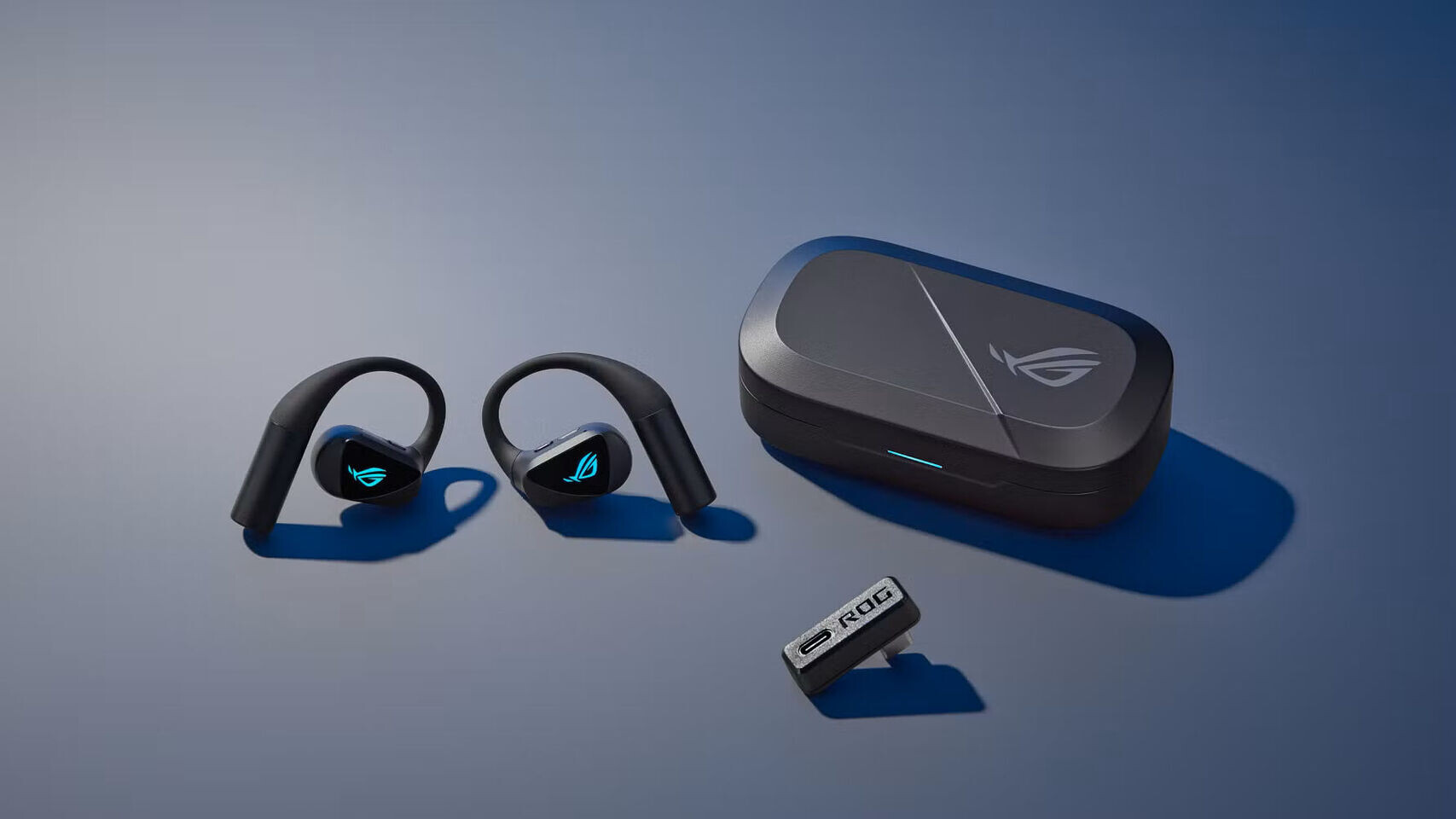
At a price point of $149, the ROG Cetra positions itself in the premium open-ear segment, where features like adaptive noise cancellation (ANC) and AI sound tuning are becoming standard. However, whether these advancements justify the cost compared to wired alternatives or other open-ear models remains an open question for buyers.
What’s still unclear is how well the earbuds perform in noisy environments, such as LAN parties or outdoor gaming setups, where ambient noise can be overwhelming. Early benchmarks suggest strong directional audio clarity, but real-world testing will determine if the open design truly enhances situational awareness without sacrificing immersion.
For those prioritizing future-proofing, the ROG Cetra’s modular connectivity options—including Bluetooth 5.3 and USB-C charging—could extend its lifespan as wireless standards evolve. Yet, the lack of a wired jack may limit appeal for gamers who prefer hardwired setups in high-stakes environments.
Looking ahead, the biggest unknown is whether this design will influence competitors to adopt more open-ear solutions, or if it remains a niche product in an otherwise closed-ear market. If adoption grows, it could signal a broader shift toward audio that balances immersion with real-world awareness—a trend worth watching as gaming spaces become more diverse.