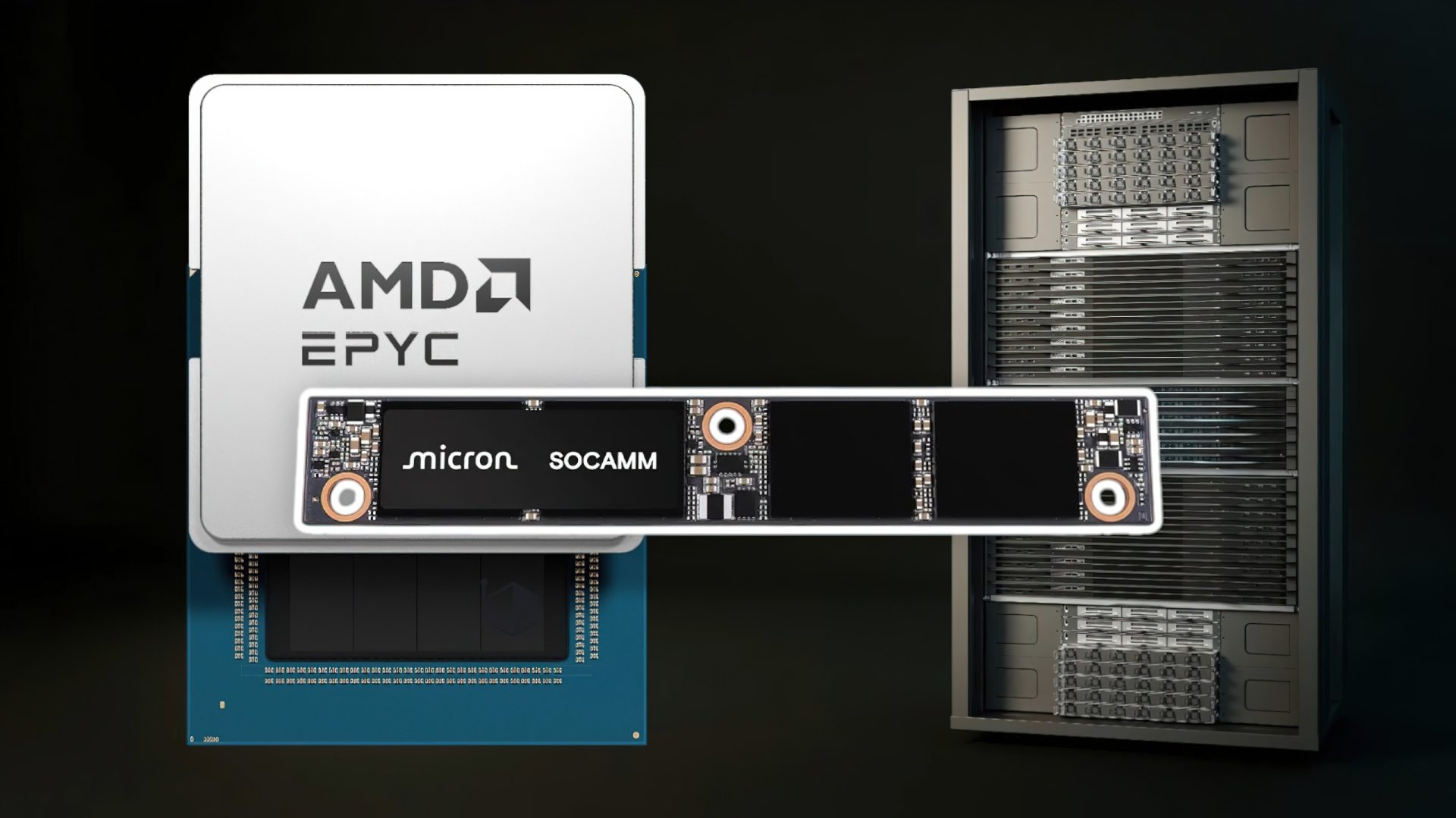
AMD has taken a bold step toward redefining rack-scale computing with the introduction of its EPYC Verano CPUs. Unlike previous generations, these processors are designed to work seamlessly with LPDDR5X memory and SOCAMM2 modules, a combination that promises significant gains in performance per watt—a critical metric for AI-driven data centers.
The shift isn’t just about speed; it’s about rethinking how servers consume power. By integrating low-power memory interfaces, AMD is positioning the Verano series as a solution tailored for AI workloads, where efficiency often outweighs raw performance. This approach aligns with broader industry trends, where data centers are increasingly under pressure to balance computational demands with energy constraints.
For enthusiasts and power users, the Verano CPUs bring something new: the ability to pair high-performance computing with memory modules that minimize latency while keeping power draw in check. The SOCAMM2 standard, a departure from traditional DIMMs, allows for tighter integration between CPU and memory, reducing bottlenecks that have long plagued multi-socket servers.
But who stands to benefit most? AI researchers and data center operators are the primary targets here. For them, the Verano series offers a way to crunch larger datasets with less heat and power consumption—a significant advantage in today’s energy-conscious environments. For everyday users or those running non-AI workloads, the gains may not be as pronounced, though the underlying technology could trickle down over time.
The exact performance improvements remain unconfirmed, but early indicators suggest a notable uplift in AI-specific benchmarks. Whether this translates to real-world efficiency gains across different applications is still an open question. For now, AMD has set its sights on proving that rack-scale computing can be both powerful and power-efficient—a challenge it’s tackling head-on with the Verano platform.