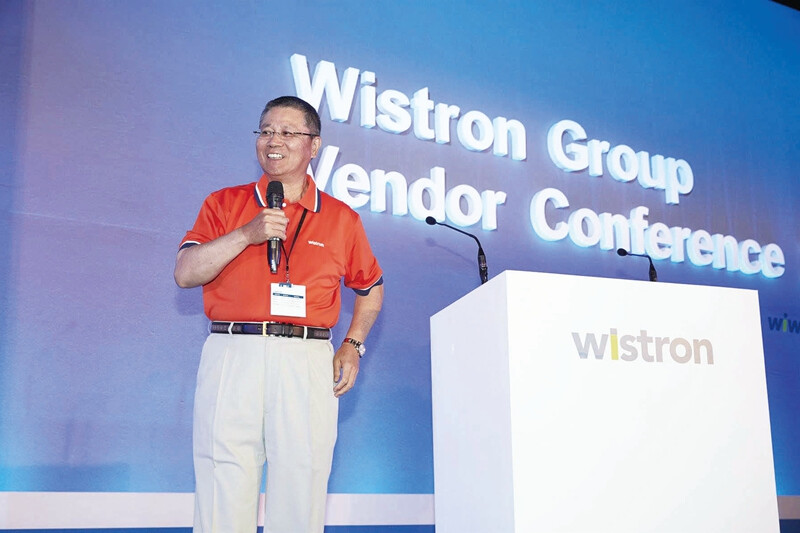
Wistron’s chairman has dismissed concerns that artificial intelligence represents a speculative bubble, framing it instead as a transformative industry shift with lasting momentum. Simon Lin told Reuters the company expects AI-related orders to grow more sharply in 2026 than in 2025, with demand sustaining production into 2027.
Wistron’s confidence is tied to a major expansion: the company will open a new U.S. manufacturing facility in the first half of this year, dedicated to producing AI servers for NVIDIA. The contract with NVIDIA, valued at up to $500 billion over four years, underscores the scale of Wistron’s bet on AI infrastructure. While the deal’s exact terms remain undisclosed, the sheer scale suggests a long-term commitment—one that could redefine Wistron’s role in the global tech supply chain.
The question lingers: Is this a calculated bet on sustained demand, or a calculated risk in an industry prone to volatility? Past tech booms have collapsed under the weight of overinflated expectations, but Wistron’s move into U.S.-based production signals a strategic pivot beyond mere speculation.
The company’s decision to invest in AI server manufacturing aligns with broader industry trends. NVIDIA’s dominance in AI accelerators has driven demand for specialized hardware, and Wistron’s entry into this space could accelerate the localization of AI production—reducing reliance on overseas manufacturing hubs.
- AI Demand: Wistron forecasts a significant uptick in AI-related orders for 2026, with growth extending into 2027.
- NVIDIA Contract: A four-year deal valued at up to $500 billion for AI server production.
- U.S. Production: New manufacturing facility in the U.S. opening in the first half of 2026.
- Industry Positioning: Wistron frames AI as a structural shift, not a bubble, despite historical precedents for tech overvaluation.
Yet skepticism remains. The $500 billion contract—if accurate—would dwarf even the most optimistic projections for AI hardware spending. While Wistron’s leadership insists this is a new era, the company’s financial stakes are now inextricably linked to NVIDIA’s ability to sustain AI-driven demand. If the market cools, Wistron’s bet could face the same fate as past overvalued tech plays.
For now, the company’s strategy hinges on execution: scaling production in the U.S., meeting NVIDIA’s needs, and proving that AI isn’t just a fleeting trend but a foundational industry. Whether that holds true will become clearer as 2026 unfolds.