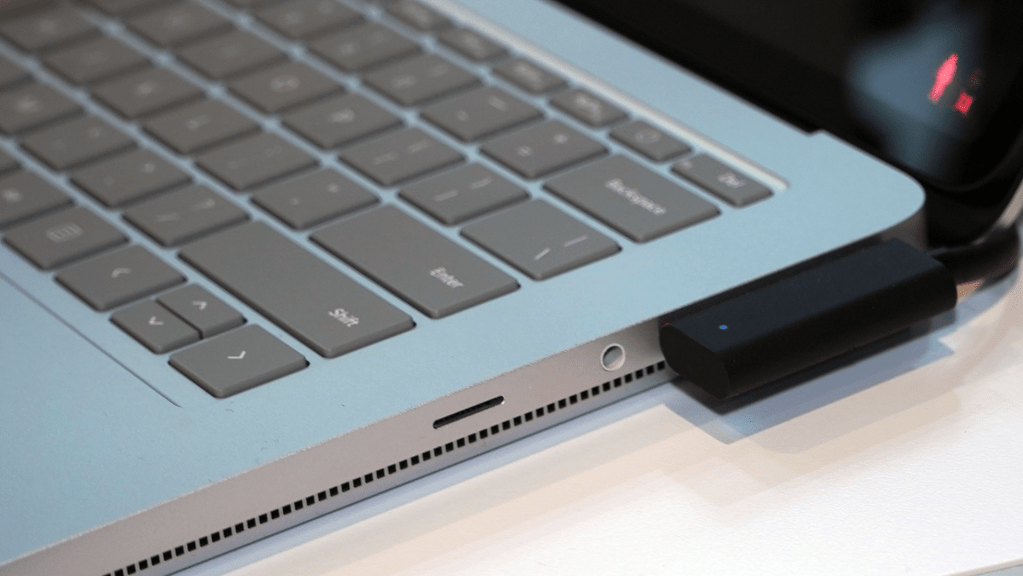
The Glyph Atom EX40 stands out in the crowded external SSD market by combining premium build quality with real-world performance that rivals high-end enclosures. Its USB4 interface, rugged aluminum body, and competitive pricing—given today’s NAND costs—position it as a strategic upgrade for creators who need both speed and reliability.
Unlike many boutique storage solutions, the EX40 doesn’t just promise benchmarks; it delivers consistent performance in 4K workloads and large file transfers. While sequential tests show solid but not record-breaking numbers, its strength lies in real-world scenarios—where it competes with enclosures housing top-tier drives like the WD SN850X or Corsair MP700 Pro.
Key Upgrades for Creators
- USB4 40Gbps: Faster than most external SSDs, with backward compatibility to USB3.2 and Thunderbolt (via adapters).
- Rugged Aluminum Design: Lightweight yet durable, with a silicone jacket that doesn’t compromise heat dissipation.
- Three-Year Warranty: Two years include free data recovery—a rare perk in boutique storage.
The EX40’s 1TB model starts at $390, while the 2TB, 4TB, and 8TB options scale up to $500, $850, and $1,700 respectively. These prices reflect current NAND market conditions, where the performance gap between bus speeds has narrowed significantly.

Who Benefits? Who Should Skip?
- Enthusiasts: Videographers or editors working with 4K/64-bit projects will see tangible speed improvements over USB3.0 or even 20Gbps drives.
- Everyday Users: For general file transfers, the price premium may not justify the upgrade unless you’re already invested in USB4 ecosystem (e.g., laptops with Thunderbolt).
A reality check: While the EX40 avoids the cable issues seen in its 20Gbps predecessor, real-world performance gains over 80Gbps drives remain modest. The biggest advantage here is simplicity—no need to source an enclosure or worry about compatibility.
Looking ahead, the EX40’s combination of portability, durability, and speed makes it a compelling option for professionals who prioritize workflow efficiency. As NAND prices stabilize, its value proposition could strengthen further, but for now, it remains a premium choice for those who refuse to compromise on performance.