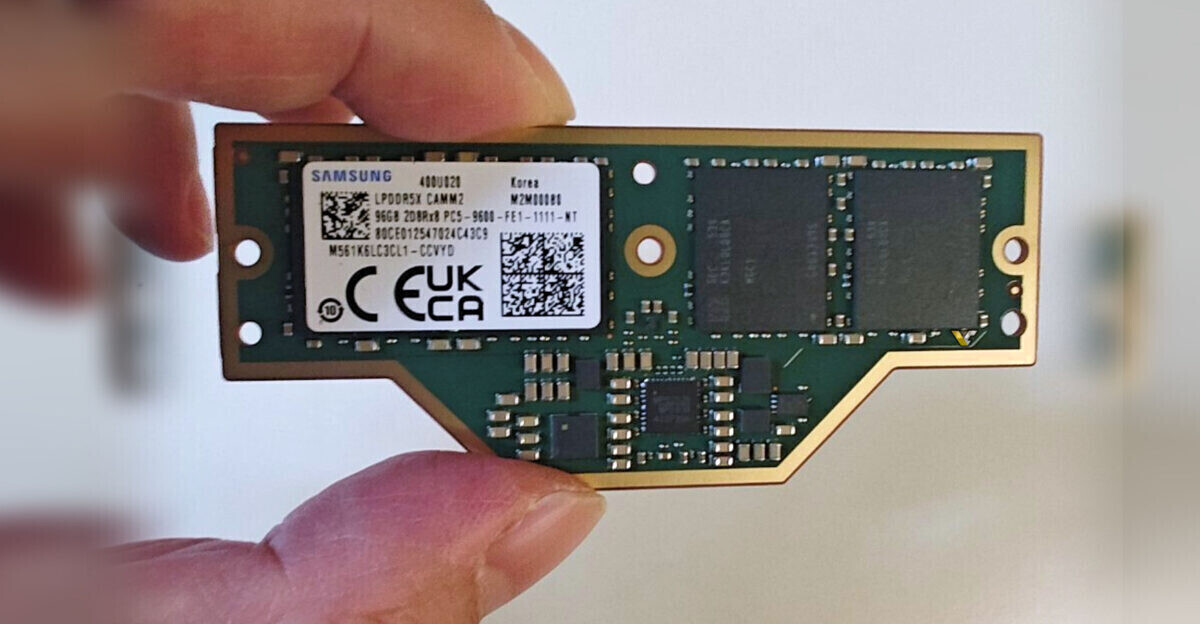
Intel’s shift toward LPCAMM2 memory has finally met its testing counterpart: MemTest86 now includes preliminary support for the form factor, ensuring standardized validation for Meteor Lake and Arrow Lake chips. This development comes as LPCAMM2 modules—ranging from CXMT’s LPDDR5X-8533 to Samsung’s LPDDR5X-9600 stacks—appear in flagship laptops like Lenovo ThinkBook 14+ and Framework Laptop 13 Pro. The move reflects a broader industry push toward DDR6-driven memory standards, with key manufacturers aligning behind LPCAMM2 as the universal interface.
Beyond Meteor Lake and Arrow Lake, the update also introduces fixes for Raptor Lake variants, addressing faulty die decoding in 1R SODIMM modules while refining temperature reporting for DDR5. The inclusion of module form factor details in graphical reports further streamlines diagnostics, though some edge cases—such as swapped memory controller ordering on Arrow Lake two-slot boards—remain unresolved.
Why This Matters
The addition of LPCAMM2 support is more than a technical update; it’s a response to the growing complexity of modern memory architectures. As DDR6 looms in 2027 with speeds up to 17,600 MT/s, LPCAMM2 serves as the bridge between today’s LPDDR5X modules and tomorrow’s high-bandwidth demands. For power users and system builders, this means a more reliable way to verify stability across Intel’s latest platforms—though thermal constraints and slot enumeration quirks persist in early implementations.
Key Specs
- LPCAMM2 Support: Preliminary testing for Meteor Lake/Arrow Lake chipsets, including faulty die decoding and module form factor reporting.
- Memory Types: Compatibility with LPDDR5X-8533 (CXMT) and LPDDR5X-9600 (Samsung) modules.
- Fixed Issues: DDR5 temperature reading, 1R SODIMM decoding, and swapped controller ordering on Arrow Lake boards.
The update doesn’t resolve all challenges—physical slot layout inconsistencies remain a hurdle—but it sets the stage for broader adoption. As LPCAMM2 solidifies its role in next-gen systems, MemTest86’s integration ensures that validation keeps pace with hardware evolution. For now, users targeting Meteor Lake or Arrow Lake can rely on this tool to mitigate risks, though thermal management and slot mapping will require further refinement.