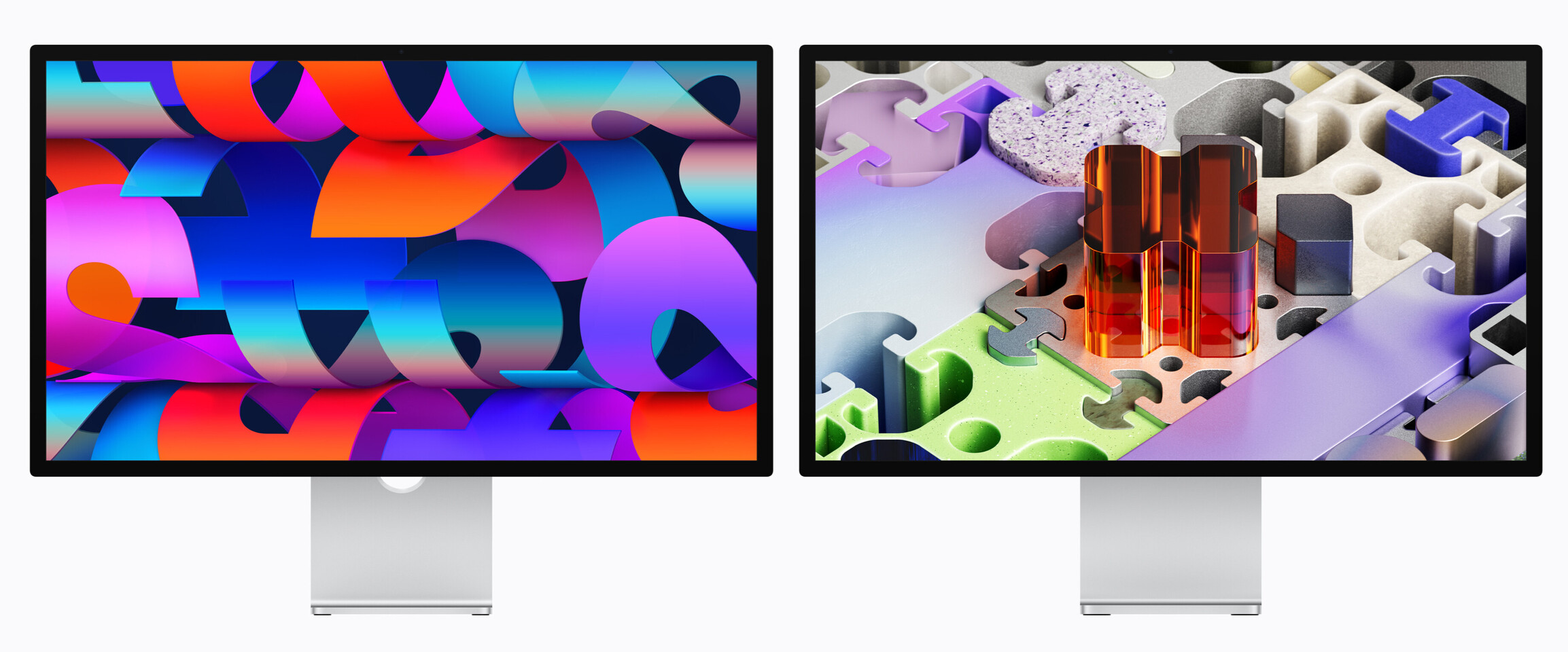
A quiet revolution is unfolding in the world of professional displays. The latest generation of Studio Displays has broken away from traditional LCD technology by integrating mini-LED precision with Thunderbolt 5 connectivity, creating a platform that pushes the boundaries of what professionals can achieve on screen.
Design philosophy remains rooted in Apple's signature minimalism, but with functional evolution at its core. The 27-inch 5K Retina display maintains all the visual refinement expected from this line—14 million pixels, 600 nits brightness, and P3 wide color gamut coverage—but introduces significant hardware advancements under the hood. Both models utilize recycled aluminum and glass construction, demonstrating a commitment to sustainability that doesn't come at the expense of durability.
The XDR variant takes these principles to new extremes with mini-LED backlighting that delivers 2,304 local dimming zones. This results in a staggering 1,000,000:1 contrast ratio—critical for high dynamic range content creation where true black levels and infinite gradations matter most.
Internally, the hardware evolution is equally transformative. The XDR model's peak brightness reaches 2,000 nits in HDR mode while maintaining 1,000 nits in standard SDR output—a leap that makes it one of the most precise displays for medical imaging and professional HDR workflows. Both models support a 120 Hz refresh rate with Adaptive Sync (47–120 Hz), ensuring buttery-smooth motion rendering whether working with video or graphically intensive applications.
- Display specifications:
- Studio Display: 27-inch 5K Retina, 600 nits brightness, P3 wide color gamut
- Studio Display XDR: 27-inch 5K Retina XDR with mini-LED (2,304 zones), 1,000 nits SDR, 2,000 nits HDR peak, 1,000,000:1 contrast ratio
- Refresh rate: 120 Hz with Adaptive Sync (47–120 Hz)
The XDR model includes specialized DICOM medical imaging presets that expand its utility for diagnostic radiology workflows. Both displays feature a 12MP Center Stage camera with Desk View functionality and a six-speaker sound system optimized for spatial audio, making them versatile tools beyond just visual work.
Connectivity represents where these displays truly differentiate themselves from the competition. Thunderbolt 5 support allows daisy-chaining up to four displays or connecting high-speed accessories while maintaining low latency. Two USB-C ports provide additional flexibility, though the real innovation comes in power delivery: the Studio Display offers 96 W of charging power through its included Thunderbolt 5 Pro cable—enough to fully charge a 14-inch MacBook Pro—while the XDR model delivers an impressive 140 W.
- Camera and audio features:
- 12MP Center Stage camera with Desk View functionality
- Six-speaker system optimized for spatial audio
- Connectivity specifications:
- Thunderbolt 5 (two ports)
- Two USB-C ports
- 96 W charging power (Studio Display)
- 140 W charging power (XDR model)
The Studio Display XDR further supports Adobe RGB and P3 color gamuts, covering over 80% of Rec. 2020 for HDR editing. Both models feature adjustable stands with different form factors: the base Studio Display offers tilt-and-height adjustment with a counterbalancing arm, while the standard model provides simpler tilt adjustment or VESA mount compatibility.
Sustainability remains a cornerstone of this generation's design, with both displays constructed from significant amounts of recycled materials and engineered for long-term durability. Pricing starts at $1,599 for the Studio Display (standard) and $3,299 for the XDR variant, reflecting their position at the high end of professional display markets.
These new displays represent a significant leap forward in contrast performance, color accuracy, and connectivity—delivering professional-grade capabilities that were previously impossible without sacrificing sustainability or usability. They stand as proof that technical innovation can coexist with thoughtful design and environmental responsibility, setting a new benchmark for what professionals expect from their display hardware.