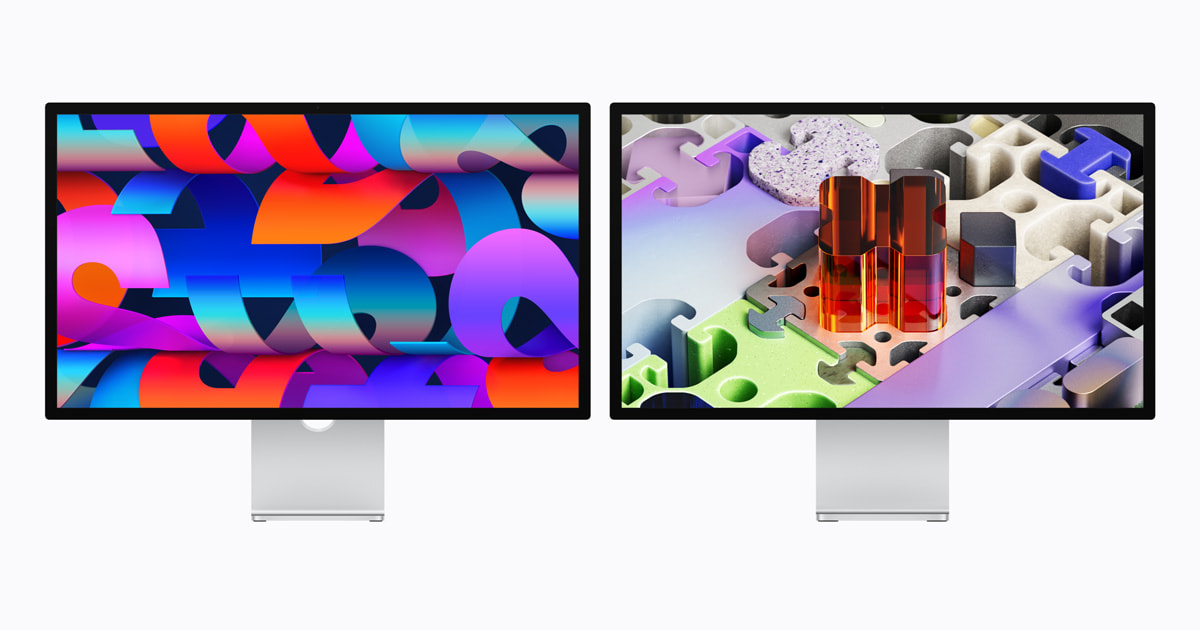
A single metric stands out in the latest generation of professional displays: 2000 nits of peak HDR brightness. That number is now achievable on a 27-inch panel with mini-LED local dimming, setting a new benchmark for front-of-screen performance in high-end workflows.
Behind that figure lies an advanced Retina XDR display with over 2,300 local dimming zones, enabling contrast ratios that approach one million to one. Combined with 1000 nits of SDR brightness and support for both P3 and Adobe RGB color gamuts, the display delivers a visual experience that spans from deep blacks to the brightest HDR highlights without visible halo or blooming.
Key Specifications
- Display: 27-inch 5K Retina XDR (5120 x 2880), mini-LED backlight, 2304 local dimming zones
- Brightness: 1000 nits SDR, 2000 nits peak HDR
- Contrast: 1,000,000:1
- Color Gamut: P3 and Adobe RGB (over 80% Rec. 2020 coverage)
- Refresh Rate: 120Hz with Adaptive Sync (47Hz–120Hz variable refresh rate)
- Connectivity: Two Thunderbolt 5 ports, two USB-C ports
- Camera: 12MP Center Stage with Desk View support
- Audio: Six-speaker system with Spatial Audio and four force-cancelling woofers
- Charging: Up to 96W via Thunderbolt 5 Pro cable (MacBook Pro), up to 140W for MacBook Pro 16-inch
- Stand: Tilt- and height-adjustable with counterbalancing arm; optional VESA mount adapter
- Glass Options: Standard or nano-texture (anti-glare)
The display is designed to address specific professional needs. For video editors and 3D animators, the 120Hz refresh rate with Adaptive Sync ensures smooth playback and rendering, while the wide dynamic range makes HDR content more immersive. Print professionals benefit from Adobe RGB support alongside P3, streamlining workflows that switch between color spaces without recalibration.
A new feature for medical imaging introduces DICOM presets and a Medical Imaging Calibrator, pending FDA clearance. This allows radiologists to view diagnostic images directly on the display, offering a versatile alternative to specialized medical monitors while maintaining seamless mode switching.
Thunderbolt 5 and Workflow Integration
Thunderbolt 5 connectivity is a core differentiator. Two ports enable daisy-chaining up to four displays for combined resolutions approaching 60 million pixels, or support for high-speed peripherals like external GPUs. The included Thunderbolt 5 Pro cable delivers up to 96W of charging power—sufficient for a full charge on a 14-inch MacBook Pro in under an hour.
For users who prioritize audio and video clarity, the 12MP Center Stage camera with Desk View provides both a centered frame and a top-down desk view, useful for creative presentations. The six-speaker system, featuring four force-cancelling woofers, delivers 30% deeper bass than previous models, enhancing spatial immersion.
The display is available in two configurations: the standard Studio Display starting at $1,599 (with a tilt-adjustable stand) and the Studio Display XDR starting at $3,299 (with a tilt- and height-adjustable stand). Both support nano-texture glass for challenging lighting conditions. Pre-orders begin on March 4, with availability set for March 11.
While the 2000 nits of peak HDR brightness is confirmed, real-world impact depends on content and use case. For data-heavy workflows like medical imaging or 3D rendering, the combination of high refresh rates, precise color accuracy, and Thunderbolt 5 connectivity may offer tangible productivity gains. However, whether this level of brightness translates to noticeable improvements in everyday tasks remains to be seen.