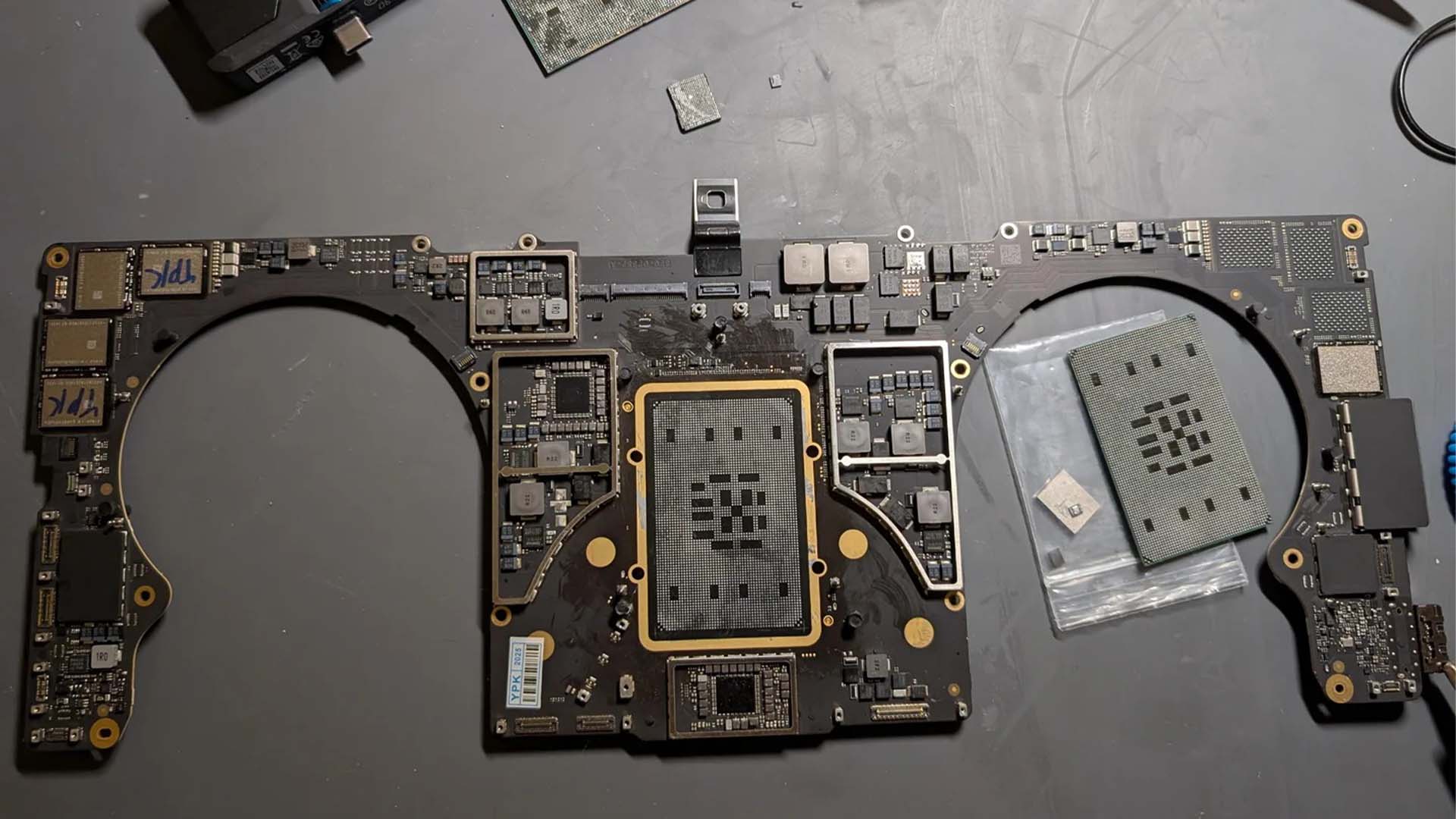
The M5 Pro and M5 Max chips represent a notable evolution in Apple's silicon lineup, particularly for professional workloads. Unlike previous generations, these chips are built using a new Fusion Architecture that integrates two dies into a single system on a chip (SoC). This design choice is aimed at pushing the boundaries of performance while maintaining power efficiency—a critical factor for developers who prioritize both speed and battery life.
What sets M5 Pro and M5 Max apart from their predecessors isn't just incremental improvements. The new 18-core CPU architecture, featuring six super cores and twelve all-new performance cores, is designed to deliver up to a 30% boost in multithreaded performance for professional applications. This is a significant leap forward, especially when compared to the M4 Pro and M4 Max chips, which previously set the bar for high-performance computing on Apple silicon.
The GPU architecture has also been scaled up, with M5 Max offering an impressive 40-core configuration. Each core includes a Neural Accelerator, which, combined with higher unified memory bandwidth, results in over four times the peak GPU compute for AI tasks compared to the previous generation. This is particularly relevant for developers working on complex simulations or AI-driven applications, where graphics performance can be a bottleneck.

However, the real question for developers isn't just about raw performance—it's about compatibility and long-term adoption. The M5 Pro and M5 Max chips are designed to work seamlessly with existing software ecosystems, but the transition from older architectures (like M1 or M4) will require careful consideration. For example, the M5 Pro supports up to 64GB of unified memory with a bandwidth of 307GB/s, while the M5 Max can handle up to 128GB with a bandwidth of 614GB/s. These specifications are tailored for users who demand maximum GPU compute and high-capacity memory, but whether these upgrades translate into meaningful improvements in real-world applications remains to be seen.
Another key aspect is the introduction of advanced technologies like Memory Integrity Enforcement, which promises always-on memory safety without compromising performance. This could be a game-changer for developers working on security-sensitive projects, but its practical impact will depend on how widely it's adopted in future software updates.
Looking ahead, the M5 Pro and M5 Max chips are poised to become the new standard for professional-grade laptops. Their ability to handle complex workloads with ease—whether it's 3D rendering, AI research, or large-scale data analysis—makes them a compelling option for developers who need to stay at the forefront of their field. But whether they'll replace older M-series chips in existing workflows is another question entirely.
The most important change here isn't just the performance uplift; it's the shift toward a more integrated, efficient architecture that could redefine what's possible in pro laptops. Developers should weigh this carefully when planning their next upgrade, ensuring it aligns with both current needs and future-proofing their projects.