Intel has just unveiled what could be a game-changer for thin-and-light laptops. The company’s latest Core Ultra X9 388H processor—codenamed Panther Lake—packs an integrated Intel Arc B390 GPU that outpaces even some low-end dedicated GPUs in raw performance. With 12 Xe3 cores, 12 ray-tracing units, and a 2.5 GHz clock speed, this iGPU isn’t just an incremental upgrade; it’s a bold step toward making high-performance gaming feasible in ultra-slim machines.
For context, the Arc B390 isn’t designed to compete with a high-end RTX 5060 or RTX 4080. Instead, it’s targeting the performance gap between entry-level discrete GPUs like the 60W RTX 4050 and traditional integrated graphics. Intel claims the B390 is roughly 10% faster than that RTX 4050 in average gaming scenarios—a feat that would have been unimaginable just a few years ago.
But what does that mean in real-world terms? A 60W RTX 4050 is the kind of GPU you’d find in budget gaming laptops, capable of running 1080p games like Cyberpunk 2077 at medium settings with modest frame rates. The Arc B390, while still an integrated solution, now brings that level of performance into laptops that previously relied on weaker iGPUs or no discrete graphics at all.
Key specs: Intel Arc B390 vs. Intel Arc 140V
- Architecture: Xe3 (vs. Xe2 in Arc 140V)
- Xe-cores: 12 (vs. 8 in Arc 140V)
- Ray Tracing Units: 12 (vs. 8 in Arc 140V)
- Xe Vector Engines: 96 (vs. 64 in Arc 140V)
- XMX Engines: 96 (vs. 64 in Arc 140V)
- L2 Cache: 16MB (vs. 8MB in Arc 140V)
- Max Frequency: 2.5 GHz (vs. 2.05 GHz in Arc 140V)
The Arc B390’s architecture is a significant leap over its predecessor, the Arc 140V found in Lunar Lake chips. With nearly double the Xe-cores and ray-tracing units, along with a larger L2 cache, Intel has effectively crammed more performance into a single chip. This isn’t just about raw numbers, though—it’s about redefining what an integrated GPU can achieve.
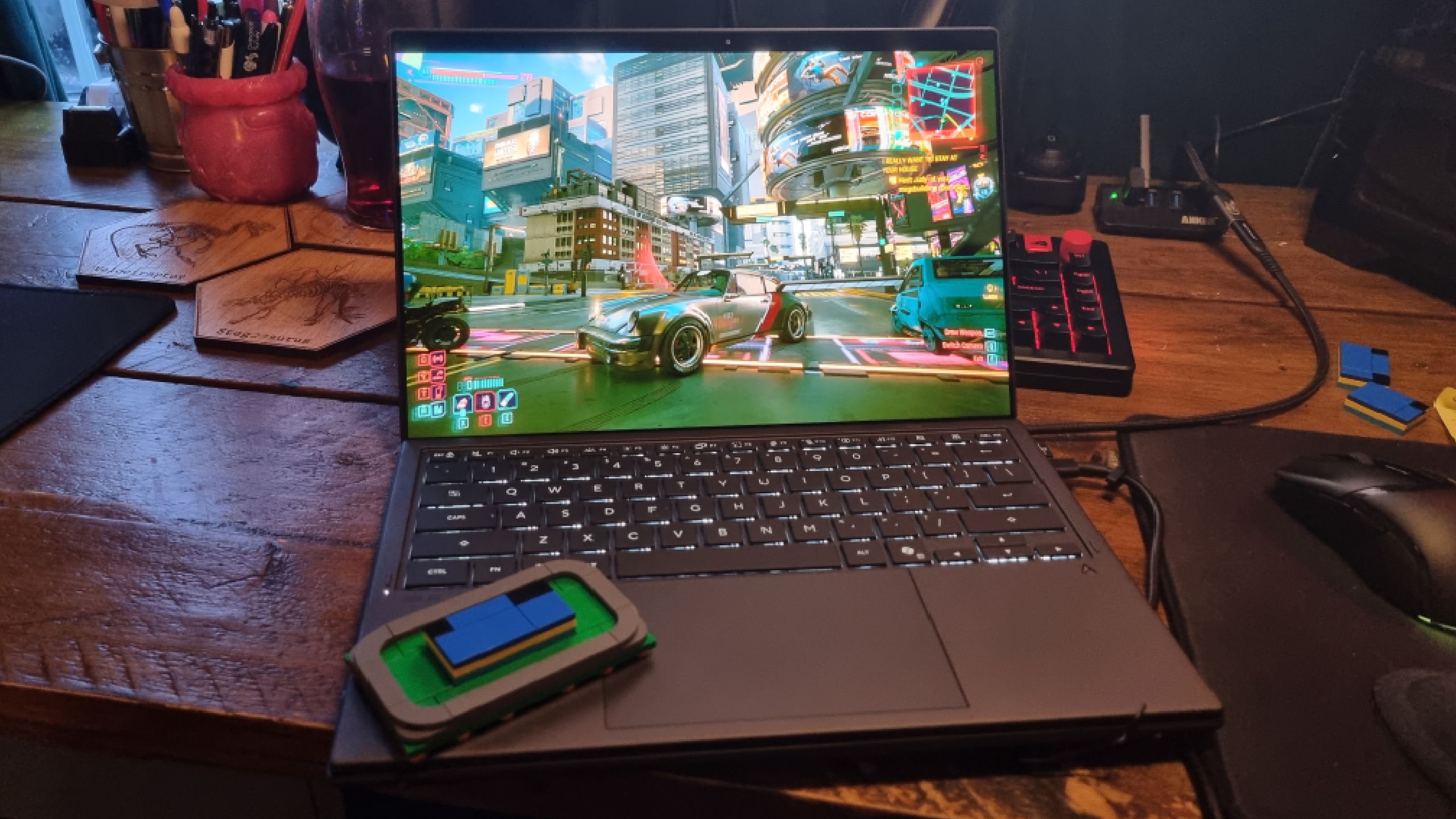
In testing, the Arc B390 delivered 64 FPS in Cyberpunk 2077 at 1080p with medium settings, a result that would have been unthinkable for an iGPU just a generation ago. For comparison, the RTX 4050 mobile typically manages around 45–50 FPS in the same game at similar settings. That’s not just competitive—it’s a statement that Intel’s integrated graphics are now capable of handling demanding titles without sacrificing portability.
Who benefits?
This isn’t just a win for gamers. The Arc B390 opens the door for manufacturers to build ultra-thin, fanless, and lightweight laptops that can handle light gaming without the bulk of a dedicated GPU. Think of it as the difference between a traditional gaming laptop—thick, heavy, and power-hungry—and a sleek productivity machine that can double as a gaming device when needed.
Handheld gaming PCs could also see a major boost. While Intel hasn’t yet confirmed a handheld with the B390, the performance suggests that devices like the Steam Deck could soon face serious competition from machines with integrated graphics that don’t require external cooling or power-hungry discrete cards.
The tradeoff? The Arc B390 still lacks the raw power of a dedicated GPU. It won’t push 1440p or 4K gaming, and it won’t deliver the same ray-tracing performance as higher-end cards. But for 1080p gaming on the go, it’s a compelling alternative—especially in machines where every gram of weight and watt of power efficiency matters.
Availability for Panther Lake-based laptops is expected to ramp up in the coming months, with more details likely to emerge at major trade shows like CES 2026. If Intel’s claims hold up, we could be looking at a new era of gaming laptops—where performance isn’t sacrificed for portability.