Privacy-conscious users now have a new way to engage with artificial intelligence without compromising their data. ExpressVPN has launched ExpressAI, a tool that promises to deliver AI-powered features while ensuring minimal exposure of personal information.
The service builds on the company’s reputation for privacy-focused networking solutions, offering developers and power users an alternative to traditional AI tools that often rely on extensive data collection. Unlike mainstream AI services, ExpressAI is designed to operate with limited data, reducing the risk of leaks or misuse while still providing actionable insights.
Key Features and Specifications
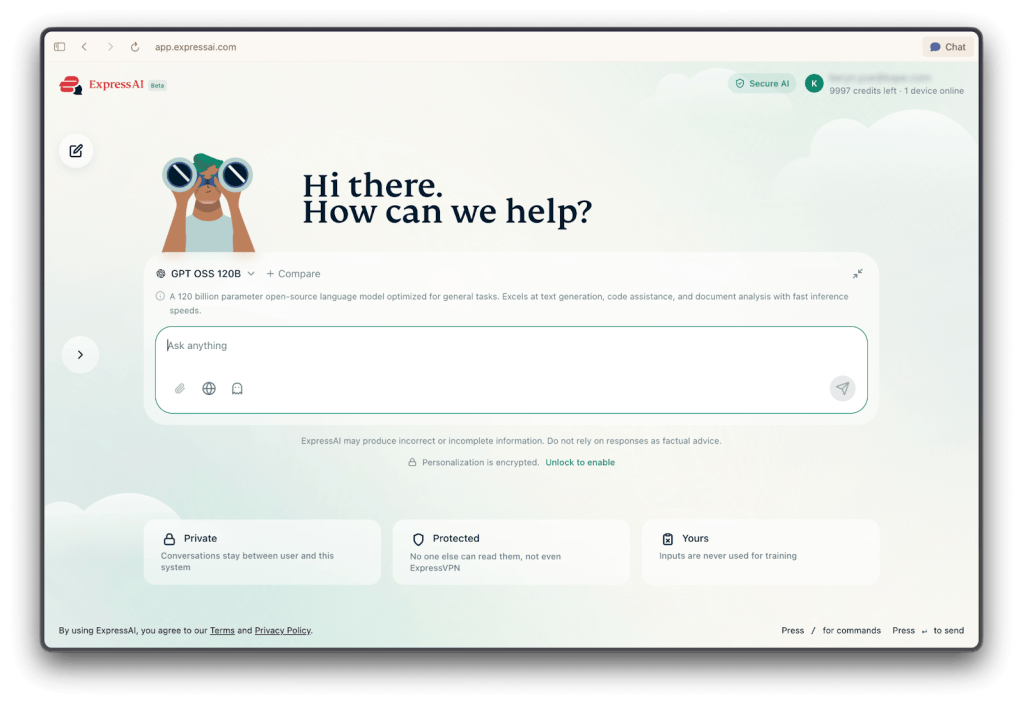
- Data Minimization: ExpressAI processes user queries and requests with minimal data retention, focusing only on what is necessary to deliver results.
- Privacy-First Design: No personal data is stored or shared beyond the scope of a single session unless explicitly requested by the user.
- Customizable Controls: Users can adjust privacy settings in real-time, controlling how much information is exposed during interactions.
The tool is positioned as a bridge between the convenience of AI and the need for transparency. While it does not eliminate all risks—such as potential vulnerabilities in any software system—it aims to significantly reduce them by design. This approach contrasts with many mainstream AI services, which often rely on vast datasets to train models, increasing the surface area for data breaches or unintended disclosures.
Practical Implications
For developers and enterprises, ExpressAI could offer a middle ground between powerful AI capabilities and strict privacy compliance. Industries like healthcare, finance, and legal services—where data sensitivity is critical—may find this tool particularly appealing. However, the trade-off lies in the potential reduction of AI accuracy or richness of insights compared to systems that leverage extensive datasets.
Looking Ahead
The future of ExpressAI will likely hinge on its ability to balance performance with privacy without sacrificing usability. If it succeeds, it could set a new standard for how AI tools are built and deployed in privacy-sensitive environments. For now, users who prioritize control over their data may find this an intriguing alternative to more conventional AI solutions.