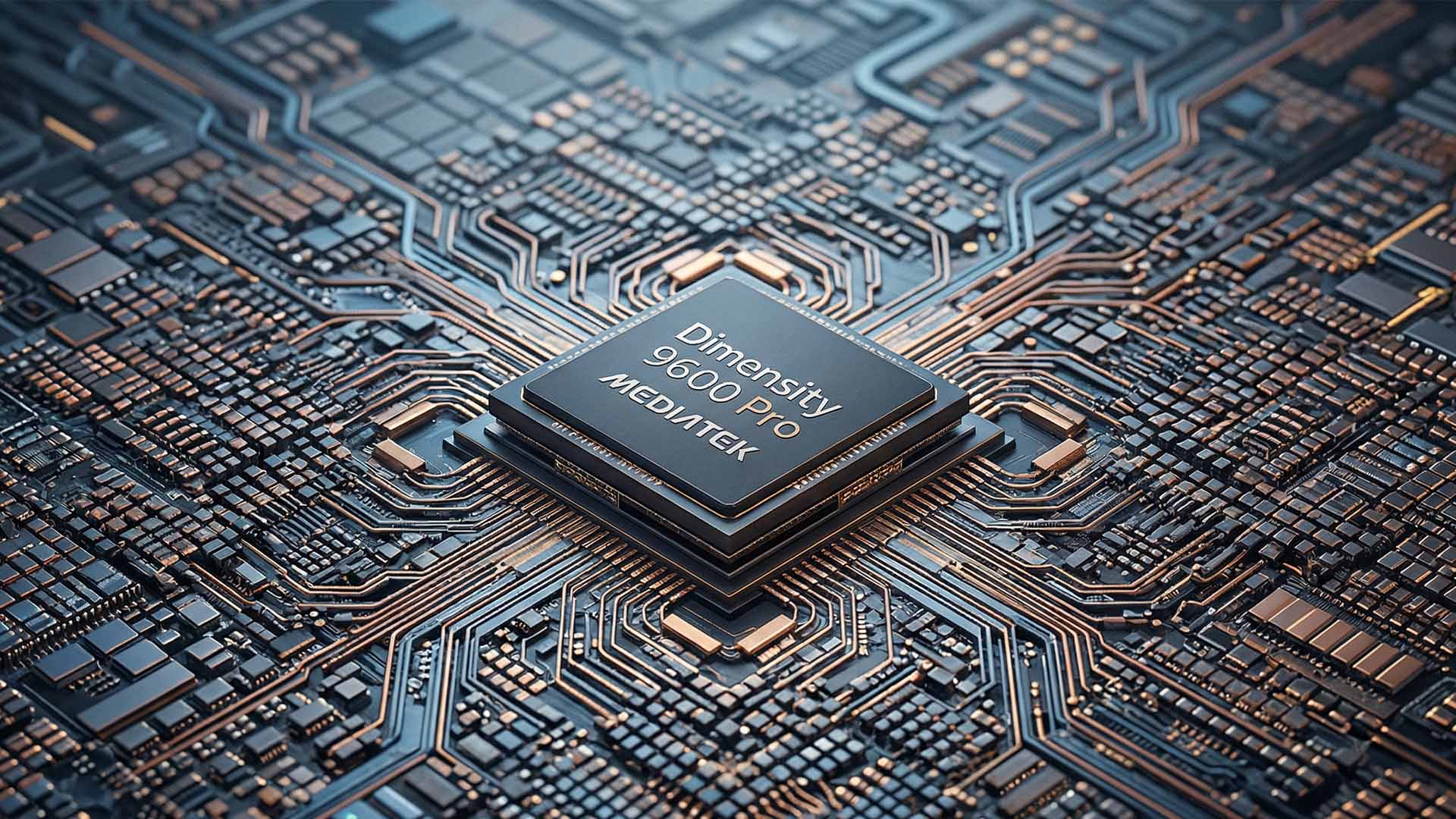
The Dimensity 9600 Pro arrives as a high-stakes gamble for manufacturers and consumers alike. Priced at approximately $216, it represents one of the most aggressive cost jumps in recent memory, forcing a reckoning over what constitutes value in mid-range hardware. This isn't just another incremental upgrade—it's a redefinition of the price-performance equation that could reshape entire product cycles.
Key Specifications
- CPU Architecture: 1+3+4 core design featuring Cortex-X4 (performance), three Cortex-A720 (efficiency), and four Cortex-A520 (utility) cores, clocked at up to 3.6 GHz.
- GPU: Adreno 850 GPU with advanced rendering capabilities and improved power efficiency.
- Memory Support: LPDDR5X-3200 MHz, enabling faster data transfer rates for smoother multitasking.
- Storage: UFS 4.0 support for quicker boot times and sustained performance under heavy workloads.
- Connectivity: Integrated 5G, Wi-Fi 7, and Bluetooth 5.4, ensuring future-proof connectivity options.
- Pricing: Estimated at $216 in certain configurations, a significant increase from prior generations.
The specifications alone suggest a chipset capable of handling high-end tasks with efficiency, but the pricing introduces a layer of complexity. For IT teams evaluating hardware for mid-range devices, the cost hike may necessitate a closer examination of whether the performance gains justify the premium over competing alternatives. The question isn't just about raw benchmarks—it's about real-world usability and long-term value.
Performance in Practice
The Dimensity 9600 Pro delivers measurable improvements in both CPU and GPU performance, translating to faster processing speeds and smoother graphics rendering. Benchmark results indicate a notable leap forward, particularly in single-core and multi-core scenarios, which could make it a compelling choice for devices targeting power users or those demanding high-end experiences. However, the true test will be how this performance scales under sustained loads, especially in thermally constrained environments.
Display quality and battery life are also critical factors. The chipset's efficiency improvements promise longer runtime for high-resolution displays, but real-world testing will determine if these gains are substantial enough to offset the higher cost. For manufacturers, this means balancing power consumption with performance to avoid thermal throttling, a common pitfall in premium hardware.
Market Implications and Future Outlook
The Dimensity 9600 Pro's market positioning is still unclear, but its arrival coincides with a period of intense competition from rivals like Qualcomm's Snapdragon 8 Gen 3. If competitors offer similar or superior performance at lower costs, the chipset could face an uphill battle for adoption. Conversely, if it delivers on its promises without significant trade-offs, it may set a new benchmark for mid-range and high-end devices.
Thermal management will play a pivotal role in determining its success. While efficiency improvements are notable, sustained performance under heavy workloads—such as gaming or video editing—could be the deciding factor for manufacturers and consumers. If thermal throttling becomes an issue, it could undermine the chipset's appeal despite its impressive specs.
Availability is expected later this year, but the timing remains uncertain. For now, the focus is on whether the price jump will prove sustainable or if it signals a broader trend in hardware pricing that IT teams must navigate carefully. The Dimensity 9600 Pro could either solidify its position as a premium choice or become a cautionary tale about the risks of overpricing performance gains.