PC builders now face fewer restrictions when configuring system memory on Intel’s Z890 and B860 motherboards. A recent BIOS update from ASUS has expanded DDR5 compatibility, allowing users to mix modules of different capacities—such as 16GB and 48GB sticks—as long as they share the same speed rating (e.g., DDR5-4800). This shift breaks away from traditional JEDEC standards, which often required identical timing profiles across all RAM modules in a dual-channel setup.
The update arrives amid rising DDR5 prices, providing a practical solution for those looking to optimize memory configurations without overpaying for full kits. While ASUS has not confirmed whether this feature will extend to other platforms, the move signals a broader industry push toward more flexible system memory design. Previously, mismatched configurations could lead to instability or performance degradation, but the new BIOS version eliminates these concerns—provided users adhere to speed-matching requirements.
Key details of the update include
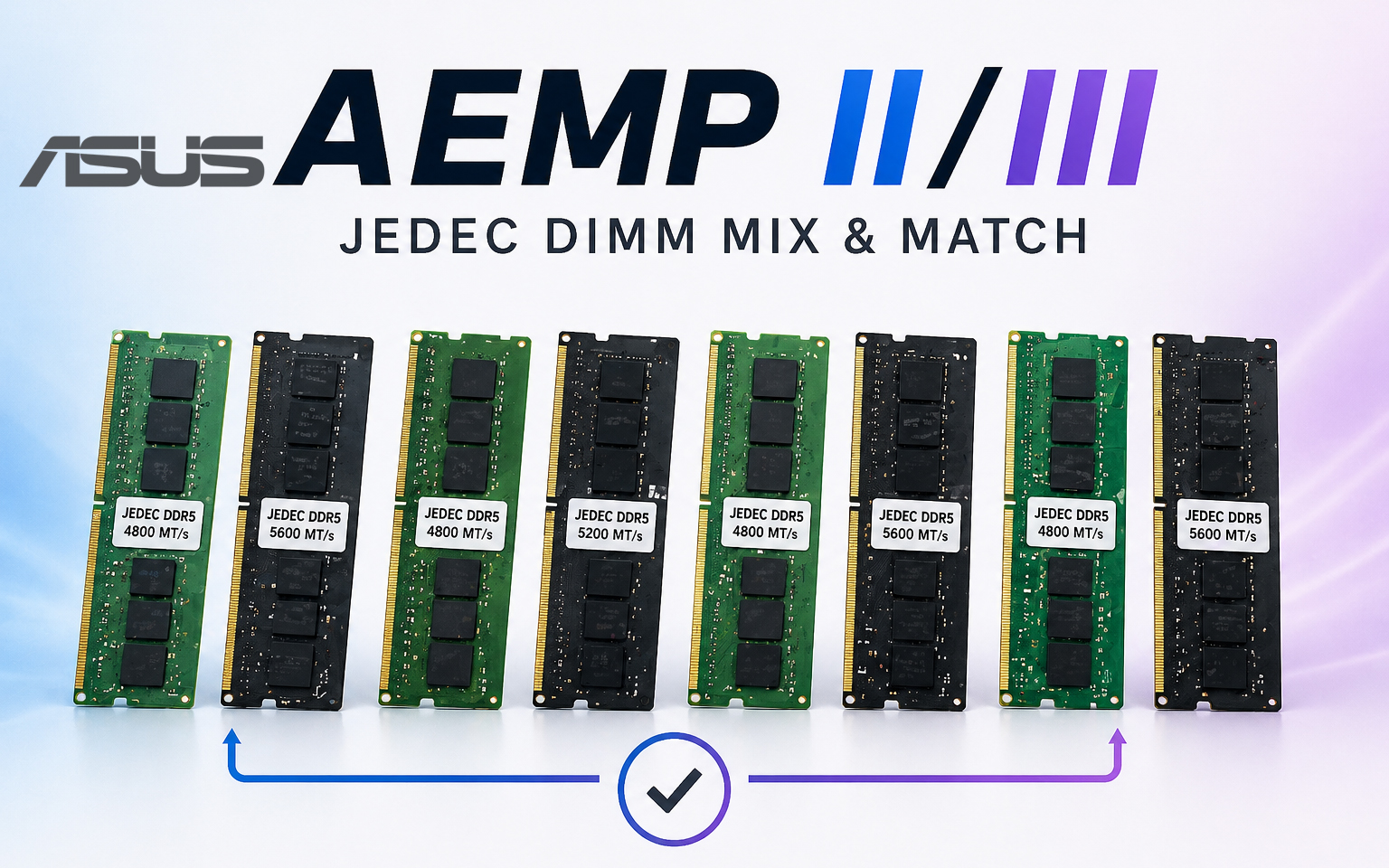
- Support for mixed DDR5 capacities (e.g., 32GB + 32GB or 16GB + 48GB) on Z890 and B860 motherboards, with total system memory limited by the smaller stick.
- No performance penalty for mismatched configurations, though users should verify manufacturer compatibility to avoid potential issues with aggressive timing profiles.
- Requires BIOS version AEMP III or later; older motherboards may need an update to access the feature.
The immediate impact is most felt by enthusiasts and workstation users who prioritize flexibility over strict JEDEC compliance. This update removes a technical hurdle that previously forced compromises on memory capacity or price. As DDR5 prices stabilize—or potentially drop further—this feature could become even more valuable, allowing builders to mix older and newer sticks without worrying about system stability.
Looking ahead, the update suggests ASUS is responding to market demands for greater flexibility in PC component selection. While compatibility still depends on manufacturer support, the change represents a step forward in making DDR5 memory more practical for a wider range of builds. For now, users should consult motherboard-specific documentation to ensure optimal performance.