In an era where gaming trends shift rapidly, certain mechanics remain timeless. The ability to rotate a 2D world into 3D space, first popularized by Fez in 2012, has yet to see widespread adoption. Yet, Cassette Boy stands as a testament to the enduring appeal of this concept, blending it with a unique narrative and puzzle-solving depth that few games have matched.
The game follows a small boy made of white cubes on a quest to restore the moon, a journey that begins with familiar Zelda-like elements before evolving into something far more intricate. The core mechanic—rotating the world to uncover hidden paths and secrets—is both intuitive and challenging, demanding players to visualize complex structures in their minds. This requirement for spatial reasoning is not just a gimmick; it becomes the foundation of Cassette Boy's puzzle design, offering a level of engagement that feels both rewarding and intellectually stimulating.
The game's world is dotted with optional shrine rooms that serve as mini-puzzle challenges. These rooms are devoid of instructions, relying entirely on player intuition to solve. This approach rewards creativity and experimentation, making each shrine feel like a personal achievement. For instance, one puzzle involves using a crate to climb onto walls and shoot an arrow at an unreachable switch, a solution that can then be applied in other contexts throughout the game.
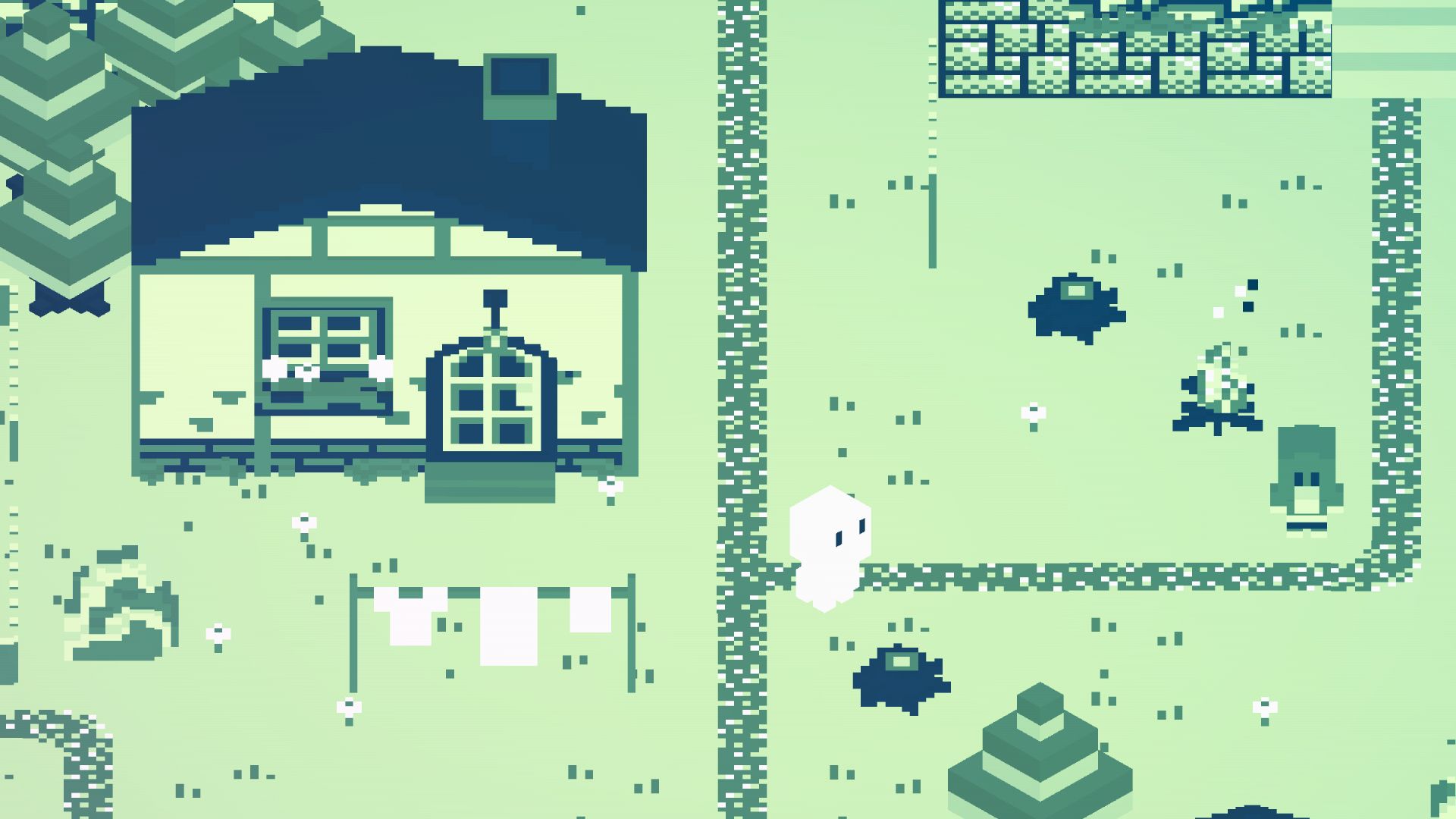
However, Cassette Boy is not without its challenges. The game's reliance on spatial memory can be daunting, especially for those who struggle with directional navigation even in traditional 2D games. Entering a room from different orientations can disorient players, turning what should be a straightforward exploration into a labyrinth of confusion. Yet, this very challenge is part of the game's charm, as it encourages players to engage more deeply with its world, uncovering hidden secrets in familiar environments.
One standout moment involves a puzzle that took nearly 30 minutes to solve. The player must manipulate pressure plates by rotating the room, ensuring they remain hidden behind obstacles. The solution requires quick thinking and precision, offering a thrill akin to solving a complex riddle. This level of depth is what sets Cassette Boy apart from its peers, making it a game that lingers in the mind long after the screen fades.
The game's later stages promise even greater complexity, introducing tools like bombs that expand the scope of puzzles and the player's approach to each area. While the core mechanic remains consistent, these additions ensure that Cassette Boy continues to evolve, offering a dynamic experience that keeps players on their toes.
Cassette Boy is now available on Steam.