YouTube TV’s long-awaited genre-based subscriptions have finally arrived, but the rollout feels more like a half-measure than a revolution. Launched after months of anticipation, the new Sports, Entertainment, and hybrid plans promise to trim costs for specialized viewers—yet they fail to match the aggressive bundling strategies of rivals like DirecTV. The result? A set of options that may save a few dollars but still leave gaps in coverage, flexibility, and long-term value.
The most talked-about addition is the $65 Sports plan, which bundles local broadcasts with national sports networks like ESPN, FS1/FS2, NBC (including regional NBC Sports in select markets), and niche channels such as Golf, NFL Network, and NBA TV. ESPN Unlimited is set to join in the fall, adding depth for fantasy sports fans. Yet even this focused package doesn’t stack up against DirecTV’s MySports plan ($70), which includes MLB Network and NHL TV—channels YouTube TV omits entirely. For markets with regional sports networks, YouTube TV holds an edge by including NBC’s regional feeds, but DirecTV can still undercut it with a $20 MyHome Team add-on in select areas.
Where YouTube TV’s new plans truly stumble is in their inability to compete with the broader ecosystem. DirecTV, for instance, doesn’t just offer live TV channels—it bundles them with streaming services like Disney+, Hulu, and HBO Max through its $35 MyEntertainment plan. Pair that with MyNews ($40), and you get local channels, cable news, and three major streaming platforms for $75 total. YouTube TV’s closest equivalent, the $78 Sports + News + Entertainment plan, cuts out kids’ channels but still charges more while offering no streaming add-ons. The message is clear: if you want a one-stop shop for live and on-demand content, YouTube TV isn’t just playing catch-up—it’s falling behind.
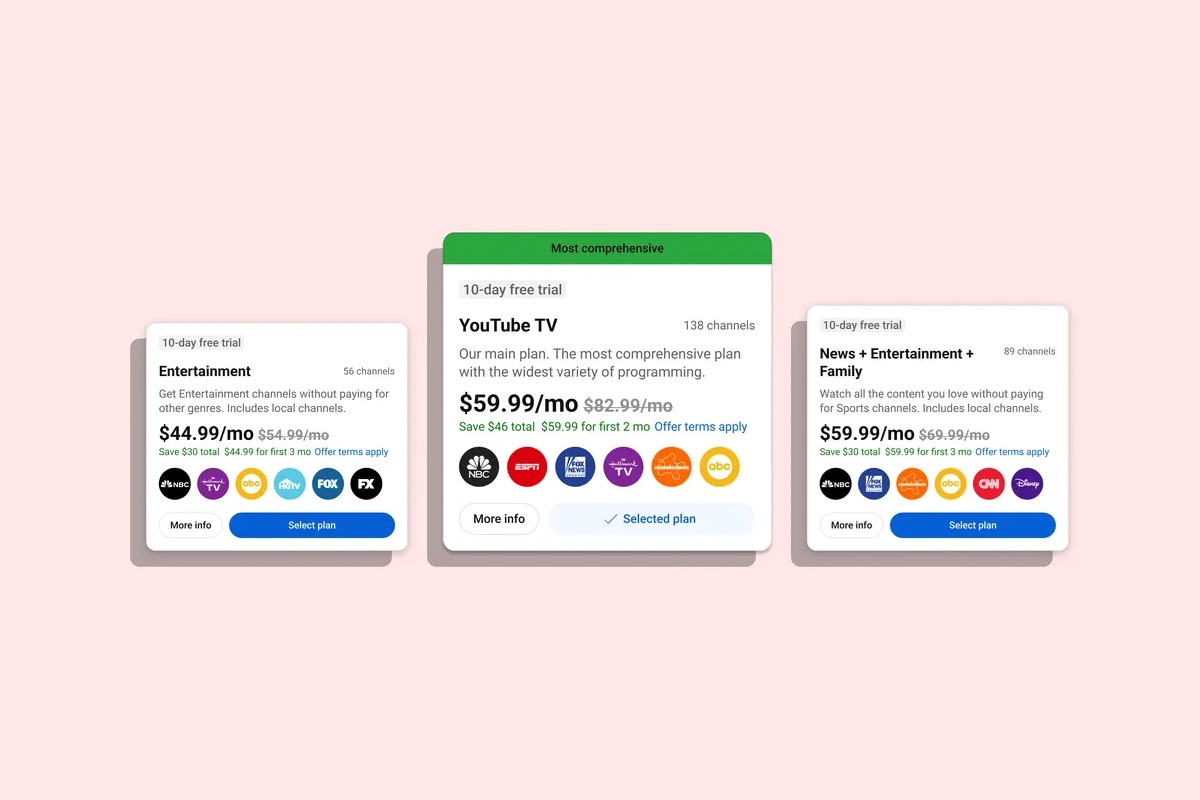
The Entertainment plan ($55) and News + Entertainment + Family plan ($70) target viewers who avoid sports entirely, but their appeal is limited. With original programming dwindling on cable networks and younger audiences migrating to Netflix and YouTube, these bundles risk becoming relics of a dying model. Meanwhile, Fubo Sports undercuts YouTube TV’s Sports plan at $56, though it lacks NBC, TNT, TBS, and regional sports coverage—a tradeoff that may not sit well with hardcore fans.
Perhaps the biggest missed opportunity is YouTube TV’s refusal to integrate its own streaming library or third-party services into these plans. Competitors like DirecTV and Sling TV have proven that bundling live channels with on-demand content can create stickier, more valuable packages. YouTube TV, which already owns YouTube Premium and has deep ties to Google’s ecosystem, could have leveraged this to stand out—but instead, it’s doubling down on a traditional cable model that’s increasingly outdated.
Availability remains a hurdle, too. While the plans launched last week, YouTube TV insists they’re rolling out slowly to ensure the best experience, leaving many users in limbo. Even when fully available, the lack of transparency around additional genre plans—only five of a promised ten have been announced—adds to the confusion. For now, the base plan ($83) remains the safest bet for those who want comprehensive coverage, though it’s hardly a bargain.
The bottom line? YouTube TV’s genre plans are a step in the right direction, but they’re not the disruptive innovation many hoped for. Savings exist, but so do compromises—whether it’s missing channels, higher long-term costs, or the absence of streaming integration. For cord-cutters seeking a tailored experience, the alternatives may still offer better value. And for YouTube TV itself, the question remains: will these plans be enough to keep subscribers from jumping ship—or will they accelerate the shift to more flexible, bundled competitors?