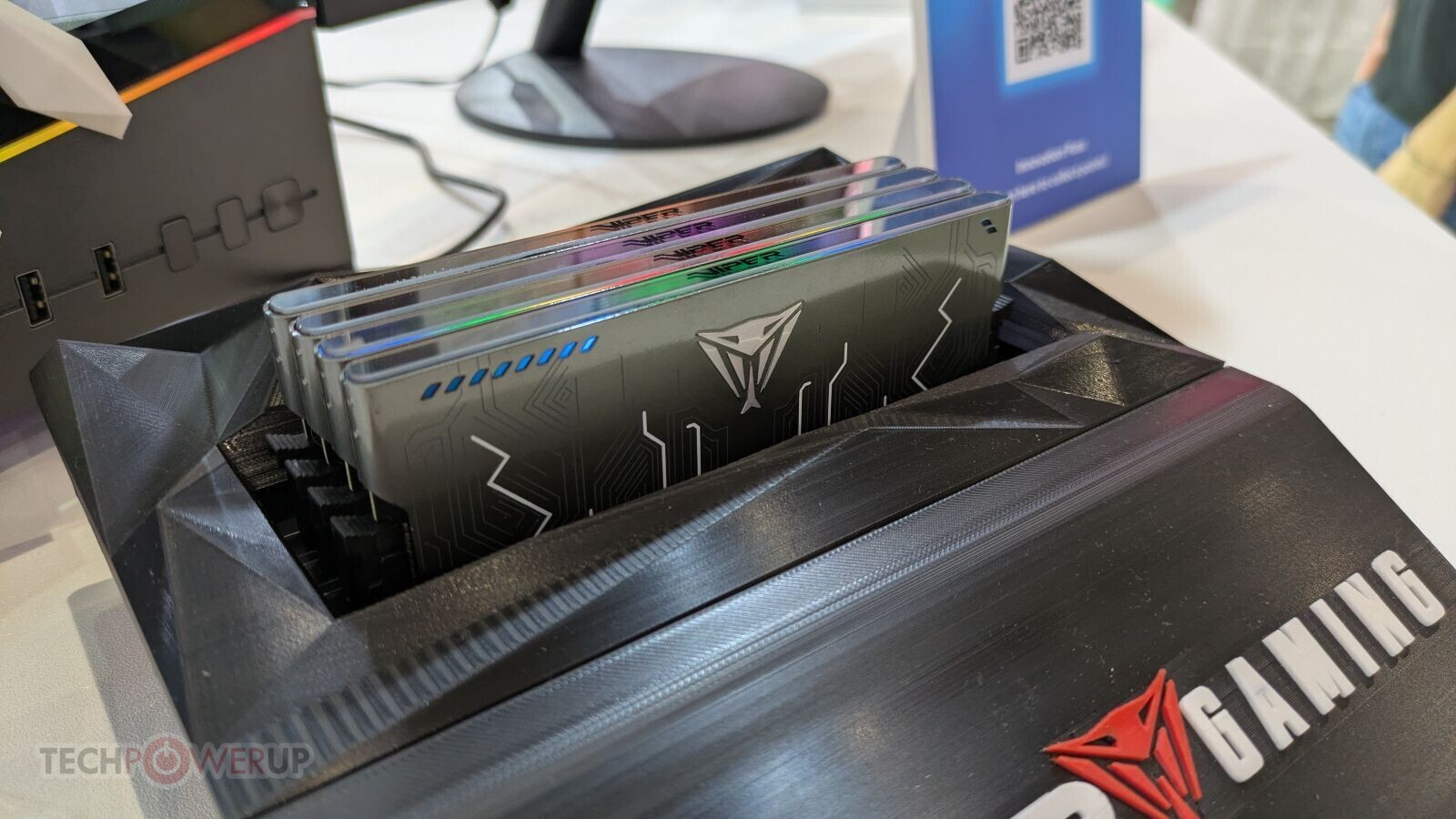
The infinity reflection effect on a heatsink is usually reserved for large, statement-making designs—but Patriot Memory has managed to shrink it down to fit a DDR5 memory module. The Viper Steel 5 Infinite isn’t just a visual trick; its specs suggest it’s built for systems that push the limits of current DDR5 performance, making it a candidate for small businesses and workstations where both speed and aesthetics matter.
Performance-wise, the module spans three key configurations: DDR5-6000 with CL30 timings, DDR5-6400 with CL36, and DDR5-8000 with CL38. These aren’t just benchmarks—they represent a clear tiering that small businesses should weigh against their workload needs. For example, a 64 GB kit (2x 32 GB) offers the highest capacity, while a 32 GB kit (2x 16 GB) delivers cost efficiency without sacrificing speed. The middle ground, 48 GB (2x 24 GB), strikes a balance for systems that need more than 32 GB but don’t require the maximum.
The real question isn’t whether this module can handle high-bandwidth tasks—it clearly can—but how its design and performance interact with the broader ecosystem. The infinity heatsink, while visually striking, raises practical concerns: will it maintain thermal performance under sustained loads, or is it more of a cosmetic statement? For small businesses investing in workstations, thermal consistency over time could be just as important as raw speed.
Where the Viper Steel 5 Infinite Fits—and Doesn’t
The module’s strengths are undeniable. DDR5-8000 at CL38 is a benchmark that few modules can match, especially in a form factor that prioritizes both performance and RGB integration. The infinity heatsink isn’t just for show; it’s designed to improve airflow while adding a signature look. But the trade-off lies in compatibility. DDR5-8000 pushes power delivery requirements, meaning systems with weaker VRMs or limited cooling may struggle to stabilize the module at its rated speed. For small businesses upgrading existing setups, this could translate into unexpected bottlenecks—or the need for additional cooling solutions.
Another consideration is the balance between capacity and price. While 64 GB is a natural choice for AI workloads or multi-tasking environments, smaller kits like 32 GB may not offer enough room for future-proofing without significant cost savings. The market dynamics here are worth watching: as DDR5 adoption grows, prices for higher capacities could stabilize, but right now, the premium for top-tier kits is real.
A Look Ahead
For small businesses, the Viper Steel 5 Infinite represents a moment where performance and design converge—but not without constraints. The infinity heatsink is a bold choice that may appeal to those who prioritize visual impact alongside technical specs, but its practical implications remain untested at scale. If thermal behavior holds up under real-world loads, this module could set a new standard for DDR5 modules in workstations. Until then, the decision comes down to weighing immediate needs against potential long-term trade-offs.