Valve’s Steam Deck is nowhere to be found in the US and Canada—every model, from the base configuration to the top-tier variant, has vanished from Valve’s official storefront. The shortage isn’t global, though: a quick check confirms the device remains available in the UK and EU markets. The reason? A supply chain bottleneck rooted in the same forces squeezing memory prices across the tech industry.
The issue stems from skyrocketing costs for LPDDR5 RAM, a direct casualty of the AI-driven surge in demand for high-bandwidth memory. While 16GB of shared RAM may not sound excessive for a gaming PC, it’s become a rare commodity in an era where even mid-range laptops are reportedly being redefined downward to 8GB—a threshold that would strain modern Windows 11 systems under heavy use.
This isn’t the first time the Steam Deck has faced stock challenges, but the timing is particularly poor. With the original $400 model discontinued and Valve’s upcoming hardware still shrouded in uncertainty, the absence of inventory arrives as Microsoft’s Windows 11 struggles with its own AI-related instability. For new PC gamers priced out of $1,000+ desktops, the Steam Deck has been the only viable handheld alternative—one that’s now off the table.
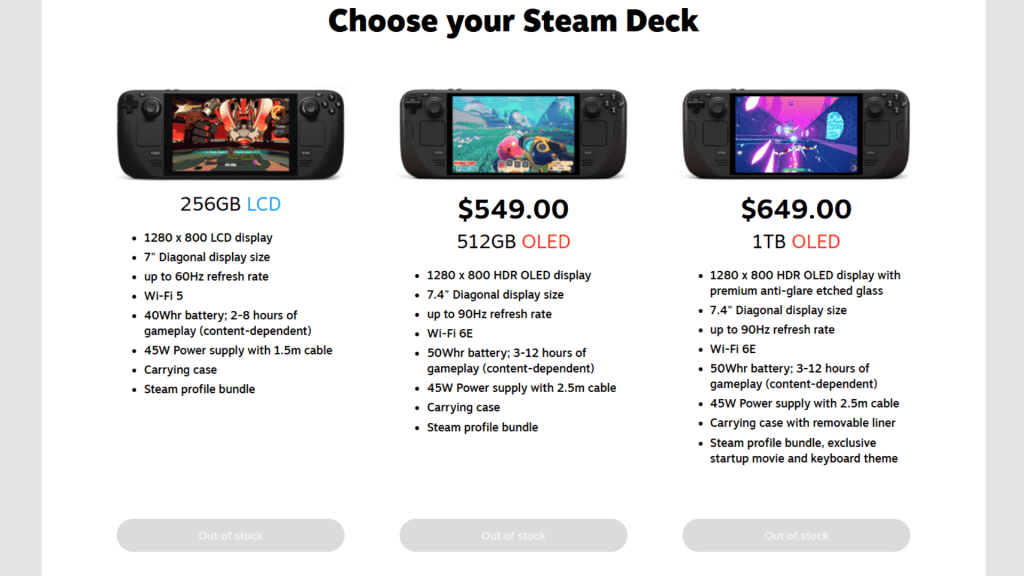
Valve has not provided a timeline for restocking, though regional availability suggests the problem is logistical rather than a full manufacturing halt. The company’s decision to sell hardware directly only in the US, Canada, UK, and EU may also be contributing to the disparity. For now, would-be buyers in North America are left staring at empty shelves—another frustration in a year where PC gaming’s ecosystem is already under pressure.
- All three Steam Deck models are out of stock in the US and Canada due to LPDDR5 RAM shortages.
- Stock remains available in the UK and EU, indicating a regional supply issue.
- Valve has not announced a restock date, though memory constraints are blamed on AI industry demand.
- The Steam Deck is the only affordable handheld PC gaming option, with competitors like Asus and Lenovo’s devices trailing far behind in adoption.
- Windows 11’s AI-related bugs and high memory requirements add urgency to Valve’s need for reliable hardware supply.
The absence of the Steam Deck comes as Valve prepares to push Steam as a console-like platform, potentially rebranding it as a more accessible alternative to traditional gaming PCs. But without inventory, that vision risks stalling before it gains traction. For now, North American buyers will have to rely on third-party resellers—or wait.