Gaming keyboards have long been the domain of mechanical switches and cramped key placements, optimized for speed rather than comfort. Yet a growing number of players are questioning that approach, drawn instead to ergonomic designs that promise relief from wrist strain without sacrificing functionality.
The Cloud Nine C959 Ergo TKL is one such keyboard, blending the split-hand design of traditional ergonomics with a familiar QWERTY layout. It’s not the first to attempt this balance, but its approach—detachable halves that snap together and wrist rests angled to encourage neutral hand positioning—has made it a standout in a category often seen as too niche for gamers.
For those accustomed to standard keyboards, the transition isn’t seamless. The split between the two halves means keys like 'H' or 'M' are no longer within easy reach when gaming, forcing players to either remap controls or accept slightly less fluid gameplay. Yet the tradeoff is clear: reduced wrist strain during long typing sessions and a more natural hand posture that can ease tension for those who spend hours at their desks.
Ergonomic keyboards aren’t uniform, of course. Some, like the Naya Create or Kinesis Freestyle Edge RGB, take a more aggressive approach with slanted key sections or ortholinear layouts, which can feel alien to gamers used to traditional setups. These designs prioritize typing efficiency over gaming ergonomics, often requiring significant adaptation.
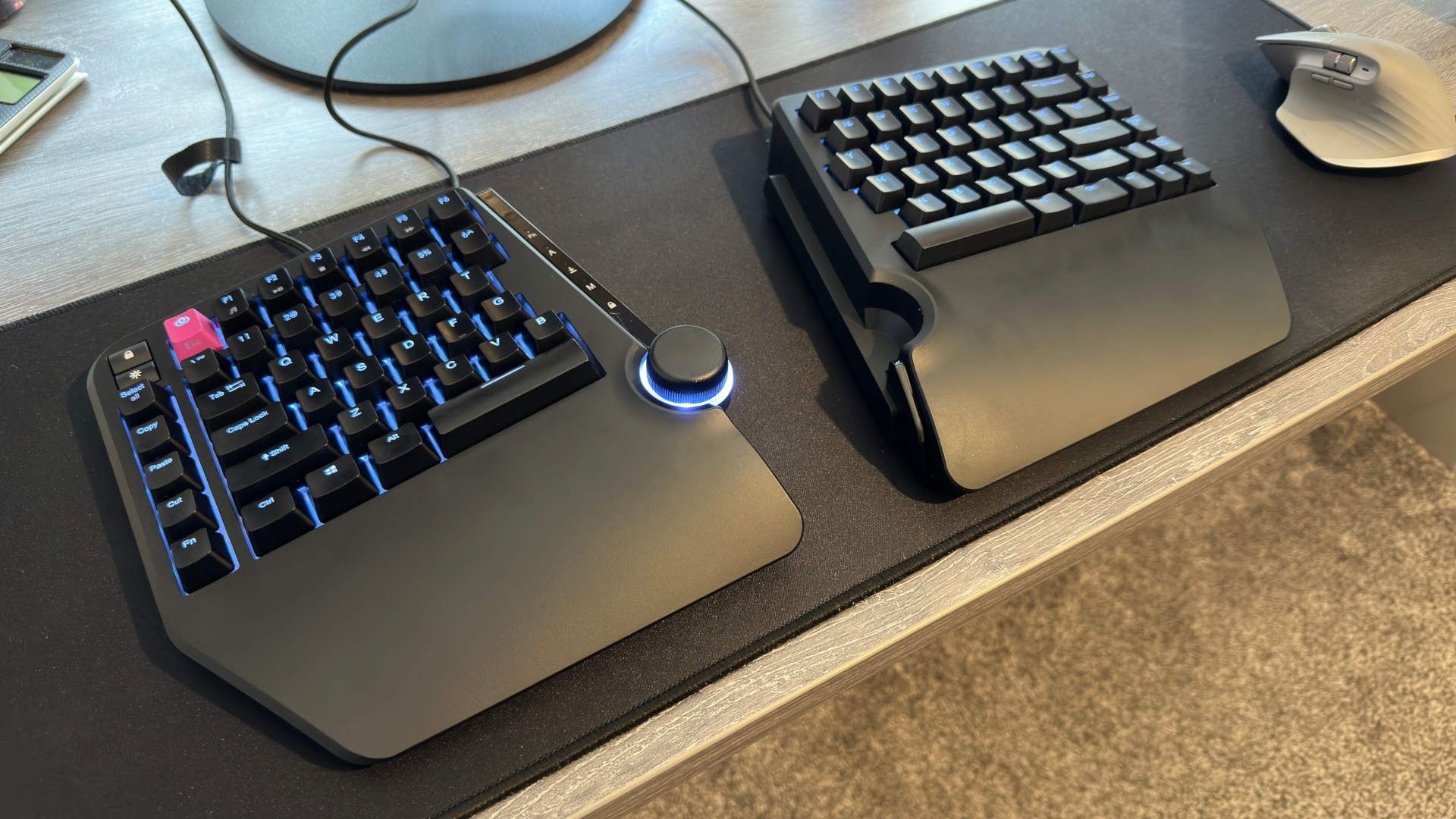
- Cloud Nine C959 Ergo TKL: Split QWERTY layout with detachable halves and wrist rests; aimed at gamers who want some ergonomic relief without full ortholinear conversion.
- Naya Create: More extreme split design, less gamer-friendly but better for typing comfort.
- Kinesis Freestyle Edge RGB: Combines slant and split, but with a steeper learning curve.
The appeal of ergonomic keyboards extends beyond the gaming community. Office workers who suffer from repetitive strain injuries or those who type extensively may find immediate relief, though the cost—often higher than standard mechanical keyboards—remains a barrier. For gamers, the decision hinges on whether the comfort benefits outweigh the minor inconveniences in gameplay.
One persistent challenge is desk space. Many ergonomic designs require more room to accommodate split halves or angled sections, making them less practical for compact setups. Additionally, while some models allow for remapping keys to mitigate gaming limitations, others leave certain functions unreachable without significant effort.
The Cloud Nine C959 Ergo TKL addresses some of these issues with its snap-together design and QWERTY layout, but it’s not a perfect solution. Gamers who rely heavily on left-hand keys (like 'M' for map or 'B' for jump) may still find themselves stretching or remapping. Yet the keyboard’s success suggests that even in gaming, where speed often trumps comfort, there’s room for compromise.
For now, the market seems to be moving toward more hybrid designs—keyboards that acknowledge the needs of both typists and gamers. Whether this trend sticks depends on whether manufacturers can refine these tradeoffs without sacrificing performance. One thing is certain: the days of dismissing ergonomics as purely for office workers are over.