Yet even this blunt critique from Faliszek—who knows Valve’s workflow better than most—pales in comparison to the company’s own public statements. In 2011, Gabe Newell addressed Half-Life 3 directly during a keynote, framing the project not as an unfinished work but as a creative dead end. We could have shipped Episode 3, he said, but it wouldn’t have moved anything forward. The implication was clear: the Half-Life series had reached a point where further development felt hollow, a conclusion that still stings for fans but aligns with the realities of long-running franchises.
The problem with Half-Life 3 rumors isn’t just their persistence—it’s their fundamental misunderstanding of how Valve operates. Unlike many studios that announce projects years in advance, Valve has never treated Half-Life 3 as a guaranteed title. Internal documents leaked years ago revealed that the game’s cancellation wasn’t sudden but a gradual realization that the original vision had outlived its potential. By 2009, development had stalled, with teams repurposed for other projects like Portal 2 and Team Fortress 2. The idea that Valve would quietly finish a game only to bury it for over a decade defies both logic and the company’s history of transparency—even when disappointing.
Take the 2019 Game Awards, for example. Speculation swirled that Valve would finally reveal Half-Life 3, only for Newell to confirm in an interview that no announcement was coming. The response from fans wasn’t frustration—it was a collective sigh of resignation. The pattern was familiar: hype, silence, repeat. Each cycle of rumors follows the same script: a cryptic Steam update, a misplaced from an employee, or a half-baked theory about internal codename leaks. But the deeper truth is that Half-Life 3, if it ever existed beyond early prototypes, died not with a bang but with a whimper—lost to shifting priorities and an industry that moves faster than ever.
What’s more telling is how Valve’s current output reflects this. Games like Artifact and Dota 2 show a company focused on iterative updates and live-service models, not blockbuster sequels. The last major single-player title Valve shipped was Half-Life: Alyx in 2020—a VR experiment that, while groundbreaking, proved the studio’s interest lies in innovation over nostalgia. Even Alyx, despite its acclaim, didn’t revive the franchise in the traditional sense. It was a reinvention, not a revival.
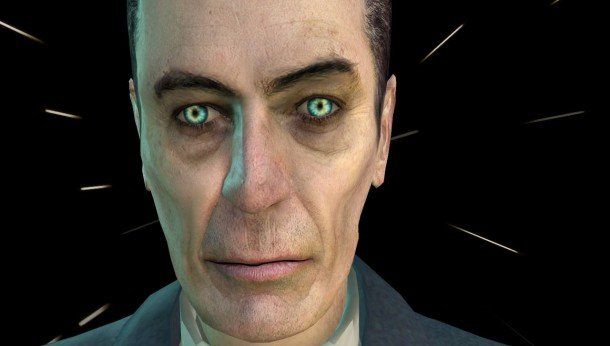
So why do the rumors refuse to die? Partly because Half-Life remains one of gaming’s most beloved franchises, its legacy untouched by time. But also because the uncertainty itself has become the story. For over two decades, fans have clung to the idea that Half-Life 3 is just around the corner, a belief reinforced by Valve’s occasional cryptic remarks—like Newell’s 2021 that the company was working on something without elaboration. It’s a masterclass in how ambiguity fuels obsession.
The latest round of speculation—centered on a supposed HLX codename and developer shuffling—follows this script perfectly. Yet even this theory unravels under scrutiny. HLX, if it exists, is more likely tied to an internal tool or an unrelated project. The notion that Valve would finish a game only to shelve it indefinitely contradicts the company’s culture of shipping, even flawed products. Consider Counter-Strike: Global Offensive, which underwent years of development before its 2012 launch. The final stages were chaotic, with last-minute polish and bug fixes—a process Faliszek’s satire so effectively mocks. If Half-Life 3 were truly done, Valve wouldn’t hide it. They’d release it, patch it, and move on—just as they’ve done with every other major title.
The reality is simpler, if less satisfying: Half-Life 3, in any recognizable form, is not coming. What will emerge instead is whatever Valve deems worthy of its resources—a decision made not by fan demand but by creative necessity. The franchise’s future may lie in smaller, experimental projects, or perhaps a return to its roots in a way no one expects. But the myth of Half-Life 3 endures because it’s easier to imagine a game than to accept its absence. And in that gap between hope and reality, the rumors will always find new life.