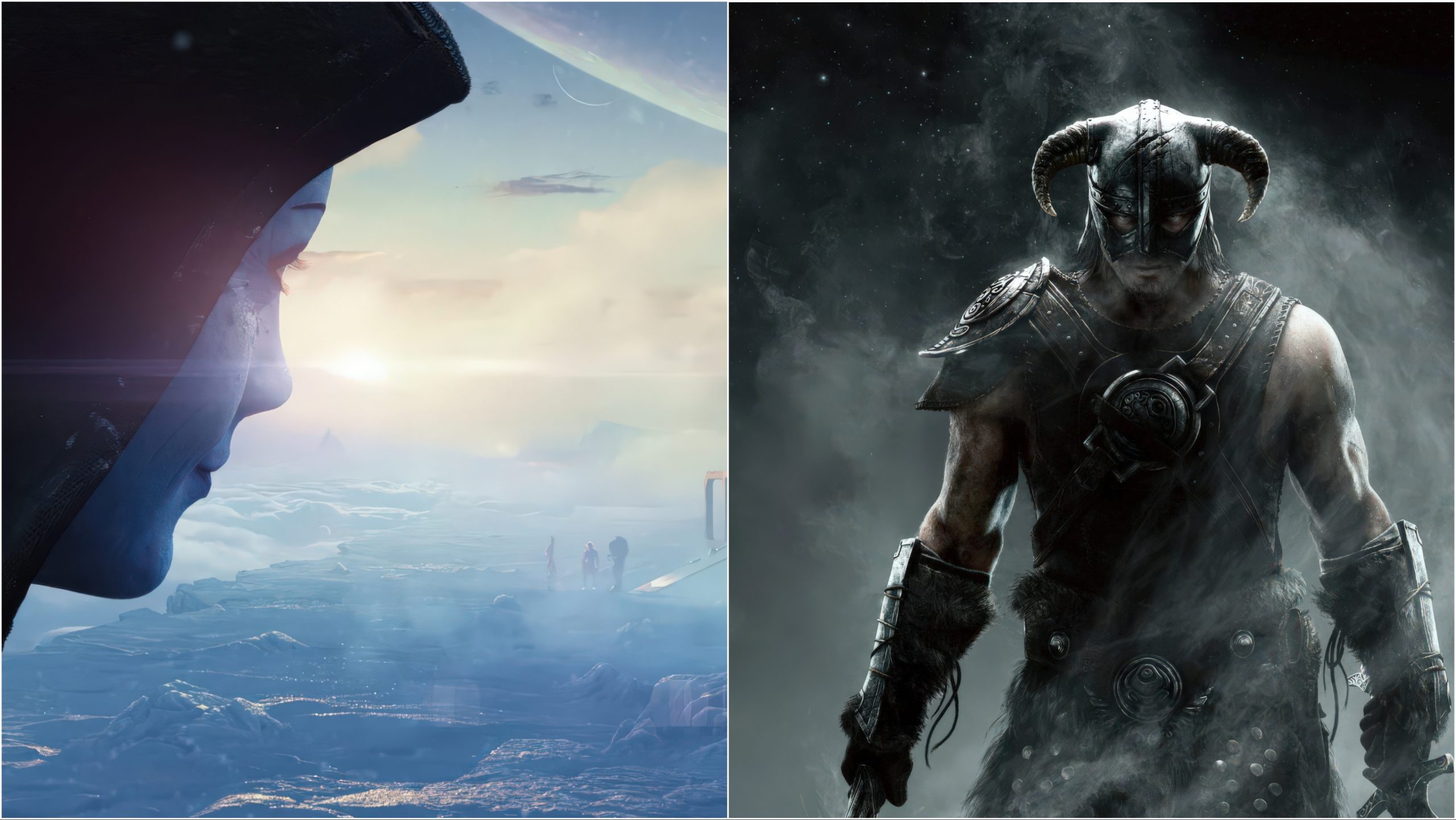
Mass Effect 5 could redefine the franchise—but only if it dares to break from tradition. Bruce Nesmith, the lead designer behind The Elder Scrolls V: Skyrim*, has publicly urged BioWare to abandon the linear narrative structure that has defined *Mass Effect since its inception. Instead, he advocates for a Bethesda-style open-world experience, blending the series’ deep lore with the freedom of exploration that has become a hallmark of modern RPGs.
The call comes as Mass Effect 5 remains shrouded in secrecy, despite years of teasing. The franchise’s last major entry, Andromeda (2017), was widely criticized for its half-hearted open-world elements, leaving fans skeptical about whether BioWare could successfully execute such a vision. Yet Nesmith argues that the time is ripe for a reinvention. Fans have been asking for an open-world Mass Effect for years, he says. The genre has evolved—games like Baldur’s Gate 3 and Starfield prove that players want immersion, not just storytelling.
Key Specs: What Would an Open-World Mass Effect Require?
- Scale: A true open world would demand a planet-hopping system, not just linear hubs. Starfield*’s 1,000+ planets set a precedent, but Bethesda struggled with performance and player engagement.
- Engine: BioWare’s current tools (likely an evolved version of the *Dragon Age engine) may not handle procedural worlds or dynamic NPC systems without heavy optimization.
- Content Density: Skyrim*’s handcrafted world took years to refine. An open-world *Mass Effect would need AI-driven side quests and reactive environments—features BioWare has never prioritized.
- Battery Life: Nesmith suggests 100+ hours of gameplay, with meaningful choices outside the main plot. Andromeda*’s open zones felt empty by comparison.
The technical hurdles are immense. *Starfield*’s launch revealed that even Bethesda—with its deep pockets and AAA resources—struggled to deliver a cohesive sci-fi sandbox. Server-heavy features like *Baldur’s Gate 3*’s persistent world required Larian Studios to overhaul its approach, and BioWare lacks a track record of scaling such systems. They’d need a complete overhaul of their design philosophy, Nesmith admits. It’s not just about adding open-world trappings—it’s about rethinking how players interact with the universe.
Performance vs. Vision: Can BioWare Deliver?
Nesmith’s pitch hinges on two pillars: lore depth and modern gameplay mechanics. *Mass Effect*’s strength has always been its characters and worldbuilding, but its combat and exploration have lagged behind competitors like *Horizon or The Witcher*. An open-world approach could finally bridge that gap—if BioWare commits to real-time physics, dynamic weather, and emergent storytelling. Look at *Baldur’s Gate 3*, Nesmith says. It took Larian six years to perfect. BioWare would need that kind of time—and a willingness to experiment.
Yet history weighs against optimism. *Dragon Age: Inquisition*’s open-world zones were praised for their ambition but criticized for clunky navigation and shallow content. *Andromeda*’s open sections felt like afterthoughts, tacked onto a linear experience. Even *Starfield*’s planets, despite their number, lacked the depth of *Skyrim*’s regions. BioWare has never been an open-world studio, Nesmith cautions. Their strength is narrative, not environmental design.
Pricing & Availability: A Speculative Timeline
If *Mass Effect 5 were to adopt an open-world model, it would likely cost $70–$80 at launch, aligning with Starfield*’s pricing but reflecting a more ambitious scope. Early access or beta phases could be necessary to test procedural content—something *Starfield*’s launch failed to account for. Nesmith estimates a 2027–2028 release window, assuming BioWare secures additional funding or studio expansion. This isn’t a small project, he warns. It’s either a gamble worth taking or a recipe for another *Andromeda*.
The debate over *Mass Effect 5*’s direction underscores a broader industry shift. While franchises like *The Elder Scrolls and Fallout embrace open worlds, *Mass Effect*’s identity has always been tied to its character-driven, linear storytelling. Nesmith’s proposal forces BioWare to ask: Can it evolve without losing what makes the series beloved? For now, the answer remains uncertain—but the stakes have never been higher.