Geralt of Rivia is about to get a new kind of legend—one told through the eyes of Dandelion, the bumbling bard who stumbles through his own tales while the world burns. Reigns: The Witcher, developed by French indie studio Nerial (creators of Card Shark* and the Reigns series), arrives February 25 as a playful yet deeply rooted spin-off that reframes Geralt’s choices not as history, but as a series of ballads composed by a poet who’s barely keeping up.
The game’s core mechanic remains faithful to Reigns: players navigate a branching narrative where decisions shape Geralt’s reputation among factions—humans, non-humans, and mages—while tracking monsters to trigger rhythmic combat minigames. But where Reigns typically follows kings and queens, this version casts Geralt as the reluctant protagonist, his every choice weighed against the consequences of a world that adores him one moment and wants him dead the next.
What sets it apart is the framing. Instead of replaying canonical events, the game presents itself as Dandelion’s interpretation of Geralt’s life—complete with mythological detours. A preview build introduced a tarasque (the lion-headed dragon-turtle of French folklore, not the D&D behemoth), while iconic moments like the stuffed unicorn or the mute druid from The Witcher 3 are recontextualized through the lens of Provençal and Euripidean storytelling. We love how Sapkowski borrowed from global myths, say the developers, so we did the same—blending tragedies, medieval lais, and even local legends to expand the lore.
The favorability system, refined from earlier prototypes, now balances three key metrics: human approval, non-human favor, and mage relations, with a fourth tracking Geralt’s monster-hunting prowess. Max out the latter, and a tarasque or other beast will charge across the board in a fast-paced dodge-and-slash sequence. But push Geralt too far toward any faction—like siding with mages at the expense of humans—and the game won’t hesitate to kill him off. One player’s overconfidence led to a fatal sorceress orgy; another’s refusal to burn a mage’s tower earned a lynch mob.
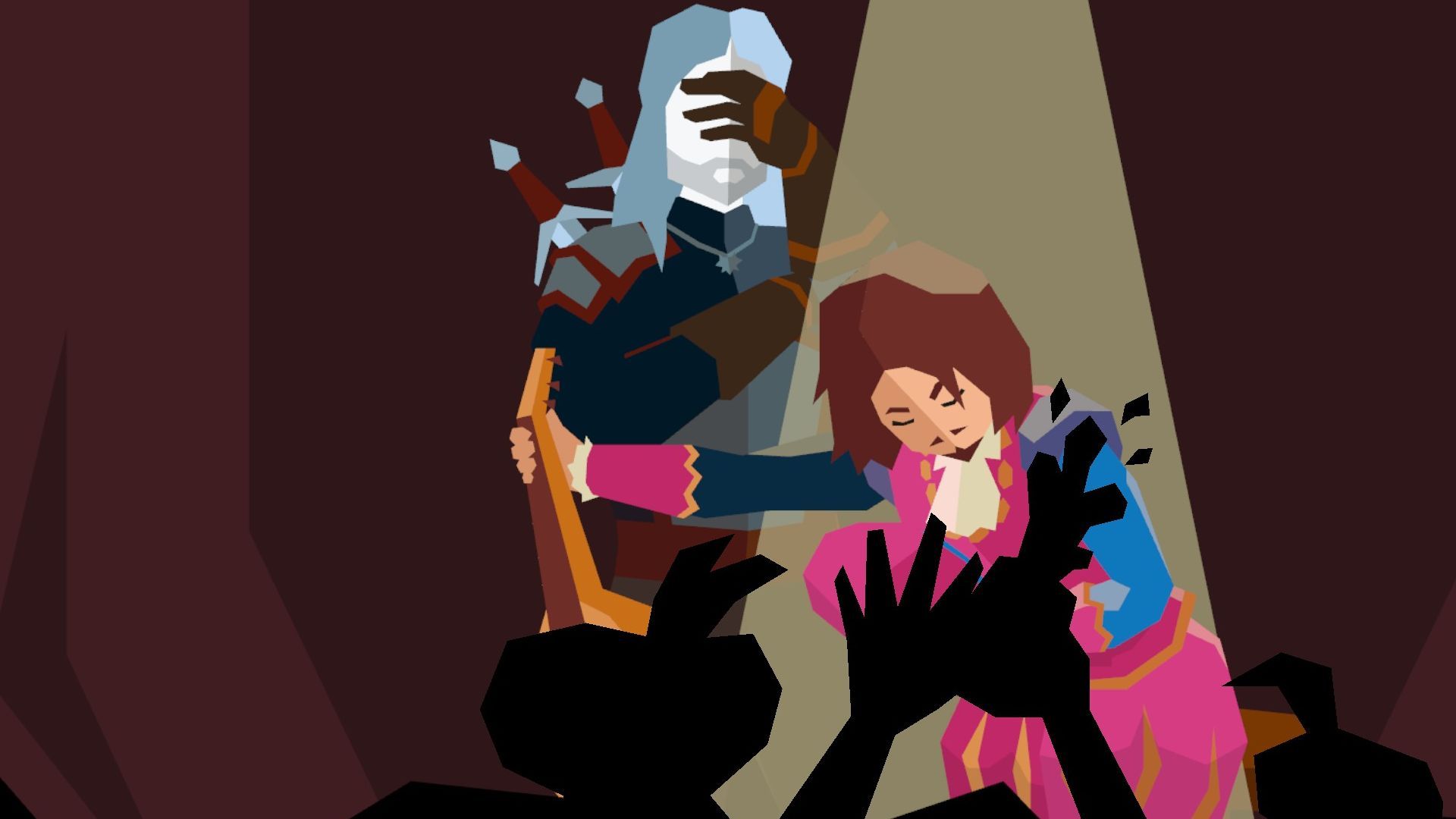
Combat, a rarity in Reigns, becomes a highlight here. Players dodge attacks by swiping left or right on a grid, catching swords to deal damage or landing on symbols to execute finishing moves. The developers emphasize its accessibility on handhelds, noting Steam Deck verification and a design that feels natural for touchscreens. We’ve tested heavily on Deck, they explain, and the rhythm translates well—it’s less about swiping like a dating app and more about the precision of a board game.
The result is a game that’s equal parts homage and reinvention. Fans of The Witcher will recognize Yen, Triss, and Regis in their game versions (closer to the books than the show), while newcomers get a self-aware, mythic retelling where Geralt’s legend is as much Dandelion’s invention as it is history. And yes, there’s still a stuffed unicorn.
Key specs:Platforms: Steam, GOGRelease date: February 25Gameplay: Branching narrative, faction reputation system, rhythmic combat minigamesInspirations: The Witcher 3 lore, French/Euripidean mythology, Provençal folkloreUnique twist: Presented as Dandelion’s ballads, not Geralt’s actual lifeCombat: Swipe-based dodging and sword-catching on a gridReputation system: Human, non-human, mage, and monster-hunting metersOptimized for: Steam Deck (Steam Deck Verified)
The game’s charm lies in its contradictions: a serious take on a silly premise, a deep dive into surface-level lore, and a combat system that feels both nostalgic and fresh. It’s not The Witcher* in the traditional sense—it’s Dandelion’s fever dream of the Witcher, and that’s where the magic lies.