Outdoor Wi-Fi deployments have long been constrained by a fundamental trade-off: devices capable of enduring harsh conditions often lag behind their indoor counterparts in speed and efficiency. A new lineup of access points challenges this dynamic, offering enterprise-grade performance while maintaining durability in environments ranging from freezing temperatures to heavy dust exposure. However, the real-world impact of these advancements hinges on how quickly regulators permit 6 GHz frequency use in public spaces.
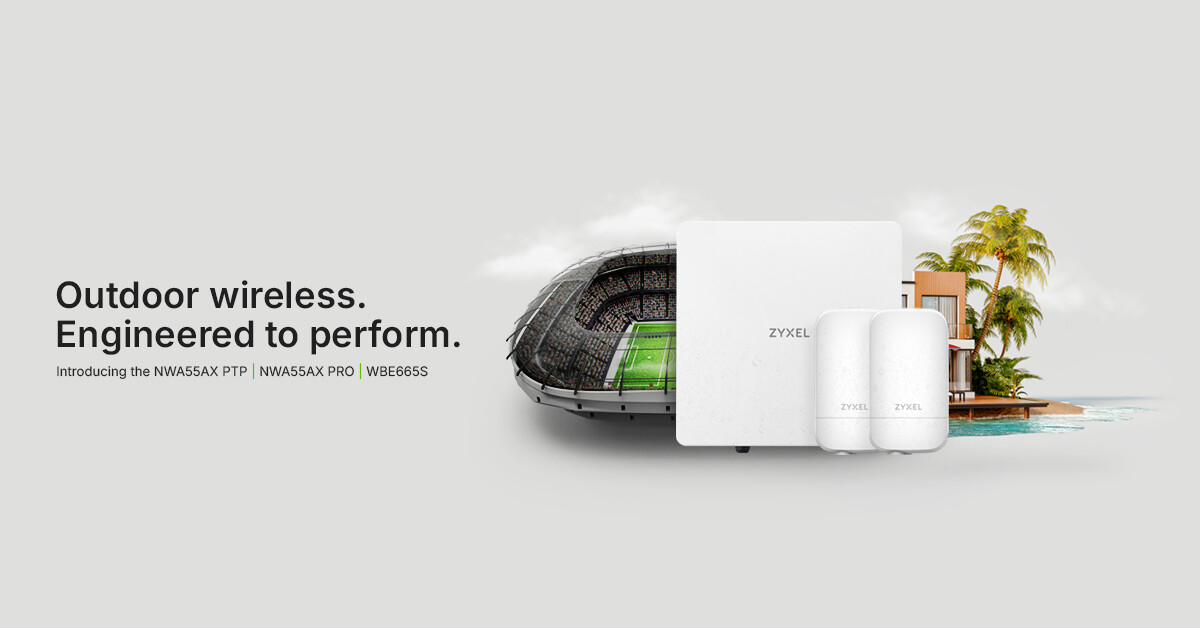
At first glance, these devices appear as an evolution of existing ruggedized hardware, but their underlying technology represents a significant shift. The WBE665S stands out with its support for Wi-Fi 7 and the 6 GHz band, promising ultra-fast connectivity even in extreme conditions—from -40°C to 70°C—while maintaining IP67 dust and water resistance. However, the practical benefit of 6 GHz remains uncertain without regulatory approval, which currently restricts outdoor deployments in many regions.
The other two models, NWA55AX PRO and PTP, adopt a more conservative approach. The PRO version delivers multi-gigabit speeds via Wi-Fi 6 (up to AX3000) with an IP55 rating, making it suitable for smaller industrial sites, hospitality venues, or extended home coverage. Meanwhile, the PTP model is engineered for long-distance point-to-point links, capable of spanning up to 5 km—ideal for education campuses, stadiums, or transportation hubs where wired connections are impractical.
For managed service providers (MSPs), these devices offer a compelling balance of affordability and enterprise-grade performance. However, the WBE665S’s 6 GHz capability is the most transformative aspect, but its full potential remains contingent on regulatory progress. Without widespread approval for outdoor 6 GHz use, the speed advantage over existing Wi-Fi 6 hardware may be limited.
- WBE665S: Wi-Fi 7 with pending 6 GHz support, IP67-rated, smart antenna for optimized coverage
- NWA55AX PRO: Multi-gigabit Wi-Fi 6 (AX3000), IP55-rated, compact design for smaller sites
- NWA55AX PTP: Point-to-point link up to 5 km, ruggedized for long-range deployments
The WBE665S’s 6 GHz capability is the most significant leap forward, but its real-world impact will be determined by regulatory progress. For now, MSPs and businesses must weigh whether the performance gains justify waiting—or if existing Wi-Fi 6 solutions are sufficient for their needs.
Looking ahead, the biggest question isn’t technical; it’s regulatory. Once 6 GHz is widely permitted outdoors, these access points could redefine high-speed, weatherproof connectivity in industrial, hospitality, and public deployments. Until then, they represent a bridge between today’s reliable but slower outdoor networks and tomorrow’s high-speed solutions.