The ONEXStation Mini AI presents a compelling tradeoff: a high-performance compact PC with the promise of advanced AI capabilities, but without clear guarantees on when—or if—it will reach users.
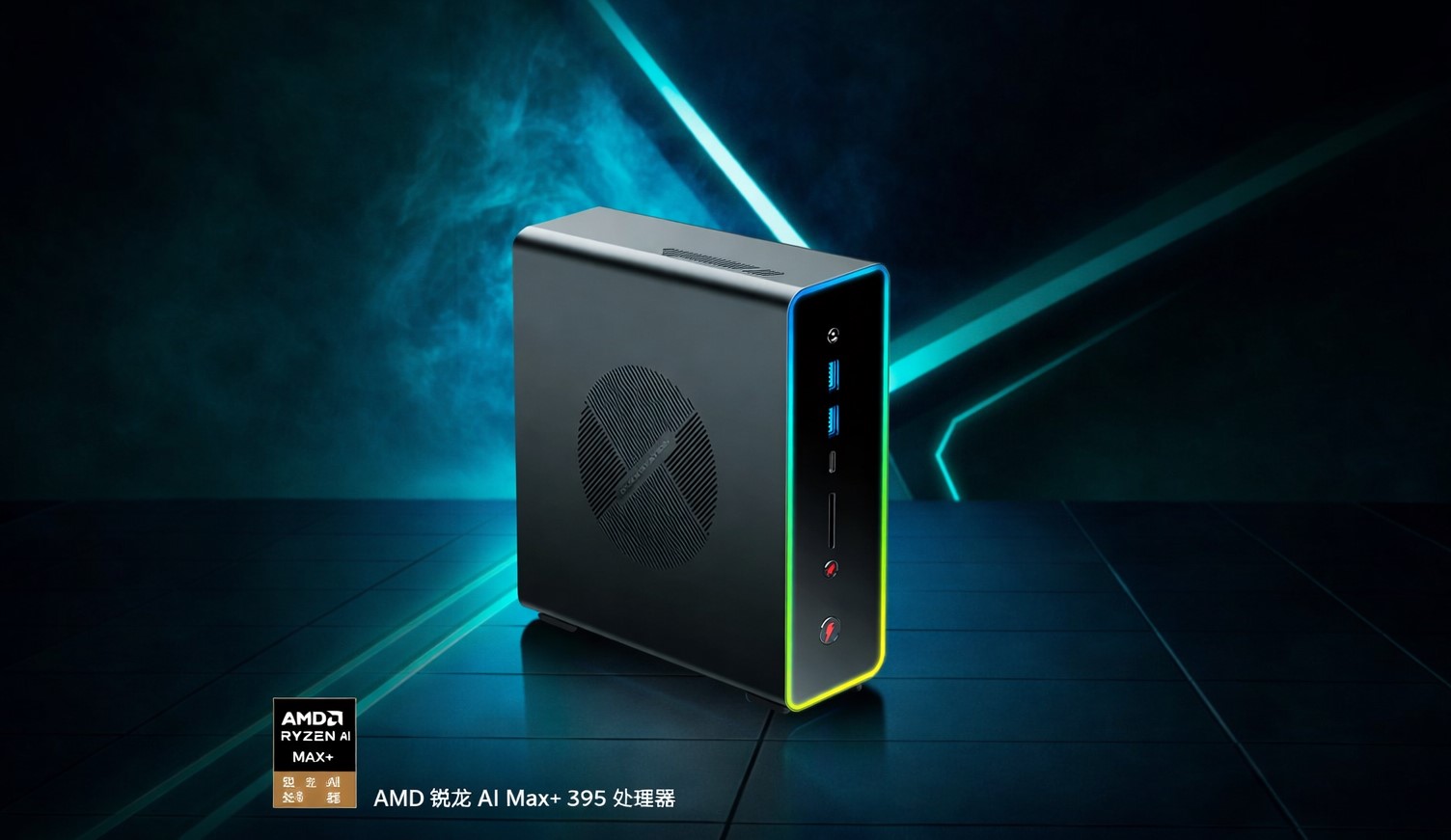
At its core, this device is built around AMD's Ryzen AI Max+ 395 processor, a chip designed to balance raw power with efficiency. The Mini AI measures just 140 x 140 x 78 millimeters yet packs in up to 64GB of DDR5-6000 RAM and 2TB of PCIe Gen 4 SSD storage. Its cooling system features a single 95mm fan, ensuring quiet operation while managing thermal output.
Key specs
- Processor: AMD Ryzen AI Max+ 395 (Zen 4 core, RDNA 3.5 GPU)
- Memory: Up to 64GB DDR5-6000
- Storage: Up to 2TB PCIe Gen 4 SSD
- Graphics: Integrated RDNA 3.5 with 16 compute units, supporting up to 8K resolution
- Connectivity: USB-C (Thunderbolt 4), HDMI 2.1, Wi-Fi 6E, Bluetooth 5.2, Ethernet 2.5Gbps
- Ports: Two USB-A 3.2 Gen 2, one USB-C (data + power delivery), HDMI 2.1, audio jack, Ethernet
- Cooling: Single 95mm fan with vapor chamber
The Mini AI's standout feature is its connectivity suite, which includes Thunderbolt 4 via USB-C and HDMI 2.1. This makes it suitable for both professional workloads—such as video editing or high-resolution display setups—and general computing tasks. The inclusion of a 2.5Gbps Ethernet port further enhances its appeal for users who prioritize stable, low-latency connections.
Why this matters
The ONEXStation Mini AI is positioned as an all-in-one solution for power users who need both performance and portability. Its compact size makes it ideal for environments where space is limited, but its reliance on a single fan may limit sustained high-load performance compared to larger systems. The Ryzen AI Max+ 395's integrated GPU and AI capabilities suggest strong potential in media-heavy tasks, though real-world benchmarks will be necessary to confirm how it stacks up against dedicated GPUs.
However, the lack of clear availability details leaves a critical question unanswered: who can actually get this device? If supply is limited or delayed, its impact on the market could be muted despite its impressive specifications. For now, the Mini AI remains a promising concept—one that power users should watch closely for updates.
What's next
The ONEXStation Mini AI's roadmap hinges on two factors: supply and software optimization. If AMD's AI Max+ stack lives up to its potential in real-world applications, this device could carve out a niche in the growing market for compact, high-performance PCs. But without confirmed availability, its long-term relevance remains speculative. For power users, the key takeaway is simple: if this system becomes accessible, it could be a game-changer for those balancing performance and space constraints.