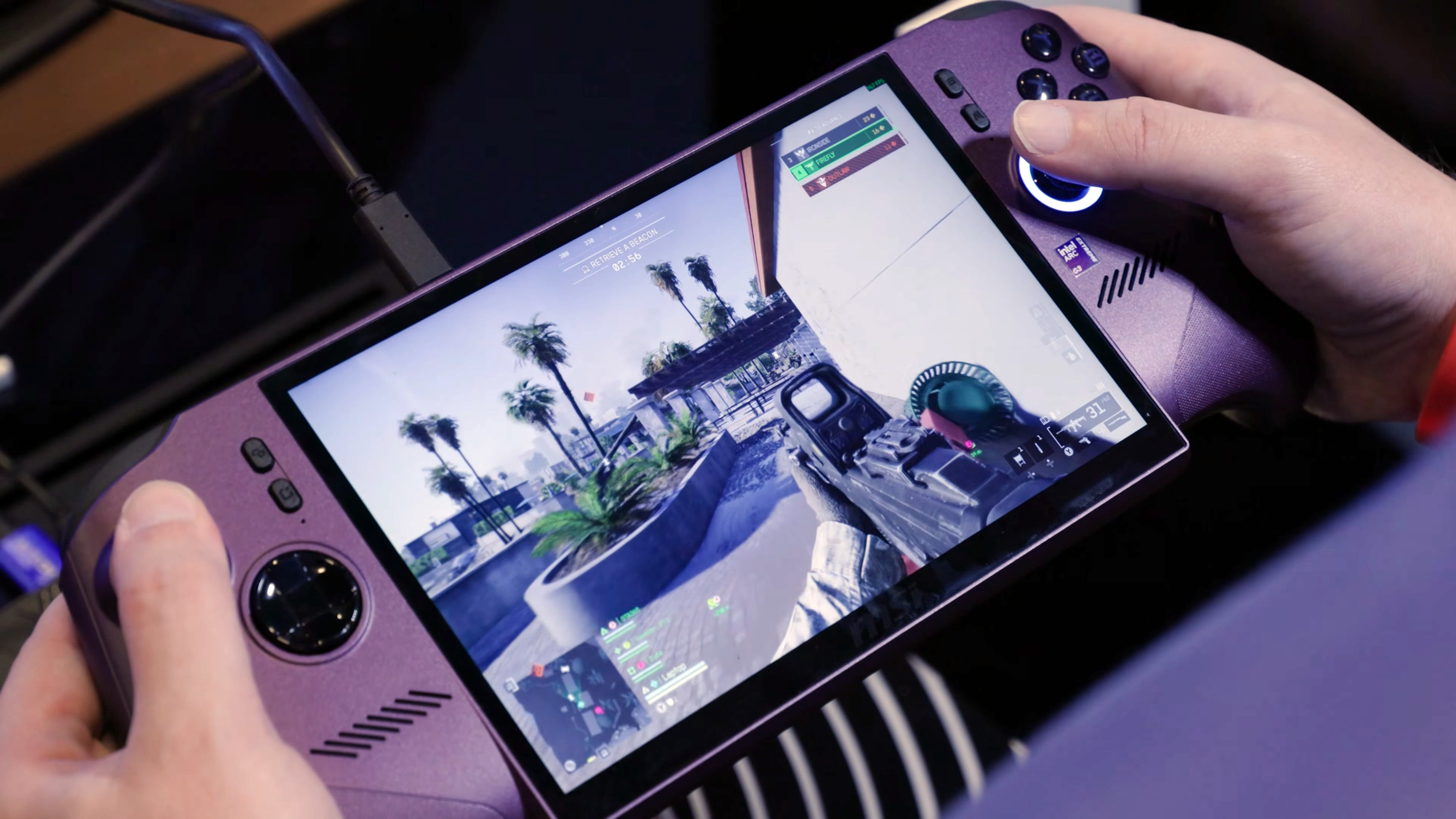
The OneXPlayer 3 marks a significant leap in handheld AI processing by embedding Intel’s Arc G3 Extreme GPU—a chip designed to deliver strong performance while minimizing power consumption. Unlike conventional laptops or desktops, the device’s small footprint raises questions about how it will handle thermal constraints, particularly under sustained AI workloads such as neural network inference.
At its core, the Arc G3 Extreme GPU features 128 GB/s memory bandwidth and up to 40 compute units, positioning it for tasks where throughput is critical. Its architecture emphasizes efficiency, with a target TDP of just 50 watts—a figure that could be pivotal in extending battery life in a handheld context. If managed effectively, this could set a new benchmark for portable AI devices.
- 128 GB/s memory bandwidth
- Up to 40 compute units
- 50-watt TDP (target)
The challenge lies in whether this efficiency translates into real-world performance. Handheld devices inherently face tight thermal envelopes, often relying on passive cooling or vapor chambers. Without details on the OneXPlayer 3’s cooling strategy, it’s unclear how well it will sustain performance under prolonged AI workloads. If successful, it could redefine the boundaries of portable computing.
Another consideration is software compatibility. The Arc G3 Extreme is a newer GPU in Intel’s lineup, and its support in AI frameworks is less mature than competitors like NVIDIA or AMD. Users may encounter integration challenges if their workflows aren’t optimized for this hardware. Whether the device can bridge that gap will determine its adoption in professional settings.
The OneXPlayer 3 represents a bold step toward more integrated, portable AI processing. Its potential to balance performance, thermals, and software readiness could break new ground—but only if these critical aspects are addressed effectively. The industry’s attention is fixed on whether this design can deliver without leaving key questions unanswered.