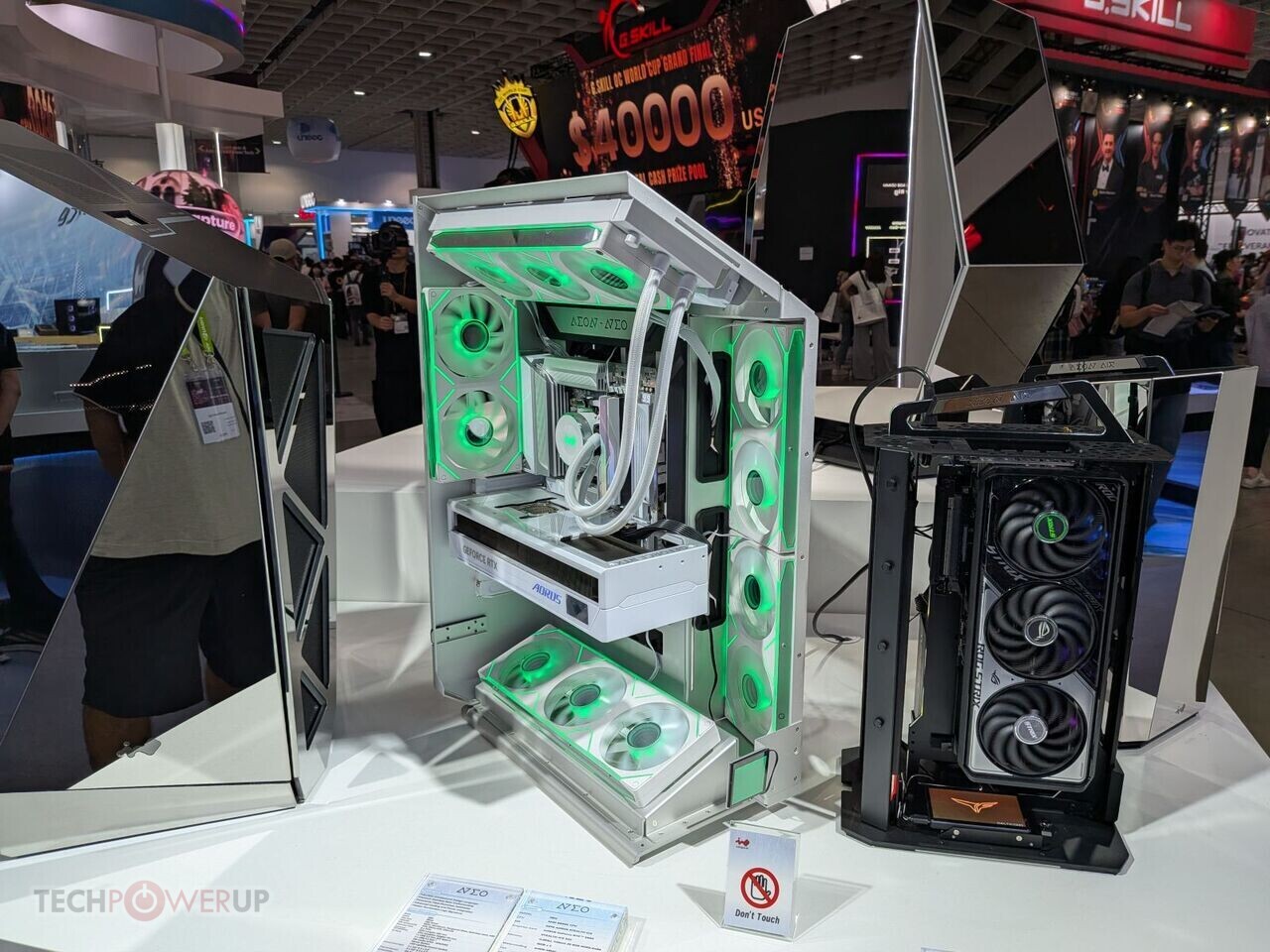
In a move that redefines thermal management for high-performance systems, Cooler Master has announced the development of two innovative cooling technologies: a hybrid air-liquid CPU cooler and a PCIe-mounted GPU exhaust fan. These solutions aim to tackle the increasing heat output from modern processors and graphics cards, particularly those leveraging advanced architectures like NVIDIA's RTX 5090 and AMD's RDNA series.
The hybrid CPU cooler, designated as the G11M, represents a departure from traditional all-liquid or air-cooling designs. It integrates liquid cooling channels with a downward-firing fan mounted directly on the CPU block, allowing for immediate heat dissipation before liquid reaches the radiator. This dual approach is said to achieve a cooling capacity of up to 400 watts, addressing the thermal demands of high-end CPUs and GPUs alike. The design also incorporates additional airflow over VRMs and memory, potentially improving overall system stability.
Complementing this, Cooler Master has introduced the MasterFlow GPU exhaust fan, a blower-style device that slots into the PCIe slot above an installed GPU. Unlike conventional fans, it exhausts hot air from the back of the PCIe cover, reducing internal case temperatures and improving thermal performance for the GPU itself. This approach is particularly beneficial in systems where multiple high-power components are housed, as it minimizes cross-contamination of hot air between CPU and GPU environments.
Both innovations were unveiled at a recent industry event, signaling Cooler Master's commitment to pushing the boundaries of thermal management in computing. The hybrid cooler and GPU exhaust fan are expected to address real-world performance constraints faced by IT teams and enthusiasts alike, particularly as power consumption continues to rise with advancements in AI-driven workloads.
While the practical impact will depend on compatibility with existing systems—such as the need for flow-through designs in GPUs—the solutions promise to redefine how heat is managed in high-performance setups. For IT teams, this means a potential reduction in thermal throttling and improved longevity of components, though availability and pricing details remain pending confirmation.